


This article was automatically translated from the original Turkish version.
+2 More
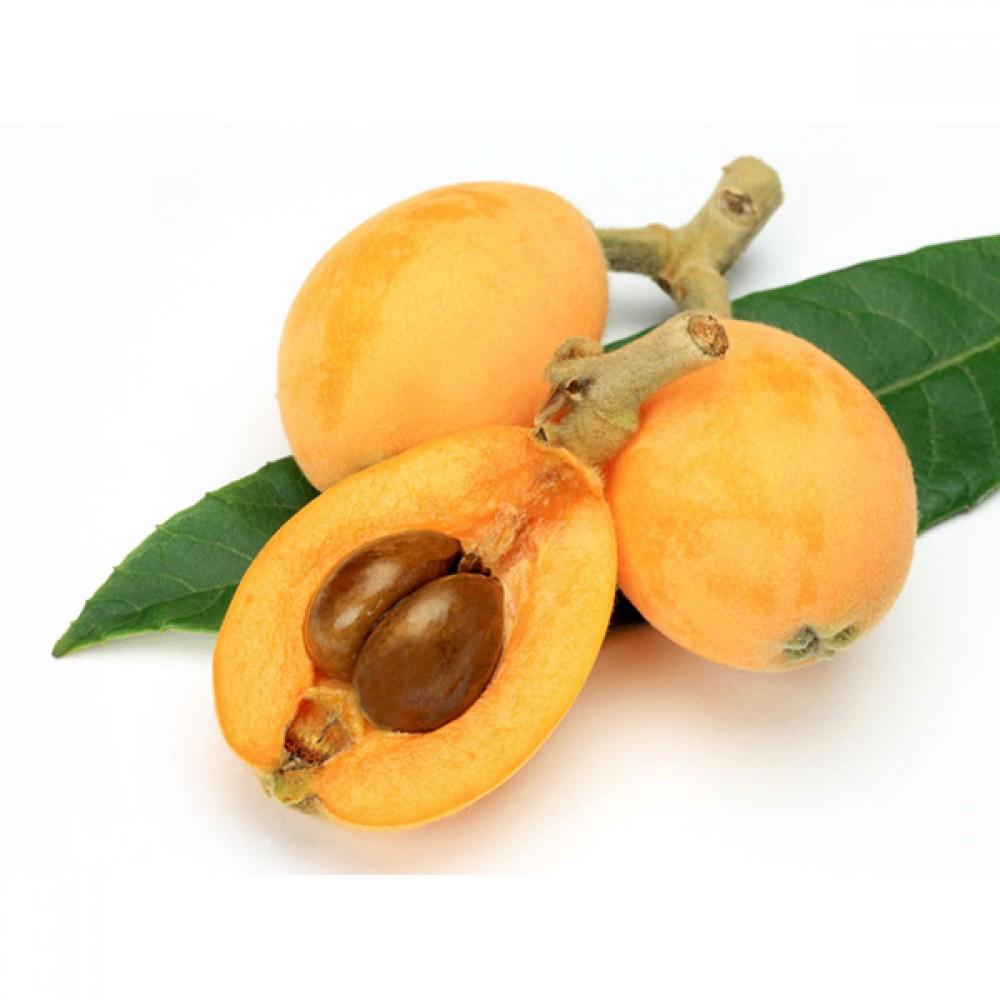
Alanya Quince is a geographical indication variety of quince (Eriobotrya japonica) distinguished by its yellow-orange skin color, yellow-cream flesh, elliptical shape, and large seeds averaging 43.26 grams in weight, cultivated exclusively in the Alanya district of Antalya. This variety, known as Ayva Göbek or Hafif Çukur Göbek, benefits from the region’s microclimate and natural protection provided by the Taurus Mountains, making it earlier ripening and higher yielding than other quince production areas in Türkiye. Alanya Quince is grown under both open-field and protected cultivation conditions, harvested gradually, and can retain its quality for up to two months at 5°C when transported under cold chain conditions.
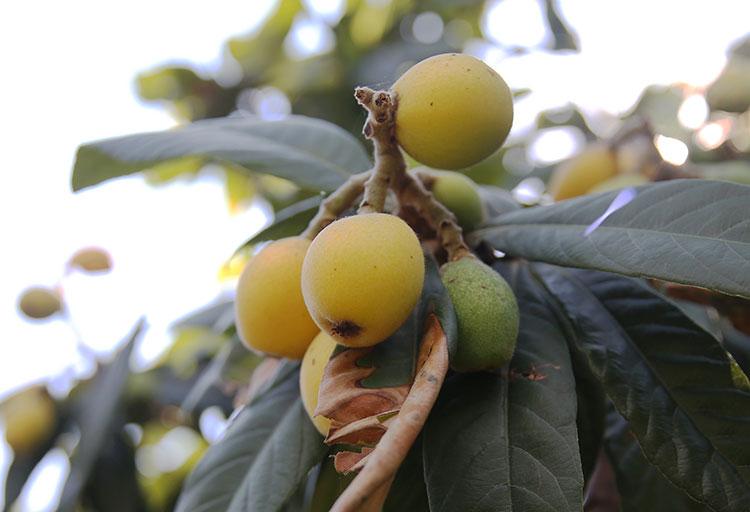
Alanya Quince (AA)
Alanya Quince is a geographical indication variety of Eriobotrya japonica. It was officially registered as a geographical indication on 07.08.2018 under registration number 373 and recorded with the status of origin name. The application was submitted by the Alanya Chamber of Commerce and Industry, and the geographical indication application was registered on 22.09.2017 under file number C2017/145. The use of the geographical indication may be combined with the trademark on the product.
This product can only be cultivated within the administrative boundaries of the Alanya district of Antalya Province. The region’s geographical and climatic features play a decisive role in developing the fruit’s distinctive qualities. Alanya is located on a narrow coastal plain that rises behind the Taurus Mountains. These mountains act as a natural barrier, blocking cold air and winds from inland areas during winter, thereby creating a “cold-break” effect for the region. As a result, the annual minimum temperature in Alanya never falls below 12°C, even in January. Additionally, the moderating influence of the sea gives the region a distinct microclimate. The average annual temperature is 19°C, with August being the warmest month at an average of 27°C and January the coldest at 12°C. Alanya exhibits typical Mediterranean climate characteristics: wet and humid winters and dry, hot summers. These climatic conditions protect flowers and young fruits from frost damage during the autumn flowering period and throughout the winter fruit development phase.
Alanya Quince belongs to the Ayva Göbek variety, also known as Hafif Çukur Göbek. It demonstrates earlier ripening and higher yields compared to quince fruits grown in other regions of Türkiye such as Hatay and other parts of Antalya. When grown in open fields, harvest occurs 7–10 days earlier; under protected cultivation, it is approximately one month earlier. The fruit matures in spring and enters the market during a period when winter fruits have ended and summer fruits have not yet appeared, resulting in low fruit variety availability.
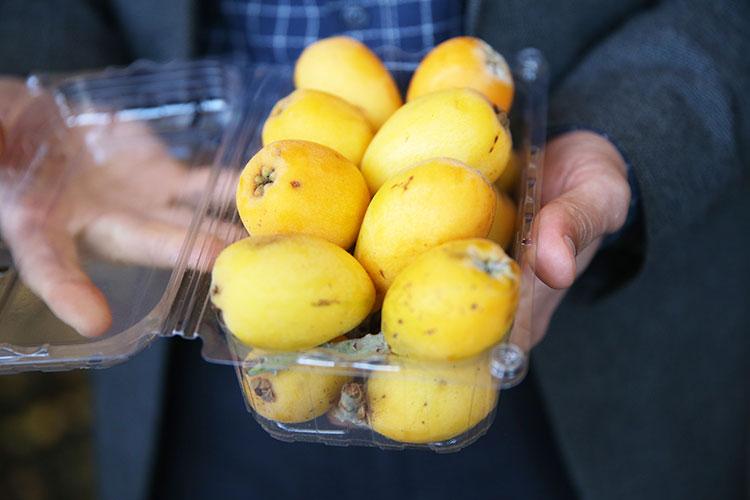
Alanya Quince (AA)
The fruit skin is yellow-orange, and the flesh is yellow-cream in color. The average fruit weight is 43.26 grams, which is higher than that of other quince varieties in Türkiye. The skin thickness is medium, a trait preferred by both producers and consumers. Thin-skinned quinces pose difficulties in transport and storage, while thick-skinned ones are less favored by consumers. Another distinguishing feature of Alanya Quince is its easy-to-peel skin.
The Alanya Quince plant is evergreen. Its root system consists of a shallow, fibrous network at a depth of 25–50 cm, along with a taproot extending up to 1.5–2 meters deep. The tree reaches a height of 5–6 meters, with a straight trunk, low branching, and a canopy that varies between dense, broad, and rounded. Leaves are 12–40 cm long, firm, and short-stalked, with blunt tips and moderately spaced serrations along the margins, oriented outward on the branches.
Production of Alanya Quince follows general quince cultivation techniques but requires attention to specific conditions and methods. Cultivation can be carried out under either open-field or protected conditions.
From a climatic perspective, Alanya has an average annual air temperature of 19°C, with August as the warmest month at an average of 27°C and January as the coldest at an average of 12°C. The region exhibits Mediterranean climate characteristics: wet and humid winters and dry, hot summers. Flowering in Alanya Quince begins in autumn, and the plant spends the winter in the young fruit stage. Since flowers and fruits can be damaged at temperatures below -3°C, the absence of frost risk during the flowering period is critical.
Regarding soil requirements, Alanya Quince thrives in well-drained, deep, loamy-sandy, loose soils with neutral pH and high organic matter content. Soil analysis from Alanya shows a pH of 7.89, indicating slightly alkaline conditions, with a calcium content of 2.8%. Salinity levels are low, with sand content at 42%, clay at 18%, and silt at 40%. Organic matter content is 3.1%, phosphorus levels are good, and potassium levels are sufficient.
Propagation is generally achieved through grafting. Bud or whip grafts are applied onto rootstocks. Seeds can be sown immediately after extraction from the fruit or stored for up to nine months before planting. The seed sowing medium should consist of peat, sand, and perlite in a 3:1:1 ratio, with a pH maintained between 6.5 and 7.0. Seeds begin to germinate 40–60 days after sowing. Rootstocks become ready for grafting approximately 1.5–2 years after planting, when stem diameters reach 1–1.5 cm. Spring grafts are performed from early March to the end of May, while autumn grafts occur between late September and November. Scions are taken from one-year-old mature, leafless shoots and grafted using the T-budding, whip-and-tongue, or patch budding methods.
In open-field orchards, planting spacings of 6x6 m or 7x7 m are used, while in protected cultivation, spacings of 2x2.5 m or 2.5x2.5 m are preferred. Protected cultivation extends the fruit’s shelf life by aligning harvest with cooler periods.
Planting is carried out in early spring after the risk of frost has diminished. During planting, plastic containers must be carefully removed without damaging roots, and roots with their surrounding soil should be placed intact. Damaged or bent roots must be trimmed. The graft union must remain above ground level to avoid deep planting. After planting, irrigation and staking of seedlings are required.
The annual water requirement is approximately 1,130 mm. Based on local soil conditions, 10–11 irrigations per year are applied, delivering 100–110 mm of water per tree per irrigation. Between April and October, 15–20 irrigations may be applied. Drip irrigation is recommended, especially under protected conditions and preferably also in open fields.
The most significant disease affecting Alanya Quince is leaf spot (Spilocaea eriobotryae), which can reduce fruit quality, particularly in open-field cultivation. Cultural measures must be adopted, including collection and destruction of infected shoots, leaves, fruits, and pedicels. Trees must be adequately ventilated, and fungicidal spraying with 1.5% Bordeaux mixture should be applied in autumn when flower clusters begin to form. A second spray is applied before flowering; after petal fall, sprays are repeated every 15–20 days during rainy periods and continued until at least 20 days before harvest. Leaf spot does not occur under protected cultivation, eliminating the need for chemical treatment.
Fertilization is based on soil and leaf analyses. In the absence of analysis, the following nitrogen recommendations are advised: 30 g of pure nitrogen (150 g ammonium sulfate) per seedling annually in the first year, 60 g (300 g ammonium sulfate) in the second year, and 100 g (500 g ammonium sulfate) in the third year. From the fourth year onward, applications of nitrogen, phosphorus, and potassium are scheduled according to specific growth stages.
The optimal time for pruning is March. It is recommended to form a goblet shape with three or four main branches. New shoots are pruned to 35–40 cm in length during the same year they grow. In subsequent years, only balanced shoots that do not congest the central trunk are retained, and shoots above the graft union are removed. In later years, pruning is limited to removing dead, diseased, or overly dense shoots. Cut surfaces are left to dry and then sealed with a thin layer of grafting wax.
Harvesting must be performed carefully to avoid damage to both fruit and tree. Harvesting tools such as pruning shears should be used, and fruits must be sorted. Harvesting is carried out in multiple stages due to the fruit’s progressive ripening. Packaging materials must not be excessively deep to prevent pressure damage to lower fruits. The cold chain must be maintained during transport, as Alanya Quince can retain its quality for approximately two months at 5°C, enabling distribution to distant markets.
The optimal planting time is early spring after the risk of frost has passed. During planting, roots and soil must be carefully placed, the graft union must remain above ground, and irrigation must be applied immediately. The annual water requirement for Alanya Quince is 1,130 mm. In open fields, 15–20 irrigations are applied between April and October; under protected cultivation, drip irrigation is recommended.
Leaf spot (Spilocaea eriobotryae) is a major disease that reduces fruit quality, especially in open-field cultivation. Chemical treatments are applied alongside cultural measures. Bordeaux mixture is applied before and after flowering. Leaf spot does not occur under protected cultivation.
Fertilization is determined based on soil and leaf analyses. In the absence of analysis, the following nitrogen applications are recommended: 30 g of pure nitrogen (150 g ammonium sulfate) per seedling annually in the first year, 60 g (300 g ammonium sulfate) in the second year, and 100 g (500 g ammonium sulfate) in the third year. From the fourth year onward, nitrogen, phosphorus, and potassium fertilizers are applied at specific growth stages.
Pruning is conducted in March. Trees are trained into a three- or four-branched goblet shape. In subsequent years, pruning is limited to removing dead, diseased, or overcrowded branches and improving light penetration into the canopy. After pruning, cut surfaces are coated with grafting wax.
Fruits are carefully harvested in multiple stages due to progressive ripening. Packaging must not be excessively deep to prevent fruit damage. The cold chain must be maintained during transport, as Alanya Quince can retain its quality for up to two months at 5°C without deterioration.
Monitoring is carried out by a three-member inspection body composed of one expert each from the Alanya Chamber of Agriculture and the Alanya District Directorate of the Ministry of Food, Agriculture and Livestock, under the coordination of the Alanya Chamber of Commerce and Industry, in accordance with Law No. 6769 on Industrial Property. Inspections are conducted at least once annually and may be carried out at any time upon complaint. During inspections, the following are verified: production within the administrative boundaries of Alanya district, the fruit being of the Ayva Göbek variety, fruit weight (29 g or higher), yellow-orange skin color, elliptical fruit shape, registration documents, and traceability elements. Inspection results are documented and reported to the Turkish Patent and Trademark Office.

Geographical Boundaries and Climatic Characteristics
Distinctive Characteristics
Botanical Characteristics
Production Method
Agricultural Practices
Harvesting, Packaging, and Storage
Monitoring