
+2 More

Date and Place of Birth | 16 September 1944, Menemen (İzmir, Türkiye) | ||||||||
|---|---|---|---|---|---|---|---|---|---|
Date and Place of Death | 2 February 2024, Istanbul | ||||||||
Mother’s and Father’s Names | Fürüzan Alatlı – Ertuğrul Alatlı | ||||||||
Nationality | Republic of Türkiye | ||||||||
Profession and Title | Writer, economist, thinker, translator, academic | ||||||||
Education | Philosophy and Theology Studies: Dartmouth College Development Economics and Econometrics Master's: Vanderbilt University Economics and Statistics Undergraduate: ODTÜ High school: The American School in Japan (Tokyo) Middle school: Ankara Namık Kemal Middle School Elementary school: Erzurum Kültür Kurumu Elementary School | ||||||||
Academic and Professional Positions | Teaching Assistant - Istanbul University Faculty of Economics, Economist - State Planning Organization, Vice President - YAZKO, Board of Trustees Chairperson - Kapadokya Vocational School and Kapadokya University | ||||||||
Literary Works | Aydın Despotism, Do the Jasmines Still Sing?, The Torturer, Is Anyone There? (4 volumes: Viva La Muerte, Nuke Türkiye, Valla Kurda Yedirdin Beni, O.K. Musti Türkiye Tamamdır), Schrödinger's Cat (2 volumes: Nightmare, Dream), In the Footsteps of Gogol series | ||||||||
Intellectual Works | Guide to Fallacy, The Day I Shut Down Hollywood, Texts Orienting the West, Texts Orienting Us | ||||||||
Palestine Studies | Translations of Edward Said (The Question of Palestine, Covering Islam), 1986 Palestine Freedom Medal – awarded by Yaser Arafat | ||||||||
Award(s) | 1986 Türkiye Yazarlar Birliği Novel Prize (The Torturer) 2018 Süleyman Demirel University Honorary Doctorate 2015 Bülent Ecevit University Honorary Doctorate 2014 Presidency Culture and Art Grand Prize 2006 Mikhail A. Sholokhov Literature Prize (Russia) 1986 Palestine Freedom Medal | ||||||||
Burial | Mihrişah Valide Sultan Tomb, Eyüp – Istanbul | ||||||||
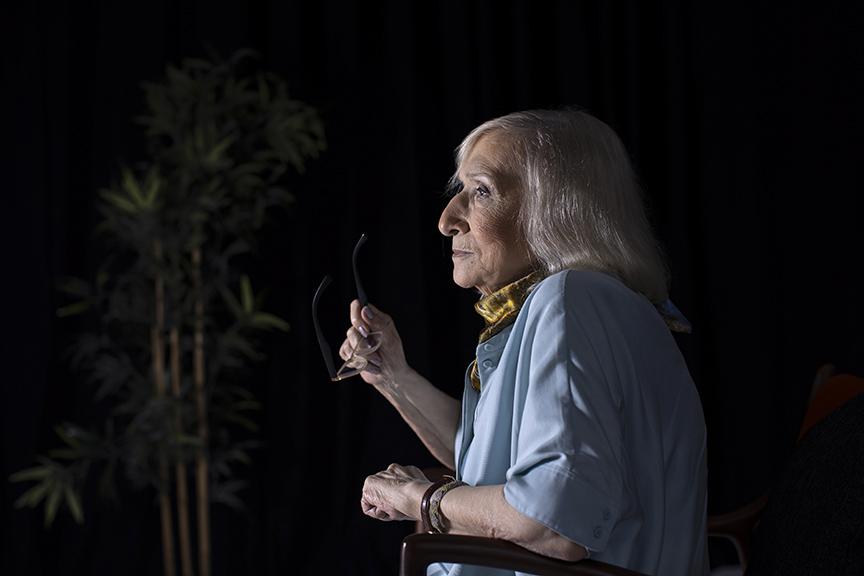
Alev Alatlı was born on 16 September 1944 in the Menemen district of İzmir. Her father, Ertuğrul Alatlı, was an officer in the Turkish Armed Forces, and her mother was Fürüzan Alatlı. Due to her father’s profession, she spent her childhood in various cities across Türkiye. Her family placed great importance on her education. When her father was appointed as a military attaché to Japan, she continued her secondary education in that country.

Alev Alatlı (AA)
Alev Alatlı began her primary education in Ankara and continued in Karaköse (present-day Ağrı) and Erzurum. She graduated from Erzurum Culture Institute Primary School. She completed her middle school years at Namık Kemal Middle School in Ankara. Due to her father’s overseas assignment, Alatlı moved to Japan and finished her high school education at the American School in Japan. During this period, she attained advanced proficiency in English and also learned Japanese.
She continued her university education in Türkiye, studying Economics and Statistics at Middle East Technical University. After graduation, she won a Fulbright scholarship and went to the United States. At Vanderbilt University, she pursued a master’s degree in development economics and econometrics. During this time, she began questioning the relationship between economics and philosophy. She subsequently conducted research in philosophy and theology at Dartmouth College, focusing intensively on social sciences, intellectual history, and the philosophy of religion.
After returning to Türkiye, she worked as a lecturer at the Faculty of Economics, Istanbul University. She later served as an economist at the State Planning Organization. During her academic years in the United States, she participated in joint psycholinguistic research projects conducted with the University of California.
In the 1980s, she played an active role in the publication of Bizim English, a magazine developed for teaching English based on Turkish. She served as vice president of the Turkish Writers Cooperative (YAZKO). In addition to her academic work, she held active roles in the establishment processes of educational institutions.
In 2005, she was appointed chair of the Board of Trustees of Kapadokya Vocational School. When the institution was later transformed into Kapadokya University, she continued serving as chair of the Board of Trustees. During her tenure at the university, she led initiatives focused on quality in education, professional development, and regional development.

Alev Alatlı (AA)
Alev Alatlı’s literary career began with intellectual texts. Her first work, Aydın Despotizmi, offered a critical perspective on the concept of intellectual authority in Türkiye. She subsequently began producing significant works in the novel genre.
She gained recognition in literary circles with her first novel, Yaseminler Tüter mi Hâlâ?. This novel explores themes such as Turkish-Greek relations, the Cyprus issue, and identity search. Her novel İşkenceci sheds light on the political and social upheavals in Türkiye’s recent history.
The four-volume series Or’da Kimse Var mı? (Viva La Muerte, Nuke Türkiye, Valla Kurda Yedirdin Beni, O.K. Musti Türkiye Tamamdır) is among her most comprehensive works. In this series, she examines relations between the West and Türkiye, the responsibility of intellectuals, the crisis of values, and questions of civilization.
With her two-volume novel series Schrödinger’s Cat (Kâbus ve Rüya), she developed a narrative that interrogates science, technology, ethics, and the condition of humanity. In the series Gogol’un İzinde, she addresses Russia’s cultural, historical, and intellectual transformation.
In addition to her literary output, she has produced intellectual works. Books such as Safsata Kılavuzu, Hollywood’u Kapattığım Gün, Batı’ya Yön Veren Metinler, and Bize Yön Veren Metinler are evaluated in the fields of cultural history and philosophy.
During her studies in the United States, Alev Alatlı established close ties with Palestinian students and participated in awareness campaigns regarding the Palestinian cause. She translated Edward Said’s works The Question of Palestine and Covering Islam into Turkish.
In 1986, she was awarded the “Freedom Medal” by Yasser Arafat, leader of the Palestine Liberation Organization, in recognition of her contributions to the Palestinian struggle. The medal was secretly delivered to her by Arafat while he was in exile in Tunisia. Along with the medal, a traditional Palestinian dress was also sent to her.
Alev Alatlı’nın Ardından (TRT 2)
Alev Alatlı’s novels feature a broad temporal narrative structure. Events are presented through transitions between past and present. Her narratives employ intertextuality, stream of consciousness, interior monologue, and multiple perspectives. Her style weaves together Ottoman Turkish, colloquial language, and foreign terms.
Her novels frequently address themes such as history, identity, culture, civilization, religion, language, morality, and politics. Female characters are powerfully positioned in her narratives. Her storytelling draws attention to the impact of social transformation on the individual.
In her works, she focuses on the influence of Western thought systems, Türkiye’s modernization process, education, language, values, faith, and moral crises.
Alev Alatlı treats literature as an intellectual instrument. In the Or’da Kimse Var mı? series, she narrates social disintegration, cultural fragmentation, and identity issues. The Schrödinger’s Cat series examines the impact of scientific advancements on individuals and society. The Gogol’un İzinde series stands out through its exploration of intercultural transition, loss of historical memory, and identity.
The series Batı’ya Yön Veren Metinler and Bize Yön Veren Metinler aim to systematically present the intellectual foundations of civilizational history. These works include texts from both Western and Islamic thought traditions.

Alev Alatlı (AA)
• 1986: Turkish Writers Union Novel Award for İşkenceci• 1986: Palestine “Freedom Medal”• 2006: Mikhail A. Sholokhov 100th Anniversary Literary Award (Russia)• 2014: Presidency Culture and Art Grand Award (Literature category)• 2015: Honorary Doctorate from Bülent Ecevit University• 2018: Honorary Doctorate from Süleyman Demirel University
She spent her final years in Kapadokya, continuing her duties at Kapadokya University until the end of her life. She passed away in Istanbul on 2 February 2024. Her funeral prayer was held at Eyüp Sultan Camii, and she was buried in the Mihrişah Valide Sultan Haziresi.
Alev Alatlı produced work over many years in academic, cultural, and literary fields. In her writings, she addressed language, history, culture, education, identity, philosophy, and human relationships through a holistic approach. Her initiatives at Kapadokya University supported regional development in education.
Her translations, novels, essays, and intellectual works have left a lasting imprint across diverse areas of Türkiye’s intellectual life.
Alev Alatlı. "Alev Alatlı Hakkında." Alev Alatlı Eğitim ve Sağlık Vakfı. Accessed October 20, 2025. https://alevalatli.org.tr/hakkinda/.
Alev Alatlı. "Ebediyete İrtihal." Alev Alatlı Eğitim ve Sağlık Vakfı. Accessed October 20, 2025. https://alevalatli.org.tr/ebediyete-irtihal/.
Anadolu Ajansı. "Eserleriyle düşünce dünyasına ışık tutan mütefekkir, yazar Alev Alatlı." Accessed October 20, 2025. https://www.aa.com.tr/tr/kultur/eserleriyle-dusunce-dunyasina-isik-tutan-mutefekkir-yazar-alev-alatli/3125977.
Anadolu Ajansı. "Yazar Alev Alatlı: "Türkiye'nin önünde ağır bir dönemeç var." Accessed October 20, 2025. https://www.aa.com.tr/tr/turkiyenin-cinarlari/yazar-alev-alatli-turkiyenin-onunde-agir-bir-donemec-var/2930775.
TRT 2. "Alev Alatlı’nın Ardından." TRT 2 YouTube Channel. Accessed October 20, 2025. https://www.youtube.com/watch?v=A08AwKzhhDM
Türk Edebiyatı İsimler Sözlüğü. "Alev Alatlı." Türk Edebiyatı İsimler Sözlüğü. Accessed October 20, 2025. https://teis.yesevi.edu.tr/madde-detay/alatli-alev.

Date and Place of Birth | 16 September 1944, Menemen (İzmir, Türkiye) | ||||||||
|---|---|---|---|---|---|---|---|---|---|
Date and Place of Death | 2 February 2024, Istanbul | ||||||||
Mother’s and Father’s Names | Fürüzan Alatlı – Ertuğrul Alatlı | ||||||||
Nationality | Republic of Türkiye | ||||||||
Profession and Title | Writer, economist, thinker, translator, academic | ||||||||
Education | Philosophy and Theology Studies: Dartmouth College Development Economics and Econometrics Master's: Vanderbilt University Economics and Statistics Undergraduate: ODTÜ High school: The American School in Japan (Tokyo) Middle school: Ankara Namık Kemal Middle School Elementary school: Erzurum Kültür Kurumu Elementary School | ||||||||
Academic and Professional Positions | Teaching Assistant - Istanbul University Faculty of Economics, Economist - State Planning Organization, Vice President - YAZKO, Board of Trustees Chairperson - Kapadokya Vocational School and Kapadokya University | ||||||||
Literary Works | Aydın Despotism, Do the Jasmines Still Sing?, The Torturer, Is Anyone There? (4 volumes: Viva La Muerte, Nuke Türkiye, Valla Kurda Yedirdin Beni, O.K. Musti Türkiye Tamamdır), Schrödinger's Cat (2 volumes: Nightmare, Dream), In the Footsteps of Gogol series | ||||||||
Intellectual Works | Guide to Fallacy, The Day I Shut Down Hollywood, Texts Orienting the West, Texts Orienting Us | ||||||||
Palestine Studies | Translations of Edward Said (The Question of Palestine, Covering Islam), 1986 Palestine Freedom Medal – awarded by Yaser Arafat | ||||||||
Award(s) | 1986 Türkiye Yazarlar Birliği Novel Prize (The Torturer) 2018 Süleyman Demirel University Honorary Doctorate 2015 Bülent Ecevit University Honorary Doctorate 2014 Presidency Culture and Art Grand Prize 2006 Mikhail A. Sholokhov Literature Prize (Russia) 1986 Palestine Freedom Medal | ||||||||
Burial | Mihrişah Valide Sultan Tomb, Eyüp – Istanbul | ||||||||
Educational Background
Professional and Academic Activities
Literary and Intellectual Works
Palestine Studies and the Freedom Medal
Style, Narrative, and Themes
Intellectual and Cultural Approach in Her Works
Awards and Honors
Final Years and Death
Scope and Legacy of Her Work