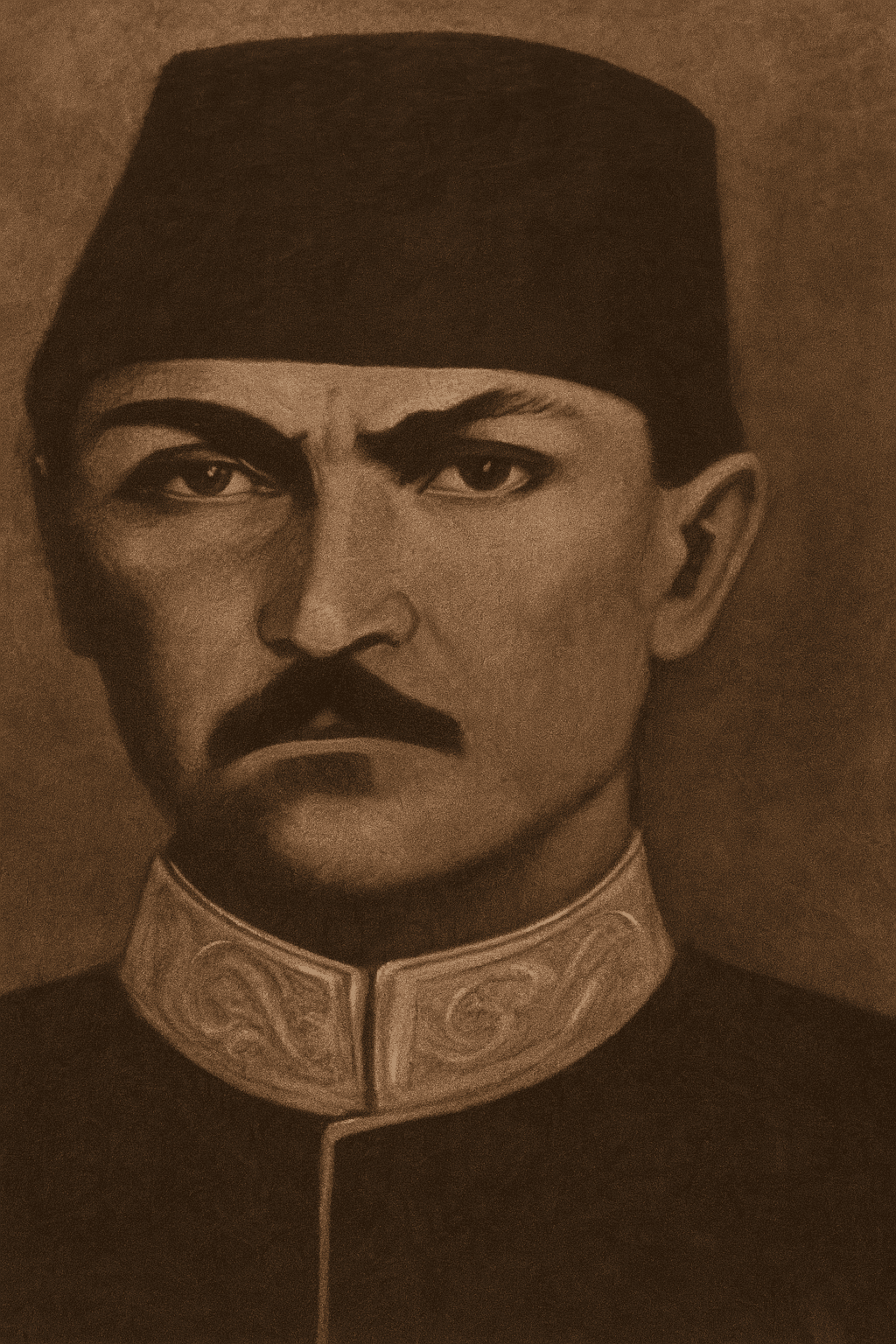
Birth | (1839), Thessaloniki, Ottoman Empire | ||||||||
|---|---|---|---|---|---|---|---|---|---|
Death | (1889 or 1893), Thessaloniki, Ottoman Empire | ||||||||
Profession(s) | Civil servant (Waqf and Customs) Merchant | ||||||||
Military Service | Asakir-i Milliye Battalion, Second Lieutenant | ||||||||
Father’s Name | Kızıl Hafız Ahmet Efendi | ||||||||
Mother(s) | Ayşe Hanım | ||||||||
Spouse(s) | Zübeyde Hanım | ||||||||
Child | Fatma Naciye Makbule Mustafa Ömer Ahmet | ||||||||
Education | Abdi Hafız Mahalle Mektebi | ||||||||
Grave | Hortacı Süleyman Camii Haziresi, Thessaloniki, Greece | ||||||||
Ali Rıza Efendi is the father of Mustafa Kemal Atatürk. He lived in Thessaloniki during the final period of the Ottoman Empire and was an educated, enlightened, and patriotic individual. He served in the Evkaf and Customs administrations, held the rank of first lieutenant in the Asakir-i Milliye Battalion, and engaged in commerce.
Ali Rıza Efendi was born in Thessaloniki in 1839. His family belonged to the “Kocacık Yörüks,” a group relocated from the Konya/Karaman region to Rumelia. His father was Kızıl Hafız Ahmet Efendi, and his mother was Ayşe Hanım. Belonging to an educated family, Ali Rıza Efendi received his early education at the Abdi Hafız School in Thessaloniki.
After completing his education, he worked as a clerk in the Evkaf Administration. He later transferred to the position of customs guard, serving in Papazköprüsü (Çayağzı) near Thessaloniki. In 1876, he voluntarily joined the newly established Thessaloniki Asakir-i Milliye Battalion and served with the rank of first lieutenant (birinci mülazım). This battalion was one of the volunteer units formed during the Ottoman-Serbian War and had been sent to Istanbul.
From the 1880s onward, Ali Rıza Efendi left public service and entered the timber trade. However, his commercial activities suffered severe losses due to pressure from Greek bands: his timber was burned, and his workers were threatened. In subsequent years, he turned to salt trading but also incurred losses in this venture. The economic hardships and security threats he faced deeply affected him.
Ali Rıza Efendi married Zübeyde Hanım in 1870 or 1871. They had six children: Fatma, Ahmet, Ömer, Mustafa, Makbule, and Naciye. However, most of the children died in infancy. Mustafa (born 1881) and Makbule (born 1885) were the two who lived to adulthood. He initially lived with his father’s family and later moved with his own family to a house in Şehzade Mahallesi.
Ali Rıza Efendi was a forward-thinking father who insisted that his son receive a modern education. He removed Mustafa from the neighborhood school and enrolled him in the Şemsi Efendi School, one of the leading modern educational institutions of the time. Ali Rıza Efendi told him, “To become a man, one must read and learn.” His influence played a significant role in Atatürk’s development.
Following his departure from public service, the failures of his business ventures led to severe depression. He later contracted intestinal tuberculosis and, after a three-year illness, died in Thessaloniki in either 1889 or 1893. He is buried in the cemetery of Hortacı Süleyman Efendi Camii in Thessaloniki.
Güler, Ali. “Ali Rıza Efendi (1839-1893).” *Atatürk Ansiklopedisi*. Date Published: May 22, 2024. Accessed July 6, 2025. https://ataturkansiklopedisi.gov.tr/detay/179/Ali-R%C4%B1za-Efendi-(1839-1893)
Millî Eğitim Bakanlığı. "Ali Rıza Efendi Kimdir?" 100. Yıl Aile Ortaokulu. Accessed July 6, 2025. https://100yilareortaokulu.meb.k12.tr/icerikler/ali-riza-efendi-kimdir_7940979.html
Ministry of National Education of the Republic of Türkiye. "Atatürk’ün Ailesi." *meb.gov.tr*. Accessed July 6, 2025. https://www.meb.gov.tr/ataturk/Hayati/Ailesi

Birth | (1839), Thessaloniki, Ottoman Empire | ||||||||
|---|---|---|---|---|---|---|---|---|---|
Death | (1889 or 1893), Thessaloniki, Ottoman Empire | ||||||||
Profession(s) | Civil servant (Waqf and Customs) Merchant | ||||||||
Military Service | Asakir-i Milliye Battalion, Second Lieutenant | ||||||||
Father’s Name | Kızıl Hafız Ahmet Efendi | ||||||||
Mother(s) | Ayşe Hanım | ||||||||
Spouse(s) | Zübeyde Hanım | ||||||||
Child | Fatma Naciye Makbule Mustafa Ömer Ahmet | ||||||||
Education | Abdi Hafız Mahalle Mektebi | ||||||||
Grave | Hortacı Süleyman Camii Haziresi, Thessaloniki, Greece | ||||||||
Family Origins and Birth
Administrative and Military Service
Commercial Activities and Challenges
Family Life and Children
View on Education and Modernization
Illness and Death