


This article was automatically translated from the original Turkish version.
+1 More
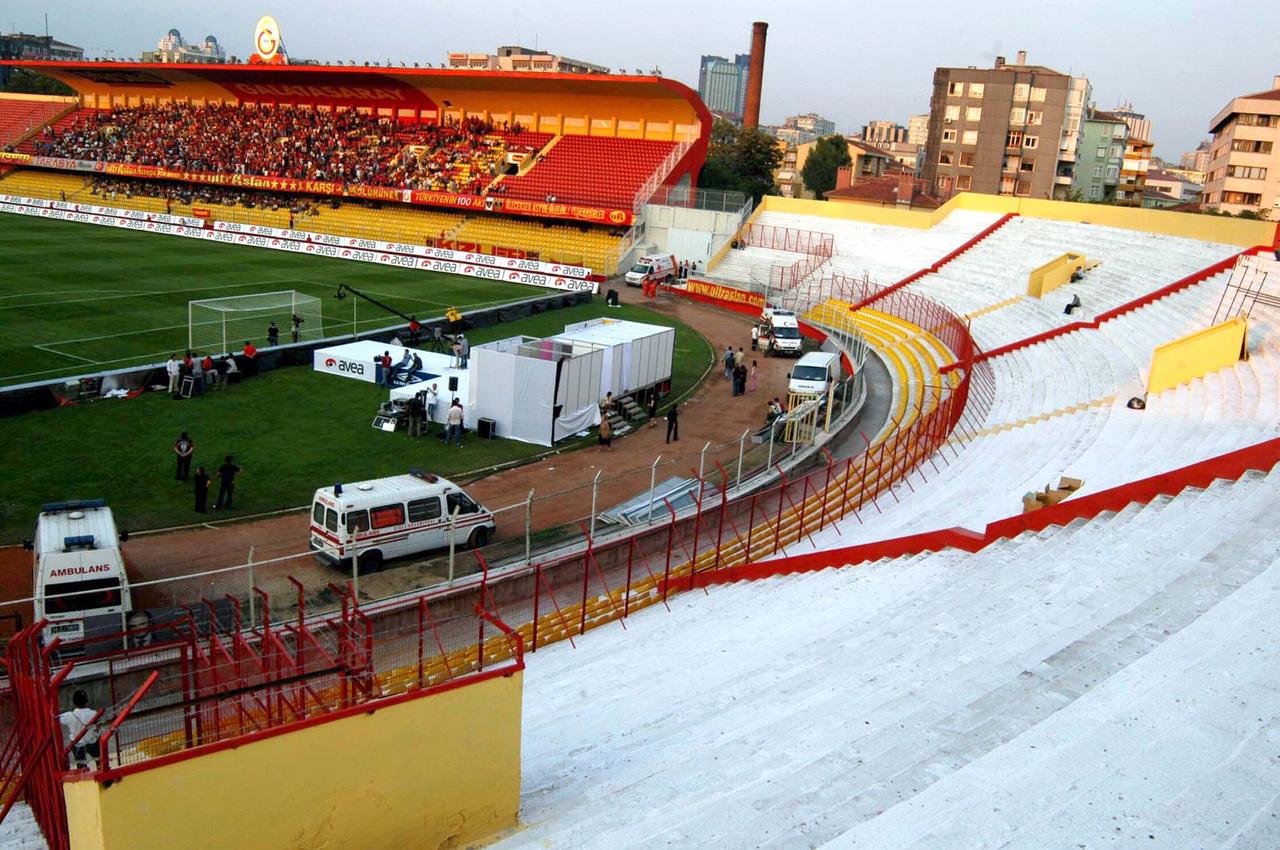
Ali Sami Yen Stadium (AA)
Location | Istanbul Şişli Mecidiyeköy | ||||||||
|---|---|---|---|---|---|---|---|---|---|
Area/Type | Sports Facility / Stadium | ||||||||
Associated Structure | Galatasaray Sports Club | ||||||||
Capacity | 35,000 (Opening), 22,000 (seated after 1993) | ||||||||
History | December 20, 1964 (Opening) - January 11, 2011 (Closure) | ||||||||
Ali Sami Yen Stadium was a sports facility located in the Mecidiyeköy neighborhood of Istanbul’s Şişli district, serving as the primary home ground of Galatasaray Sports Club intermittently between 1964 and 2011. Named after the club’s founder Ali Sami Yen, the stadium was demolished in 2011, and the club’s matches were relocated to a new sports complex built in Seyrantepe.
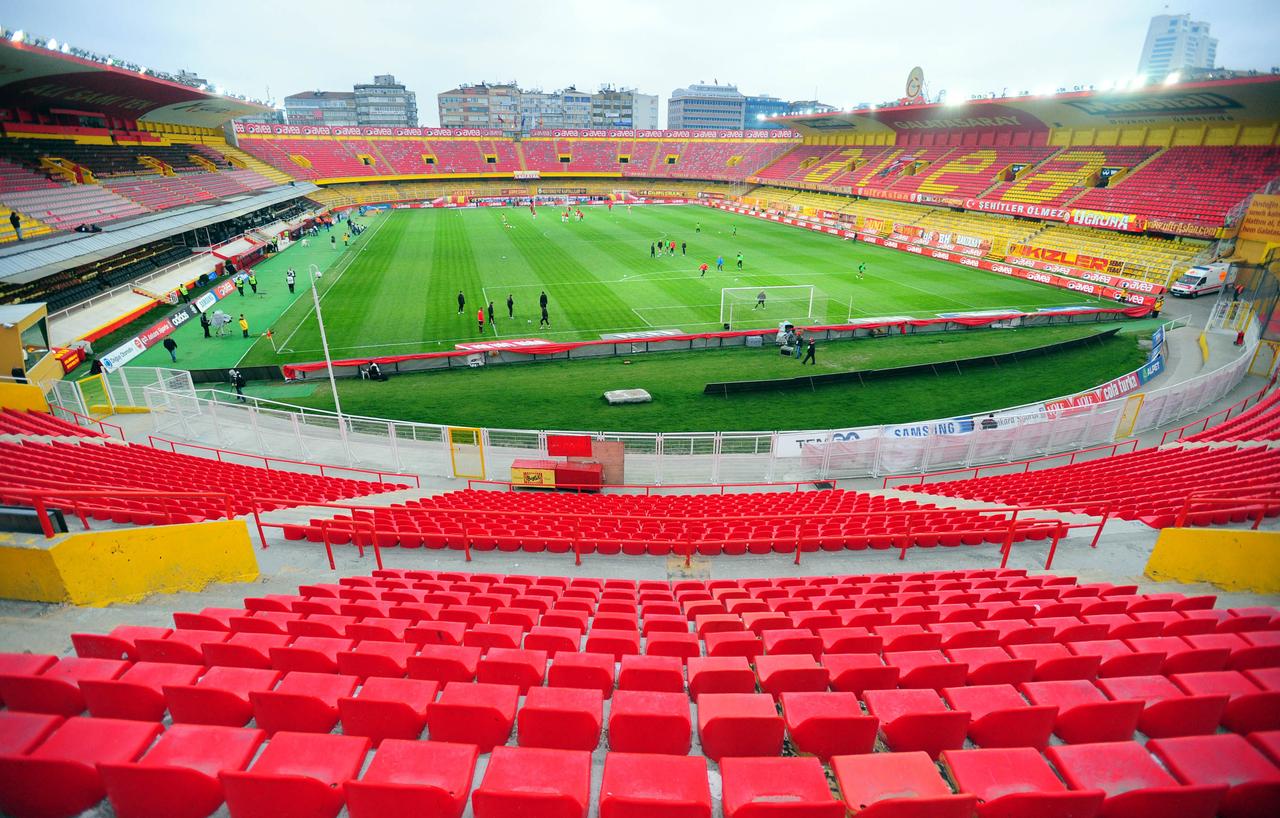
Ali Sami Yen Stadium (AA)
Papazın Çayırı, one of the earliest football fields in Istanbul, and the Taksim Stadium opened in 1919, were the city’s early football centers. With the demolition of Taksim Stadium in 1939 as part of urban redevelopment, Istanbul clubs were compelled to seek new venues. During this period, Galatasaray began efforts in the early 1930s to resolve land ownership issues and construct a permanent stadium.
In 1933, under the initiative of then club president Ali Haydar Barşal, discussions were held with state authorities to allocate a plot of land in Mecidiyeköy to Galatasaray. Although land clearance work began in 1936, the project stalled due to financial constraints. In 1940, during the presidency of Tevfik Ali Çınar, the land was leased to Galatasaray for 30 years at a symbolic annual rent of one lira, with the commitment to build a modern stadium and a cycling velodrome. Construction progressed slowly due to the hardships of World War II, and in 1943, under the presidency of Osman Dardağan, work began on a more modest facility. The stadium opened in 1945 with a small open stand and an earthen pitch, but its distance from the city center and strong winds limited its long-term usability, prompting the club to prefer İnönü Stadium for several years.
Construction accelerated in 1959 after the General Directorate of Physical Education took over the project, and in 1961, exclusive usage rights were formally granted to Galatasaray. The stadium’s official opening took place on 20 December 1964 with a friendly match between the Turkey and Bulgaria national teams, which ended 0-0. On opening day, overcrowding occurred as attendance exceeded capacity, and a gas stove belonging to a mobile vendor ignited, causing a crush. Eighty-one people were injured when iron railings collapsed, and spectator Andon Hristodolis died in hospital on 5 January 1965.
Following the incident, matches were suspended for a period due to the stadium’s lack of official licensing. After necessary improvements were completed, the stadium reopened for football on 29 September 1965 with a match between Galatasaray and FC Sion.
Ali Sami Yen Stadium consisted architecturally of four main stands. The numbered and covered stands were located along the long sides of the stadium, while the New Open and Old Open stands were situated behind each goal.
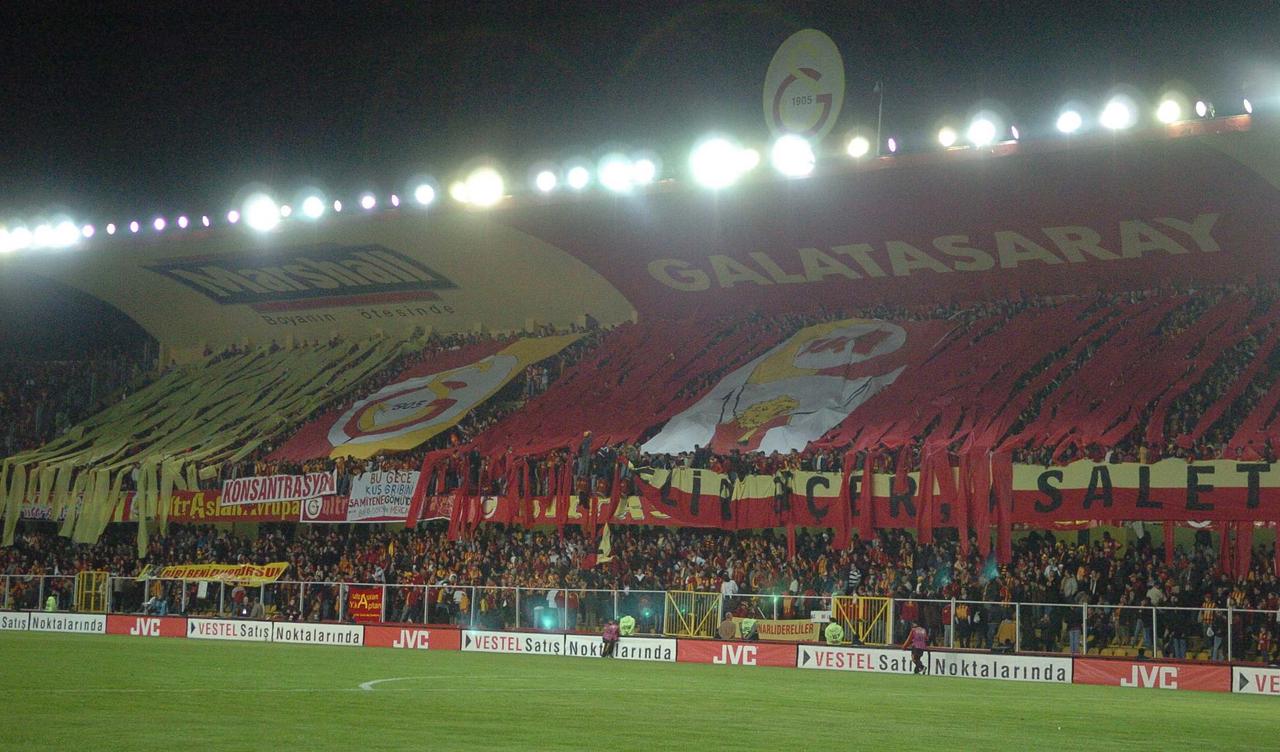
Ali Sami Yen Stadium (AA)
The stadium’s initial capacity was approximately 35,000. In 1993, the complete transition to seated seating reduced capacity to 22,000. That same year, the stadium’s lighting system was upgraded and Türkiye’s first combined ticketing system was introduced.
Throughout its history, the stadium was closed multiple times for infrastructure projects and maintenance:
From the 1990s onward, Ali Sami Yen Stadium gained international recognition due to Galatasaray’s results in European competitions. The club recorded victories at the stadium against teams such as Real Madrid (3-2, 2001), AC Milan (3-2, 1999 and 2-0, 2001), FC Barcelona (2-1, 1994), Manchester United, Juventus, Paris Saint-Germain (1-0, 2000), PSV Eindhoven (2-0, 2001), and Leeds United (2-0, 2000).
The acoustic pressure created by spectators, combined with banners welcoming opponents with the theme “Welcome to Hell,” was noted by numerous sports figures. Ryan Giggs, wearing a Manchester United jersey, described the atmosphere as “the entire stadium erupting into song simultaneously after a moment of silence.” Referees Graham Poll and Pierluigi Collina emphasized the intensity of the crowd noise, while managers Alex Ferguson and Javier Irureta highlighted the stadium’s challenging environment for visiting teams.
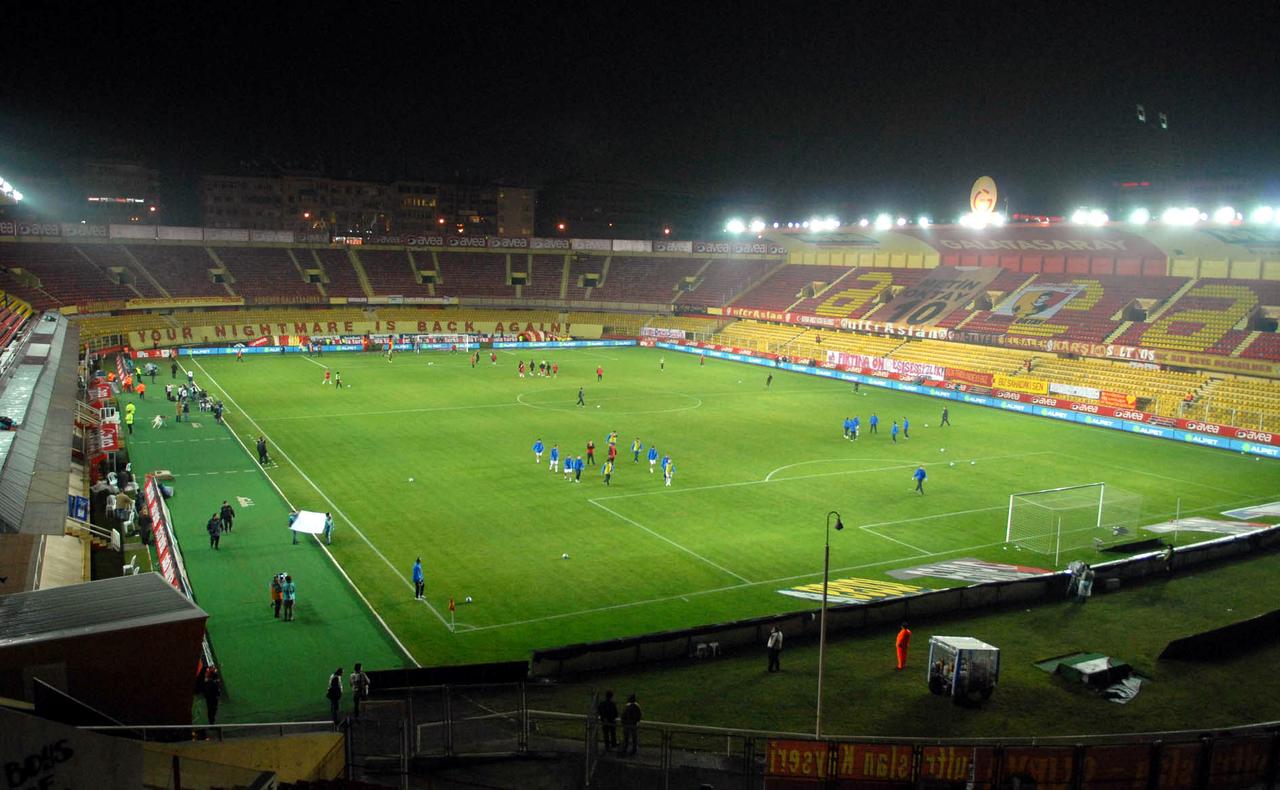
Ali Sami Yen Stadium (AA)
Throughout its long history, the stadium hosted numerous derbies and national team matches:
As Mecidiyeköy evolved into one of Istanbul’s busiest commercial and residential centers, state authorities opposed expansion of the stadium on its existing site. In response, Galatasaray’s management commissioned a Canadian architectural firm in 1997 to design a new 50,000-seat multi-purpose stadium to replace the existing facility.
In the 2003-2004 season, following renewed interest in the old project, the stadium was emptied and demolished, and Galatasaray began playing its matches at Atatürk Olympic Stadium. However, due to wind issues, access difficulties, and the failure to secure funding for the new project, the club returned to Ali Sami Yen Stadium after one season. After prolonged searches, a decision was made to build a new sports complex in Seyrantepe (Aslantepe) in cooperation with TOKİ, with the tender launched in 2007 (Turk Telekom Arena).
The final official football match at Ali Sami Yen Stadium was played on 11 January 2011, in the Ziraat Türkiye Kupası, when Galatasaray defeated Beypazarı Şekerspor. On 12 January 2011, a farewell ceremony was held, after which the stadium’s lights were permanently turned off. Demolition began shortly thereafter.
Anadolu Ajansı. "İnfografik." Accessed March 8, 2026. https://www.aa.com.tr/tr/info/infografik/35057
BeIN Sports Türkiye. "Bir Tarihe Elveda." Accessed March 8, 2026. https://beinsports.com.tr/fotogaleri/bir-tarihe-elveda/4
Galatasaray Spor Kulübü. “Ali Sami Yen Stadı.” Accessed March 8, 2026. https://www.galatasaray.org/s/ali-sami-yen-stadi/21
Galatasaray. “1933’ten 2011’e Ali Sami Yen.” Accessed March 8, 2026. https://www.galatasaray.org/haber/futbol/1933ten-2011e-ali-sami-yen/34471
Galatasaray.no. "Ali Sami Yen Stadı." Accessed March 8, 2026. https://www.galatasaray.no/tr/tarih/ali-sami-yen-stadi/
Today Sports. "Ali Sami Yen's Farewell Day." Accessed March 8, 2026. https://web.archive.org/web/20110407005206/http://spor.bugun.com.tr/spor-haber/137590-ali-sami-yen-e-veda-gunu-haberi.aspx
Ali Sami Yen Stadium (AA)
Location | Istanbul Şişli Mecidiyeköy | ||||||||
|---|---|---|---|---|---|---|---|---|---|
Area/Type | Sports Facility / Stadium | ||||||||
Associated Structure | Galatasaray Sports Club | ||||||||
Capacity | 35,000 (Opening), 22,000 (seated after 1993) | ||||||||
History | December 20, 1964 (Opening) - January 11, 2011 (Closure) | ||||||||
No Discussion Added Yet
Start discussion for "Ali Sami Yen Stadium" article
Historical Background and Establishment Process
Official Opening and Incidents
Architectural Structure and Stand Features
Closures and Renovation Periods
International Matches and Stadium Atmosphere
Derbies and National Team Statistics
Search for a New Stadium and Farewell