
This article was automatically translated from the original Turkish version.
+1 More
Altunköprü Massacre, is a mass execution event that occurred on 28 March 1991 in the town of Altunköprü, located in the Kirkuk province of Iraq, during which numerous Turkmen civilians were killed by soldiers loyal to the Baath regime. The massacre took place amid the political and military chaos that followed Gulf War, and it left long-lasting effects on the demographic and social structure of the region, where the Turkmen population was concentrated.
Altunköprü is a settlement with a significant Turkmen population, situated approximately 40–44 km north of Kirkuk along the Kirkuk–Erbil road. It derives its name from a historic bridge over the small Zap River. The region occupies a strategic position at the intersection of major transportation routes between Kirkuk and Erbil.
According to the 1957 census, the Turkmen population in Altunköprü was predominant. Changes in the region’s demographic composition occurred over successive periods in Iraq due to Arabization policies and later Kurd migration campaigns.

Altunköprü Massacre (Anadolu Agency)
The process that began with Iraq’s invasion of Kuwait on 2 August 1990 continued in early 1991 with military operations led by a coalition under the auspices of the United Nations. Following the declaration of a ceasefire on 28 February 1991, uprisings were launched in northern Iraq by Kurdish groups and in southern Iraq by Shia communities.
By 18 March 1991, Peshmerga forces entered Kirkuk and launched attacks against institutions and structures loyal to the Baath regime, briefly gaining control of the city. In an effort to alter the city’s demographics and eliminate Turkmen settlement rights, they looted and burned records from land registry and population offices. However, on 26 March, Iraqi Army units dispatched from Baghdad re-entered Kirkuk and, after intense fighting, regained control of the city.
Following the reassertion of Baath regime control in Kirkuk, between 27 and 28 March 1991, the town of Altunköprü was subjected to intense artillery bombardment by Iraqi security forces, and all entry and exit points were sealed. According to witness accounts, heavy weapons and artillery fire continued throughout the preceding night.
On the morning of 28 March, Baath regime soldiers went door to door, rounding up adult males and boys. Those who resisted were shot at or physically assaulted. Those detained were loaded onto military vehicles and taken to unknown locations.
According to various sources, the number of Turkmen killed ranged between 100 and 135. These individuals were taken to the Dibis Kayabaşı site and executed. Of them, 55 were from Kirkuk, 15 from Tazehurmatu, 32 from Altunköprü, and 13 from other Turkmen settlements. Witness statements indicate that most of the detained civilians were lined up and shot on the same day.
Among the victims were children and elderly people; at least 25 individuals under the age of 18 were executed. One of the youngest victims was 8-year-old Cemil Süleyman Abbas, as recorded in official accounts.
Documentary on the Altunköprü Massacre (Presidency of Turks Abroad and Related Communities)
The bodies were accidentally discovered by shepherds 15 to 22 days after the massacre, and the site of the mass burial was identified near the Dibis district. Burial procedures were carried out with difficulty due to official prohibitions on funeral rites imposed by the ruling regime at the time.
Witness accounts reveal the impact of the massacre on the civilian population:
Murat Tatar, who was seven years old at the time, described soldiers raiding homes and forcibly taking adult men:
"We could not sleep until dawn because of the sound and fear of the heavy weapons, artillery, and shells used by Saddam Hussein’s soldiers to enter the town. In the morning, soldiers who controlled the town went door to door, collecting men. The soldiers who entered our neighbor’s house took our elders by force. They shot those who resisted in the feet."【1】
Nebil Bayız, who was 17 at the time of the massacre, lost his uncle, two brothers, two brothers-in-law, and six cousins. He recounted that soldiers had conducted continuous artillery bombardment until dawn, then gathered the men:
"There was intense and unrelenting artillery shelling. We left our home late at night; some of us took refuge in my uncle’s house and others in my aunt’s. Shells fell on houses, shops, and every part of the town. Early in the morning, soldiers who entered the town arrested every adult male and boy they encountered, loaded them onto military vehicles, and took them to unknown destinations. We learned where our relatives’ bodies were buried but were denied permission to retrieve them. After great difficulty we obtained permission, but then a ban was imposed on mourning ceremonies. They also prohibited washing and shrouding the bodies brought into the town. We buried the corpses in the large cemetery in Altunköprü. Because of these bans, families who lost loved ones could not hold mourning ceremonies."
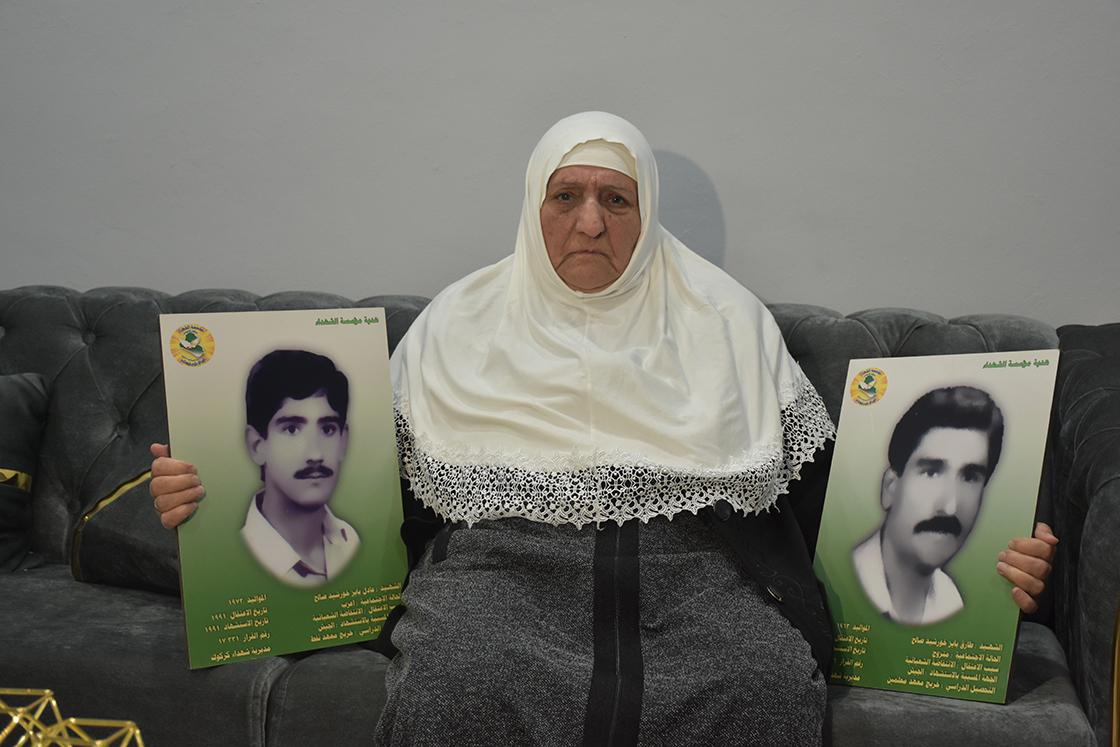
Nebil Bayız (Anadolu Agency)
Şengül Nalbant stated that four members of her family were killed, and that soldiers entered the basement where they had taken shelter and took the men away:
“Soldiers kicked open the door of the basement where we were hiding. My mother stepped forward and tried to explain the situation, but they did not listen and used force. They took the men and left. We heard nothing more from them. Later we learned they had been killed. We then retrieved their bodies, brought them to Altunköprü, and buried them in graves we dug ourselves. After the massacre, many widows and orphaned children remained.”【2】
These testimonies demonstrate that the victims of the massacre were entirely civilians.
The massacre left lasting effects on the Turkmen community in Altunköprü and its surroundings. Families were shattered, leaving many orphans and widows. Security concerns among the local population intensified, forcing some families to flee.
Of the From the Turkmen executed, only 77 identities could be confirmed. The process of exhuming the mass graves and identifying the victims spanned many years.
Every year on 28 March, commemoration ceremonies are held in Altunköprü and other regions of Iraq. These ceremonies include Quran recitations, visits to the mass graves, and the reading of the names of those killed in the massacre.
Representatives of the Iraqi Turkmen Front and civil society organizations describe the Altunköprü Massacre as a pivotal historical turning point firmly embedded in the collective memory of the Turkmen community.
The Altunköprü Massacre was an event that occurred during the 1991 period of civil war-like conditions in Iraq, in which a large group of entirely civilian Turkmen were killed. The massacre left deep marks on the collective memory of the Turkmen identity in the region and has maintained its presence in social memory through annual commemorative programs. Witness accounts, documents, and various research studies confirm that the massacre took place within the context of a large-scale military operation targeting civilian settlements.
[1]
Anadolu Ajansı. “Altunköprü Türkmen Katliamı Hafızalardan Silinmiyor.” Anadolu Ajansı. Erişim 17 Kasım 2025. https://www.aa.com.tr/tr/dunya/altunkopru-turkmen-katliami-hafizalardan-silinmiyor-/1432445
[2]
YTB. “Altunköprü Katliamı 30’uncu Yıl Dönümünde Anıldı.” Yurtdışı Türkler ve Akraba Topluluklar Başkanlığı (YTB). Erişim 17 Kasım 2025. https://ytb.gov.tr/haberler/altunkopru-katliami-30uncu-yil-donumunde-anildi


No Discussion Added Yet
Start discussion for "Altunköprü Massacre" article
Geographical and Demographic Position of Altunköprü
Historical Background
Gulf War and Uprisings in Iraq
Developments in Kirkuk
The Massacre
Encirclement of Altunköprü
Gathering of the Civilian Population
Execution of the Massacre
Mass Execution
Child and Elderly Victims
Discovery of Mass Graves
Witness Testimonies
Consequences of the Massacre
Demographic Impact
Mass Graves and Identification of Victims
Commemoration Ceremonies and Collective Memory