


This article was automatically translated from the original Turkish version.
+2 More
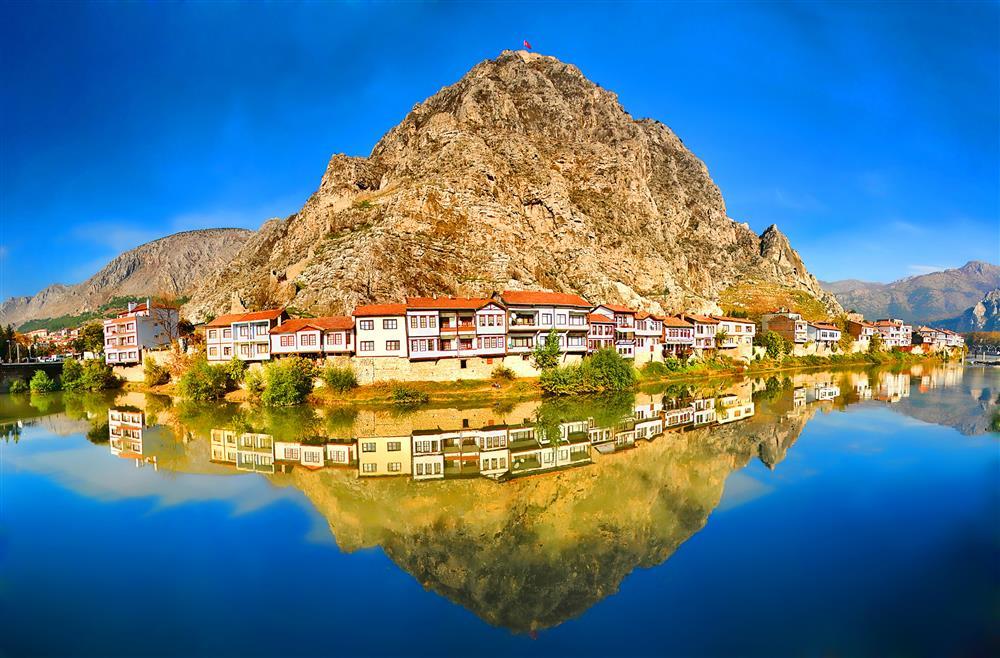
Amasya Yalıboyu Houses are among the most historic and cultural structures in Black Sea Region province of place in Türkiye, located along the Amasya area. These traditional Ottoman-era houses, aligned along the banks of the Yeşilırmak River, attract attention with their architectural design and historical fabric.

(Hakan USLU, Yalıboyu Sunset).
Amasya Yalıboyu Houses belong to a category of traditional Turkish houses that reflect characteristic features of Ottoman architecture. These houses are examples constructed using the Hımış and Bağdadî techniques. Mostly built in the 19th century, these structures feature timber-framed walls filled with wattle and daub, wide eaves, hipped or barrel roofs, and whitewashed facades. Roofs are typically covered with alaturka tiles. Some houses include rooms known as “şahnişin” located atop the roof.
The ground floors of the houses are built on stone foundations while the upper floors are predominantly wooden. The houses are generally courtyard-based and include gardens. Within the courtyard, a water well and a January can be found. In some houses, a oven structure has been built to meet the household’s bread needs. The second floors are typically constructed with overhanging, cantilevered projections. This design creates a spatial link within the house’s layout while also increasing usable area. The outward-facing second floors contain more windows than the lower levels. The windows are predominantly of the “giyotin” type, a kohl style. Wooden latticework screens are placed in front of the windows to prevent visibility from the outside.
These houses, usually arranged in contiguous rows and built as single or two-story structures, are most notably distinguished by their wide cantilevered windows facing the Yeşilırmak River. These windows not only enhance the aesthetic appeal but also allow residents to comfortably view the river and surrounding landscape.
Amasya Yalıboyu Houses are among the most important architectural elements to have survived to the present day while preserving the historical texture of the city. Reflecting Amasya’s rich cultural heritage from the Ottoman period, these houses are now used for today tourism purposes. Some have been converted into museum guesthouses, restaurants, café or boutique hotel.
Especially with nighttime lighting, the visual effect they create along the Yeşilırmak River has become a popular recording spot for photographers and tourists. The area where the houses are located, alongside historic landmarks such as Amasya Castle, the Külliye of Bayezid II, and King Rock Tombs, like other significant structures, enhances the city’s tourism potential.

(Hacı Hüseyin ŞAHİN, Yalıboyu Night View).
Due to their historical and cultural value, the Amasya Yalıboyu Houses were placed under protection by the Cultural and Natural Heritage Preservation Board through Decision No. 2863 and the Law on the Protection of Natural Heritage, specifically by its decision dated 05.05.1992 and numbered 2364, and have since undergone various restoration efforts. These restoration works, carried out while preserving the original architectural character of the buildings, ensure the continued existence of the houses over the years.
The Yalıboyu Houses are recognized as one of the finest examples of traditional Ottoman civil architecture and are considered among Amasya’s symbol structures.

No Discussion Added Yet
Start discussion for "Amasya Yalıboyu Houses" article
History and Architectural Features
Cultural and Touristic Significance
Conservation and Restoration Efforts