


This article was automatically translated from the original Turkish version.
+2 More
Ancient City of Comana
Location | Gümenek Mevkii Tokat Türkiye | ||||||||
|---|---|---|---|---|---|---|---|---|---|
Period | Hellenistic Roman Imperial period | ||||||||
Monumental Materials | Columns of Ali Paşa Camii, Ulu Camii, and Garipler Camii in Tokat | ||||||||
Architecture | remains of the temenos wall tetrastyle temple | ||||||||
Status | principality polis (city-state) temple state | ||||||||
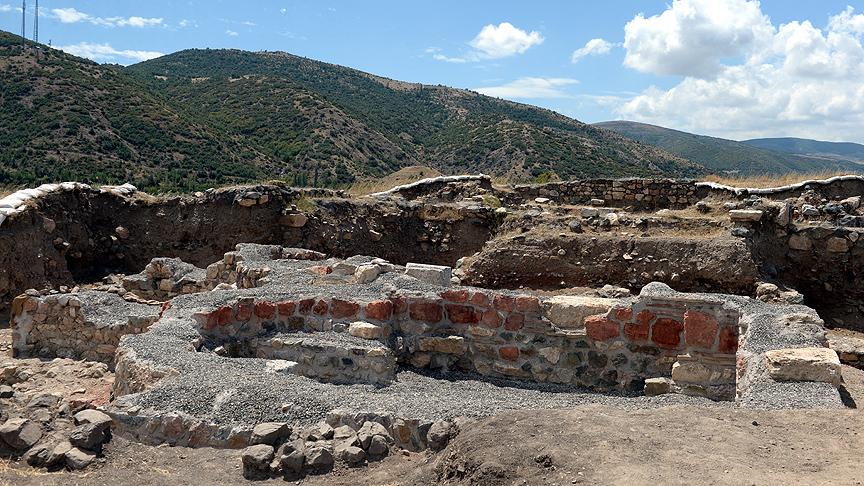
Ancient City of Komana, is located approximately 9 km northeast of the city center of Tokat in Türkiye’s Black Sea Region. The city was built on a large hill at the Gümenek locality within the Yeşilırmak Valley. Thanks to its strategic position, it exerted control over the fertile plain surrounding it. It has been reported that the temple was connected to the other bank of the Yeşilırmak by a bridge that no longer exists, and one of the bridge’s piers was discovered in 2004 within a water regulator.

Komana Antik Kenti (TC.Kültür ve Turizm Bakanlığı)
Komana was a major cult center dedicated to the Mother Goddess Ma and one of the two great temple states in Hellenistic Anatolia. It also held the status of a polis (city-state) and functioned not only as a religious center but also as a commercial hub. During the period of the Kingdom of Pontus, Komana emerged as a significant religious and economic center. After Mithradates VI fled following the collapse of the Kingdom of Pontus, Komana was made a principality by Pompey in the 1st century BCE and granted to Archelaus.
After Archelaus was removed from office by Caesar, his son continued the administration; later, rulers appointed by the Romans including Lycomedes of Bithynia and administrators such as Medeius, Cleon, and Dyteutus assumed control. Following Dyteutus’s death, Komana was incorporated into the Roman province of Pontus Galaticus. During the reign of Emperor Maurice Tiberius (582–602 CE), it was fully integrated into the imperial territories. During this period, the political power of the priests diminished, but their religious functions continued.

Komana Antik Kenti (AA)
As a temple state in the Cappadocian style, Komana possessed a large sanctuary dedicated to the Mother Goddess Ma. Although direct archaeological remains of the temple’s architecture are limited, depictions of a tetrastyle temple appear on coins from the reigns of Caracalla, Septimius Severus, and Trajan. Additionally, it is believed that eight gray columns used in the Ali Paşa Camii in the city center of Tokat, as well as columns and column capitals in the Ulu Camii and Garipler Camii, originally belonged to this temple.
The economy of Komana was largely based on agriculture. During the Roman period, Pompey granted the city an additional 2 schoeni of land, and Caesar or Antony later added another 4 schoeni. These lands expanded the city’s territory to the east, south, and west, increasing its diameter to approximately 4 kilometers. Under Augustus, Komana reached the status of a civitas; when it was incorporated into the province of Pontus Galaticus around 34–35 CE, Magnopolitis was likely included within this administrative structure.
The religious rituals and festivals centered on the cult of the Mother Goddess Ma played a vital role in the social and economic life of Komana. As a sacred city, it welcomed pilgrims from various regions throughout the year. Festivals and markets organized in the city attracted people from all over Anatolia.
Archaeological work at the Ancient City of Komana began in 2004 under the “Komana Pontika Archaeological Research Project,” a collaboration between Middle East Technical University (METU), the Ministry of Culture and Tourism, and the Tokat Governorship. Excavations initiated after surface surveys in the Gümenek Hamamtepe area revealed settlement traces, churches, and burial grounds dating to the Byzantine, Seljuk, Danişmend, and Ottoman periods.
In 2020 excavations, an Egyptian scarab seal bearing the name of Thutmose III was discovered. Dating to 1479–1425 BCE, this artifact is regarded as an important archaeological find for understanding Komana’s international relations and trade networks.

Komana Antik Kenti (AA)
With the spread of Christianity, the religious structure based on the cult of the Mother Goddess Ma lost its significance and the temple ceased its function. The city’s central role shifted to the smaller settlement of Daximon. The name Komana continued to be mentioned alongside Hierocaesareia until the time of Titus. The gradual decline of the city and the end of its religious functions marked the dissolution of the temple state.
Anadolu Ajansı. "Komana Antik Kentinin Tarihi 1300 Yıl Geriye Gitti." Accessed May 29, 2025.https://www.aa.com.tr/tr/kultur-sanat/komana-antik-kentinin-tarihi-1300-yil-geriye-gitti/1281243.
Culture Portal. "Komana Antik City." Türkiye Kültür Portalı. Accessed May 29, 2025.https://www.kulturportali.gov.tr/turkiye/tokat/gezilecekyer/komana-antk-kent.
Tokat Valiliği. "Medeniyetler Bahçesi: Tokat." Tokat Valiliği Resmî Web Sitesi. Accessed May 29, 2025.https://www.tokat.gov.tr/-medeniyetler-bah-esi-tokat-.
Türkiye Cumhuriyeti İçişleri Bakanlığı İletişim Başkanlığı. “Tokat’taki Komana Pontika Antik Kentinde Mısır Mührü Bulundu.” İletişim Bakanlığı. Accessed May 29, 2025.https://www.iletisim.gov.tr/turkce/yerel_basin/detay/tokattaki-komana-pontika-antik-kentinde-misir-muhru-bulundu.

Ancient City of Comana
Location | Gümenek Mevkii Tokat Türkiye | ||||||||
|---|---|---|---|---|---|---|---|---|---|
Period | Hellenistic Roman Imperial period | ||||||||
Monumental Materials | Columns of Ali Paşa Camii, Ulu Camii, and Garipler Camii in Tokat | ||||||||
Architecture | remains of the temenos wall tetrastyle temple | ||||||||
Status | principality polis (city-state) temple state | ||||||||
No Discussion Added Yet
Start discussion for "Ancient City of Comana" article
Historical Development and Political Status
Temple and Religious Structure
Territory and Economic Structure
Cult and Festivals
Archaeological Research and Excavations
Komana in Later Periods