This article was automatically translated from the original Turkish version.
+1 More
Location | Tufanbeyli Türkiye Adana | ||||||||
|---|---|---|---|---|---|---|---|---|---|
Ancient Name | Comana (Cilician Comana) | ||||||||
Period(s) | Hittite Byzantine Roman | ||||||||
Roman Period Name | Hieropolis | ||||||||
Located within the boundaries of Şar Village in the Tufanbeyli district of Adana Province, Türkiye, the Şar Ören Yeri is an important settlement site known in antiquity as “Comana.” This archaeological site, which hosted the Hittite, Roman and Byzantine civilizations, has been officially registered as a First-Degree Archaeological Site. Throughout history it has served as a center of religious, cultural and political significance, owing to its sacred structures, burial grounds, monuments and architectural remains.
.jpg&w=1280&q=75)
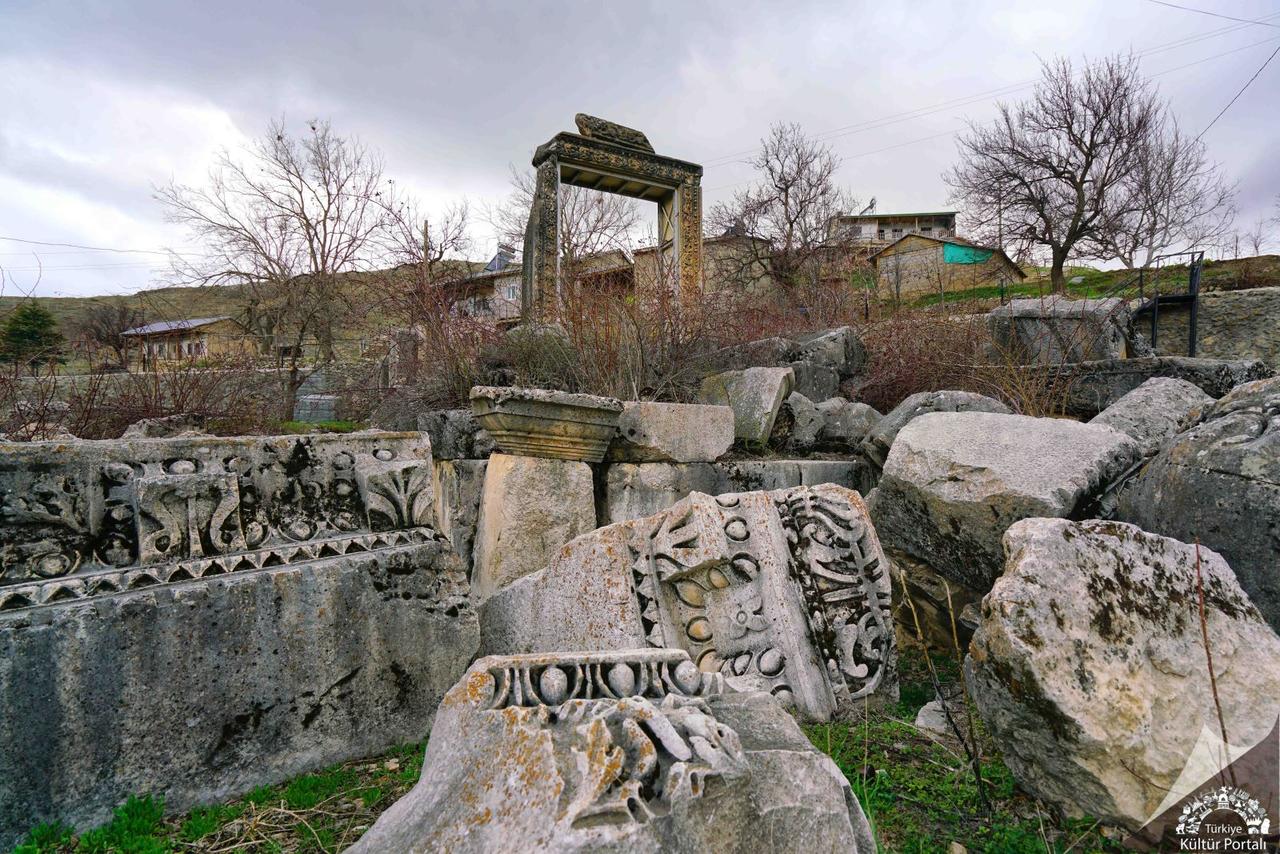
Şar Ören Yeri (Türkiye Culture Portal)
Şar Ören Yeri lies approximately 20 kilometers north of the Tufanbeyli district center and just a few kilometers from the border of Kayseri Province. Throughout history, Comana, one of the major cities of the Cilicia region, functioned as a sacred center for religious ceremonies, particularly during the Hittite period. During the Roman era the city was known as Hieropolis and retained its importance in the Byzantine period. The region also bears traces of the Late Assyrian, Crusader and Arab periods. The ancient city, built on both banks of the Sarız Çayı river, occupied a strategic position along transit routes used by numerous civilizations throughout history.
Şar Ören Yeri has been declared a First-Degree Archaeological Site by the Ministry of Culture and Tourism. This status ensures the protection of the area and provides legal safeguards for its cultural heritage structures and remains. The site is of significant interest both for scientific archaeological research and for tourism.
The majority of the architectural remains in the area date to the Roman period. The open-air theater is among the most prominent structures from this era. Built into the slope, the theater retains portions of its stepped seating. Some of the vaulted chambers beneath the seating area lie buried underground and are believed to have served as shelters or supporting structures. Additionally, numerous architectural elements such as columns, column capitals, architraves and arches are scattered across the site.
Alakapı is one of the most significant structures to have survived from the ancient city of Şar. This monumental structure, standing six meters high and three meters wide, is constructed from large marble blocks. It is thought to have served as the entrance to the Temple of the Great Goddess. Although most other parts of the temple have been largely destroyed, the stone elements surrounding Alakapı, adorned with floral motifs, provide important clues regarding the original decorative program and architectural scale of the structure.
Kırık Kilise is one of the most important structures at Şar Ören Yeri. Its foundation dates to a funerary monument from the 4th century CE, which was later converted into a cross-shaped church. The apse of the building bears the most distinctive traces of this conversion process. Excavations conducted in 1968 uncovered a tomb and funerary inscription belonging to the Roman senator Aurelius Claudius Hermodorus.
The structure, restored in 2015 by the Ministry of Culture and Tourism, has a rectangular plan and was built using cut stone. The western façade, with its W-shaped layout and triple window system, exhibits characteristics considered precursors to late antique Cappadocian church architecture. In the ramp leading to the entrance, medieval gravestones were found repurposed as paving stones. The church was constructed as a two-story building and appears as either single or double story depending on the slope of the terrain to the east and west.
Surrounding the ancient city are numerous tumuli, rock-cut tombs and necropolis areas. These structures constitute important archaeological evidence reflecting burial customs and belief systems of the ancient period. The distribution of these burial monuments across various points of the city demonstrates that Comana was not merely a religious center but also a major burial ground.
Cultural Heritage and Museums General Directorate. "Adana Şar Ören Yeri." (PDF). Accessed June 25, 2025. https://kvmgm.ktb.gov.tr/Eklenti/90811,adana-sar-oren-yeripdf.pdf?0.
T.C. Ministry of Culture and Tourism. "Adana Şar Ören Yeri." *Müze.gov.tr* (PDF). Accessed June 25, 2025. https://muze.gov.tr/s3/MysFileLibrary/Adana%20%C5%9Ear%20%C3%96ren%20Yeri-548733fc-622a-4642-8fc4-967fc433b9af.pdf.
T.C. Ministry of Culture and Tourism. "Şar Örenyeri." *Kültür Portalı*. Accessed June 25, 2025. https://www.kulturportali.gov.tr/turkiye/adana/gezilecekyer/sar-orenyeri.
T.C. Ministry of Culture and TourismAdana İl Directorate of Culture and Tourism. “Şar Ören Yeri (Ancient City of Sar).” *adana.ktb.gov.tr*. Accessed June 25, 2025. https://adana.ktb.gov.tr/TR-236371/sar-oren-yeriancient-city-of-sar.html.
Yalçınkaya, Nermin Merve. “Şar Örenyeri.” *Türkiye Turizm Ansiklopedisi*. Accessed June 25, 2025. https://turkiyeturizmansiklopedisi.com/sar-orenyeri.

Location | Tufanbeyli Türkiye Adana | ||||||||
|---|---|---|---|---|---|---|---|---|---|
Ancient Name | Comana (Cilician Comana) | ||||||||
Period(s) | Hittite Byzantine Roman | ||||||||
Roman Period Name | Hieropolis | ||||||||
No Discussion Added Yet
Start discussion for "Sharr (Komana) Archaeological Site" article
Location and History
Archaeological Site Status
Roman Period Remains
Alakapı
Kırık Kilise
Other Structures and Necropolises