
This article was automatically translated from the original Turkish version.
Original Name(s) | Andrei Rublev | ||||||||
|---|---|---|---|---|---|---|---|---|---|
Type(s) | Historical drama art and faith-centered period film | ||||||||
Country / Year | USSR / 1966 | ||||||||
Director(s) | Andrei Tarkovsky | ||||||||
Screenplay(s) | Andrei Tarkovsky Andrei Konchalovsky | ||||||||
Main Actors | Anatoly Solonitsyn (Andrei Rublev), Ivan Lapikov (Kirill), Nikolai Grinko (Daniil Chorny), Nikolai Burlyaev (Boriska), Irma Raush (Durochka) | ||||||||
Language(s) | Russian | ||||||||
Notable Achievement | Cannes 1969 FIPRESCI Prize (winner), multiple festival selections and retrospective programs from the 1970s to the 2020s | ||||||||
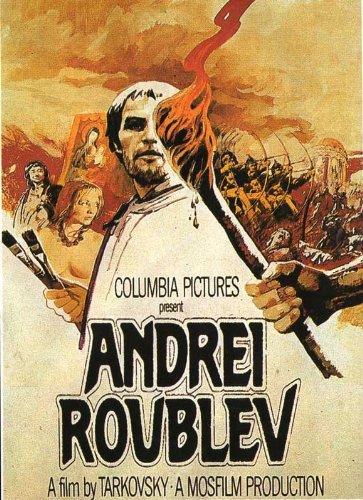
Andrei Rublev is a feature-length historical and philosophical film that interprets the life and era of 15th-century Russian icon painter Andrei Rublev as a cinematic fresco. The film explores the relationships between art, faith, violence, and power alongside the fragility of personal creation. Although the narrative follows a biographical trajectory, it does not adhere to a rigid chronology; instead, it expands the historical panorama with moral and metaphysical questions. The cinematic language establishes an observational distance rather than a decorative one, seeking a balanced rhythm between religious and ritual imagery and the harshness of everyday life. Long takes, wide framing, and mise-en-scène that evoke the passage of time transform the narrative’s weight into a visual-auditory unity. Color and light define the spirit of space and the climate of the era. Ultimately, the film transcends the story of a single life to become an inquiry into culture and conscience.
The film debates the question of “what service art owes” through both secular authority and spiritual responsibility. The tension between craft and inspiration extends from the character’s inner world to the social stage. Spaces—the cathedral, the workshop, the steppe, the village square, and occupied towns—make thematic poles visible. Moments of violence and silent contemplation are placed side by side, continuously eroding the boundaries of expression. Dialogue is restrained, inviting the viewer to reflect rather than delivering definitive judgments. The film unites the material of painting—wood, pigment, and metal—with cinema’s time and light to generate an interdisciplinarily resonant effect. Thus, the period drama becomes an “anatomy of art.”
The story centers on the years when the monk-painter Andrei struggles to find his place amid the political and military unrest and religious divisions shaking the land. Caught between destruction and creation, he questions whether the evil and suffering he witnesses can be transformed into aesthetic expression. Episodes resembling a journey unfold through scenes spread across different regions of the country, each representing another trial of the artistic conscience. Internal conflicts and external pressures produce a two-way flow that determines the narrative’s rhythm. The story seeks not a final triumph but the conditions under which the act of creation may endure. In this way, it emerges not as a simple biography but as a moral and aesthetic examination of the spirit of its age.
The timeline advances through disruptions and leaps; some sections function like independent short films, yet thematic connections remain continuous. Symbols and rituals render the characters’ inner worlds visible through concrete objects and situations. Scenes of violence are presented in their raw reality without aestheticization; conversely, silence becomes prominent during moments of prayer, workshop activity, and labor. Individual stories—of craftsmen, clergy, peasants, and invaders—enrich the broader panorama. The ending leaves open a cautious possibility that art and faith may regenerate from ruins. Thus, the film does not answer the question “what is art for?” but shares its weight.

A scene from the film Andrei Rublev (IMDb)
The visual design constructs space as a character through wide frames and long takes. The camera’s patient movements record both the devastation left by war and the heavy rhythm of rituals. The interplay of light and shadow confronts the confined pressure of interior spaces with the open horizons of the exterior. The use of color reinforces the period’s atmosphere through textures such as mud, smoke, and metallic gleam; icon scenes produce a distinct resonance within this unity. In sound design, crowd noise, bells, wind, and natural sounds are positioned as dramatic elements. Editing prioritizes intra-scene continuity, and the rhythm is kept flexible enough to allow space for reflection. This whole constitutes a consistent, unshowy formal coherence.
Art direction and costume faithfully convey the material culture of the era with unexaggerated detail. The organization of workshops, foundries, and places of worship renders visible the physical labor of craftsmanship. In crowd scenes, the movement of people and the use of space evoke a sense of witnessing. In scenes of violence and occupation, the combination of camera, editing, and sound heightens impact without resorting to rhetorical embellishment. Music is used sparingly; silence and ambient sounds become the primary carriers of dramatic tension. The technical synthesis bridges historical epic and meditative cinema, transforming the film into a timeless experience.
Anatoly Solonitsyn portrays Andrei Rublev with a restrained, composed, and resolute demeanor, avoiding grand gestures. Solonitsyn’s gaze and breathing rhythm convey the character’s spiritual burden independently of dialogue. The character appears on screen as a consciousness torn between faith and art. The delayed yet intense delivery of reactions ensures the emotional continuity of scenes. This portrayal makes visible the film’s intellectual backbone and anchors its center. The fragility of the artist’s identity takes shape as human resilience against brutality and chaos.
Ivan Lapikov as Kirill sharpens the ethical debate as a contrasting figure oscillating between envy, disillusionment, and ambition. Nikolai Grinko as Daniil Chorny embodies the cautious face of master-apprentice, brotherhood, and professional solidarity. Nikolai Burlyaev as Boriska materializes the passionate resistance and creative yearning of the young craftsman; this figure is positioned as the hope of art’s future. Irma Raush as Durochka incarnates the motifs of silence and purity, reminding viewers of human vulnerability amid violence. All supporting roles—clergy, invaders, peasants, and craftsmen—complete the social layers of the panorama. Ensemble acting maintains a balanced tone, avoiding theatrical excesses.
Critics emphasize that the film opens the triangle of art, faith, and violence to discussion without reducing it to a single thesis. The narrative tests the legitimacy and cost of artistic production against historical ruptures and personal moral conflicts. Visual compositions bring together the order of painting and the chaos of war and violence within the same frame. The rhythm of long takes invites the viewer to contemplate and remain within the scene. The balance of sound and silence generates a profound resonance without overemphasizing emotional direction. Thus, the film achieves an original equilibrium between epic narration and meditative cinema. The relationship between craft and inspiration becomes visible through scenes, avoiding didacticism.
Interpretations also read the characters’ trapped states between the “sacred” and the “secular” through the arrangement of space and objects. The craftsman’s world materializes in scenes of the workshop and foundry; places of worship recall the discipline of ritual. The unadorned presentation of violence is recorded without aestheticization, preserving an ethical distance. Through the figure of the young craftsman, a door opens to the possibility of the future. The film’s ending is interpreted not as an absolute conclusion but as a cautious affirmation of “the continuity of art.” This totality lifts the film beyond a period-specific “biography” into a timeless act of reflection.
The film won the FIPRESCI Prize (Non-Competition) at the 1969 Cannes Film Festival; this recognition is a significant indicator of its early international reception. In the years that followed, the film appeared in the programs of festivals such as Venice (2023), Berlin (2002), Locarno (1972, 2011), Toronto (2010), Rotterdam (1985), Telluride (1979), and São Paulo (2011). It also gained visibility at selections by the BFI London (1972) and New York Film Festival (1973), and was screened at Karlovy Vary (2000), Istanbul Film Festival (2009), and !f Istanbul (2009). More recently, screenings have been added in Moscow (2022), Sydney (1974), and Mumbai (2014). This itinerary demonstrates the film’s sustained festival circulation over decades and its continued assertion of “classic” status through programming.
The 1969 FIPRESCI award at Cannes symbolizes the film’s first international recognition, while its appearances at Locarno, Rotterdam, Telluride, and Toronto from the 1970s to the 2010s enabled access to successive generations of audiences. From the 2000s onward, inclusion in major festivals such as Berlin and Karlovy Vary signals the film’s re-entry into circulation through restoration and retrospective programs. Screenings in Istanbul and along the New York–London axis have kept global cinema discourse engaged with the film. New programs in the 2010s and 2020s present frameworks where historical value meets contemporary debate. The complete record of awards and screenings confirms the film’s enduring presence and diversity within the festival landscape.
Andrei Rublev. Directed by Andrei Tarkovsky. Produced by Mosfilm. Moscow: Mosfilm Studios, 1966. Film.
IMDb. "Andrei Rublev (1966)." Accessed October 9, 2025. https://www.imdb.com/title/tt0060107/
IMDb. "Andrei Rublev – Awards." Accessed October 9, 2025. https://www.imdb.com/title/tt0060107/awards/?ref_=tt_ov_at_op_awd
IMDb. "Andrei Rublev – Full Cast & Crew." Accessed October 9, 2025. https://www.imdb.com/title/tt0060107/fullcredits/?ref_=tt_ov_at_pop_cst
IMDb. "Andrei Rublev – Media Index." Accessed October 9, 2025. https://www.imdb.com/title/tt0060107/mediaindex/?ref_=tt_ov_at_pop_ph
IMDb. "Andrei Rublev – Plot Summary." Accessed October 9, 2025. https://www.imdb.com/title/tt0060107/plotsummary/?ref_=tt_ov_at_pl_pl
IMDb. "Andrei Rublev – Release Info." Accessed October 9, 2025. https://www.imdb.com/title/tt0060107/releaseinfo/?ref_=tt_ov_at_dt_rdat
IMDb. “Andrei Rublev – Filming Locations.” Accessed October 9, 2025. https://www.imdb.com/title/tt0060107/locations/?ref_=tt_ov_at_dt_flmg
MUBI. "Andrei Rublev – Awards." Accessed October 9, 2025. https://mubi.com/tr/films/andrei-rublev/awards
MUBI. "Andrei Rublev." Accessed October 9, 2025. https://mubi.com/tr/tr/films/andrei-rublev
Osmanoğlu, Ömer. “Tarkovsky Sinemasında Sanat ve Maneviyat İlişkisi: Andrei Rublev Üzerine Bir İnceleme.” TRT Akademi 3, no. 5 (January 2018). Accessed October 9, 2025. https://dergipark.org.tr/tr/download/article-file/423917

Original Name(s) | Andrei Rublev | ||||||||
|---|---|---|---|---|---|---|---|---|---|
Type(s) | Historical drama art and faith-centered period film | ||||||||
Country / Year | USSR / 1966 | ||||||||
Director(s) | Andrei Tarkovsky | ||||||||
Screenplay(s) | Andrei Tarkovsky Andrei Konchalovsky | ||||||||
Main Actors | Anatoly Solonitsyn (Andrei Rublev), Ivan Lapikov (Kirill), Nikolai Grinko (Daniil Chorny), Nikolai Burlyaev (Boriska), Irma Raush (Durochka) | ||||||||
Language(s) | Russian | ||||||||
Notable Achievement | Cannes 1969 FIPRESCI Prize (winner), multiple festival selections and retrospective programs from the 1970s to the 2020s | ||||||||
No Discussion Added Yet
Start discussion for "Andrei Rublev (Film)" article
Subject and Narrative Structure
Production and Technical Features
Actors and Characters
Critical Evaluation
Awards and Screenings