+2 More

Anne Frank was a Jewish girl born on 12 June 1929 in Frankfurt am Main who migrated to the Netherlands and was forced to go into hiding with her family in Nazi-occupied Amsterdam during the Second World War.
Anne Frank was born on 12 June 1929 in Frankfurt am Main as the second child of Otto Frank and Edith Frank.【1】 The family’s first child was Margot Frank. Otto Frank worked as a businessman in Frankfurt and lived as a member of a middle-class Jewish family.
In 1933 the Nazi Party under the leadership of Adolf Hitler came to power in Germany.【2】 During this period social and legal discrimination against Jews intensified. Due to the political and social conditions in Germany Otto Frank moved his family to Amsterdam in the Netherlands; shortly afterward Edith Frank and the children joined him in Amsterdam.【3】 The family settled in Amsterdam in 1933.【4】

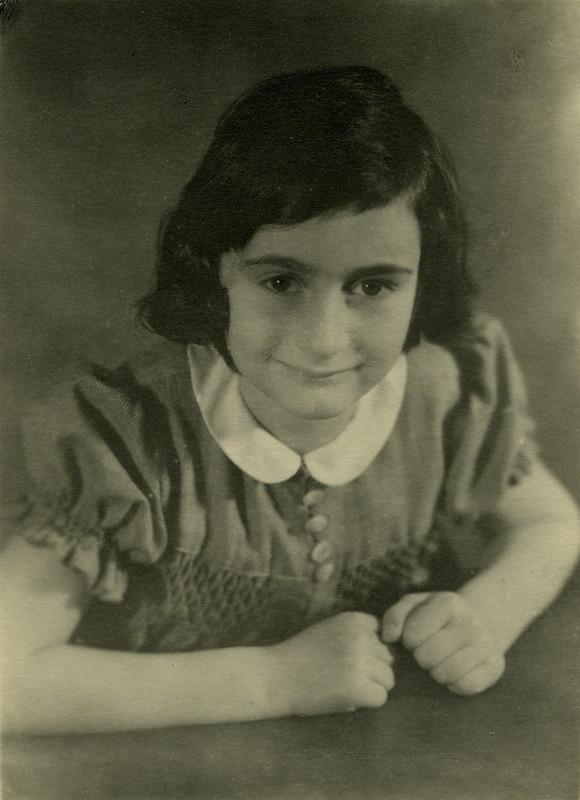
Anne Frank Portrait (Flickr)
Anne Frank’s father Otto Frank established a business in Amsterdam to support the family. After relocating to the Netherlands Anne and Margot enrolled in the Dutch education system and continued their primary and secondary schooling there. The family’s social structure and participation in education and professional life influenced their process of integration into Dutch society.
Anne Frank was born on 12 June 1929 in Frankfurt am Main and spent her early years in Germany.【5】 After moving to Amsterdam with her family in 1933 she continued her education there.【6】
In Amsterdam she enrolled in a Montessori primary school and completed her elementary education there. During her schooling she learned Dutch and continued her lessons in that language. She later began attending a secondary school.
On 10 May 1940, following Germany’s occupation of the Netherlands, discriminatory measures targeting Jewish students were implemented.【7】 As a result Anne Frank was transferred to a separate school exclusively for Jewish students.
Anne Frank’s interest in writing became evident during this period. On 12 June 1942, on her thirteenth birthday, she received a diary as a gift which later became the foundation of her published journal.【8】 Her initial entries were intended to record personal thoughts and daily events.
Her formal education was disrupted due to discriminatory policies under Nazi occupation and ended in 1942 when the family began their period of hiding.【9】
On 10 May 1940 Germany occupied the Netherlands.【10】 Following the occupation the Netherlands came under German civil administration.
From 1940 onward a series of incremental legal restrictions were imposed on the Jewish population.【11】 Under these measures Jews were banned from public service and dismissed from their government positions. Access to public spaces such as cinemas theatres parks and sports facilities was restricted.
Discriminatory practices were also introduced in education; Jewish students were required to leave regular schools and attend institutions exclusively for Jewish pupils. Anne Frank attended the Jewish High School as a result of these regulations.
Registration and identification procedures were implemented to identify Jews; beginning in 1942 Jews were required to wear a yellow Star of David on their clothing.【12】 Additionally Jews were prohibited from using bicycles restricted from public transportation and forbidden from leaving their homes outside designated hours.
These legal measures were expanded in 1942 alongside policies leading to the forced deportation of Jews to labor camps.【13】 The issuance of a call-up notice to Margot Frank in 1942 to report to a labor camp was decisive in the Frank family’s decision to go into hiding.
In July 1942 Margot Frank received a call-up notice to report to a labor camp in Germany.【14】 Following this development the Frank family put their hiding plan into action. On 6 July 1942 the family moved to a concealed annex at 263 Prinsengracht in Amsterdam where Otto Frank’s business was located.【15】 This space later became known as the Secret Annex.
The hiding area was located at the rear of the business premises and separated from the front by a movable bookcase. Shortly after the Franks moved in Hermann van Pels Auguste van Pels and their son Peter van Pels joined them. In November 1942 dentist Fritz Pfeffer also became part of the group.【16】 Thus eight people lived together in the same space during the hiding period.
During the day the occupants had to remain silent due to the presence of workers in the business premises. Daily life was organized according to spatial limitations and security requirements. Food clothing and other basic necessities were provided by Otto Frank’s former employees. Among those who assisted were Miep Gies and other staff members of the business.
Anne Frank continued writing her diary throughout the hiding period. Her journal entries documented daily life in the annex relationships among the eight people living together and observations on the war. After hearing a radio broadcast by the Dutch government-in-exile in London in 1944 calling for the collection of documents related to the occupation she reviewed her writings and revised some sections.【17】
The hiding period ended on 4 August 1944 when the concealed annex was discovered and all eight people were arrested.【18】
Anne Frank began writing in the diary she received as a thirteenth birthday gift on 12 June 1942.【19】 The earliest entries were written shortly before the family went into hiding. After moving to the annex on 6 July 1942 she continued her diary entries regularly.【20】
The diary entries document daily life in the concealed annex at 263 Prinsengracht relationships among the eight people living together and the impact of wartime conditions on everyday existence. The writings include family interactions spatial constraints security measures and news received from the outside world.
Anne Frank addressed part of her diary entries to an imaginary recipient she named “Kitty.”【21】 The entries were structured as letters and dated.
In 1944 she heard a radio broadcast by the Dutch government-in-exile in London urging the collection of daily records and documents from the occupation period.【22】 Following this announcement Anne Frank began reviewing her existing diary entries and rewrote some sections. During this process she edited her writings with the intention of publishing them.
The diary consists of original handwritten notebooks and later revised texts. The writings cover the period from 12 June 1942 to 1 August 1944.【23】 Diary writing ended on 4 August 1944 when the hiding place was discovered.【24】
On 4 August 1944 the concealed annex at 263 Prinsengracht was discovered and the eight people hiding there were arrested.【25】 After their arrest the group was sent to the Westerbork transit camp in the Netherlands following detention in Amsterdam.
In Westerbork the Frank family and other hidden individuals were held in sections known as “punishment barracks.” On 3 September 1944 they were transported from Westerbork to the Auschwitz-Birkenau concentration camp.【26】 This deportation was recorded as the last train transport from the Netherlands to Auschwitz.
Upon arrival at Auschwitz-Birkenau men and women were separated. Otto Frank was sent to the men’s section while Anne Frank Margot Frank and Edith Frank remained in the women’s section. Edith Frank died in Auschwitz in January 1945.【27】
In late October 1944 Anne Frank and Margot Frank were transferred from Auschwitz-Birkenau to the Bergen-Belsen Concentration Camp in Germany.【28】 Conditions at Bergen-Belsen led to the spread of epidemics.
After the war Otto Frank returned to Amsterdam as the only surviving member of his family from Auschwitz.
In late October 1944 Anne Frank was transferred along with her sister Margot Frank from Auschwitz-Birkenau to the Bergen-Belsen Concentration Camp in Germany.【30】 At this time Bergen-Belsen operated as an overcrowded camp with severely inadequate hygiene conditions.
In early 1945 a typhus epidemic broke out in the camp.【31】 Anne Frank and Margot Frank both fell ill during this outbreak. It is reported that Margot Frank died shortly before Anne.
The Bergen-Belsen Concentration Camp was liberated by British forces on 15 April 1945.【33】 Anne Frank died shortly before the camp’s liberation.
Accessed November 26, 2025. https://www.aa.com.tr/tr/kultur/ahlatta-acilan-kurslarla-geleneksel-tas-isciligi-yasatiliyor/3116279.
Anne Frank House. “Who Was Anne Frank?” Accessed March 2, 2026. https://www.annefrank.org/en/anne-frank/who-was-anne-frank/
Anne Frank Trust UK. “Learn about Anne Frank.” Accessed March 2, 2026. https://www.annefrank.org.uk/learn-about-anne-frank
AnneFrank.com. "Anne Frank History." Accessed March 2, 2026. https://annefrank.com/history/
Biography.com Editors. “Anne Frank.” Biography.com. Accessed March 2, 2026. https://www.biography.com/authors-writers/anne-frank#who-was-anne-frank
Biography.com Editors. “Anne Frank: Early Life and Family.” Biography.com. Accessed March 2, 2026. https://www.biography.com/authors-writers/anne-frank#early-life-and-family
Biography.com Editors. “How Did Anne Frank Die?” Biography.com. Accessed March 2, 2026. https://www.biography.com/authors-writers/anne-frank#how-did-anne-frank-die
Eden Camp Modern History Museum. "Exploring the Life and Legacy of Anne Frank." Accessed March 2, 2026. https://edencamp.co.uk/blog/exploring-the-life-and-legacy-of-anne-frank/
National Women’s History Museum. “Anne Frank.” Accessed March 2, 2026. https://www.womenshistory.org/education-resources/biographies/anne-frank
Research History. "Anne Frank Biography." Accessed March 2, 2026. https://researchhistory.org/2012/03/06/anne-frank-biography/
United States Holocaust Memorial Museum. “Anne Frank: Biography.” Holocaust Encyclopedia. Accessed March 2, 2026. https://encyclopedia.ushmm.org/content/en/article/anne-frank-biography
gregerravik. Anne Frank House, Prinsengracht 263, Amsterdam [Flickr Photograph]. Flickr. Accessed March 3, 2026.
[1]
Biography.com Editors. “Anne Frank: Early Life and Family.” Biography.com. Erişim 3 Mart 2026. https://www.biography.com/authors-writers/anne-frank#early-life-and-family
[2]
AnneFrank.com. “Anne Frank History.” Erişim 3 Mart 2026. https://annefrank.com/history/
[3]
Anne Frank Trust UK. “Learn about Anne Frank.” Erişim 3 Mart 2026. https://www.annefrank.org.uk/learn-about-anne-frank
[4]
AnneFrank.com. “Anne Frank History.” Erişim 3 Mart 2026. https://annefrank.com/history/
[5]
Biography.com Editors. “Anne Frank: Early Life and Family.” Biography.com. Erişim 3 Mart 2026. https://www.biography.com/authors-writers/anne-frank#early-life-and-family
[6]
AnneFrank.com. “Anne Frank History.” Erişim 3 Mart 2026. https://annefrank.com/history/
[7]
Biography.com Editors. “How Did Anne Frank Die?” Biography.com. Erişim 3 Mart 2026. https://www.biography.com/authors-writers/anne-frank#how-did-anne-frank-die
[8]
Anne Frank House. “Who Was Anne Frank?” Erişim 3 Mart 2026. https://www.annefrank.org/en/anne-frank/who-was-anne-frank/
[9]
Biography.com Editors. “How Did Anne Frank Die?” Biography.com. Erişim 3 Mart 2026. https://www.biography.com/authors-writers/anne-frank#how-did-anne-frank-die
[10]
AnneFrank.com. “Anne Frank History.” Erişim 3 Mart 2026. https://annefrank.com/history/
[11]
Eden Camp Modern History Museum. “Exploring the Life and Legacy of Anne Frank.” Erişim 3 Mart 2026. https://edencamp.co.uk/blog/exploring-the-life-and-legacy-of-anne-frank/
[12]
Eden Camp Modern History Museum. “Exploring the Life and Legacy of Anne Frank.” Erişim 3 Mart 2026. https://edencamp.co.uk/blog/exploring-the-life-and-legacy-of-anne-frank/
[13]
Eden Camp Modern History Museum. “Exploring the Life and Legacy of Anne Frank.” Erişim 3 Mart 2026. https://edencamp.co.uk/blog/exploring-the-life-and-legacy-of-anne-frank/
[14]
Eden Camp Modern History Museum. “Exploring the Life and Legacy of Anne Frank.” Erişim 3 Mart 2026. https://edencamp.co.uk/blog/exploring-the-life-and-legacy-of-anne-frank/
[15]
Amsterdam.info. “Anne Frank.” Erişim 3 Mart 2026. https://www.amsterdam.info/anne-frank/
[16]
Biography.com Editors. “Anne Frank: Early Life and Family.” Biography.com. Erişim 3 Mart 2026. https://www.biography.com/authors-writers/anne-frank#early-life-and-family
[17]
Anne Frank House. “Who Was Anne Frank?” Erişim 3 Mart 2026. https://www.annefrank.org/en/anne-frank/who-was-anne-frank/
[18]
United States Holocaust Memorial Museum. “Anne Frank: Biography.” Holocaust Encyclopedia. Erişim 3 Mart 2026. https://encyclopedia.ushmm.org/content/en/article/anne-frank-biography
[19]
Anne Frank House. “Who Was Anne Frank?” Erişim 3 Mart 2026. https://www.annefrank.org/en/anne-frank/who-was-anne-frank/
[20]
United States Holocaust Memorial Museum. “Anne Frank: Biography.” Holocaust Encyclopedia. Erişim 3 Mart 2026. https://encyclopedia.ushmm.org/content/en/article/anne-frank-biography
[21]
Anne Frank House. “Who Was Anne Frank?” Erişim 3 Mart 2026. https://www.annefrank.org/en/anne-frank/who-was-anne-frank/
[22]
Anne Frank House. “Who Was Anne Frank?” Erişim 3 Mart 2026. https://www.annefrank.org/en/anne-frank/who-was-anne-frank/
[23]
Anne Frank House. “Who Was Anne Frank?” Erişim 3 Mart 2026. https://www.annefrank.org/en/anne-frank/who-was-anne-frank/
[24]
United States Holocaust Memorial Museum. “Anne Frank: Biography.” Holocaust Encyclopedia. Erişim 3 Mart 2026. https://encyclopedia.ushmm.org/content/en/article/anne-frank-biography
[25]
United States Holocaust Memorial Museum. “Anne Frank: Biography.” Holocaust Encyclopedia. Erişim 3 Mart 2026. https://encyclopedia.ushmm.org/content/en/article/anne-frank-biography
[26]
Biography.com Editors. “How Did Anne Frank Die?” Biography.com. Erişim 3 Mart 2026. https://www.biography.com/authors-writers/anne-frank#how-did-anne-frank-die
[27]
[28]
United States Holocaust Memorial Museum. “Anne Frank: Biography.” Holocaust Encyclopedia. Erişim 3 Mart 2026. https://encyclopedia.ushmm.org/content/en/article/anne-frank-biography
[30]
United States Holocaust Memorial Museum. “Anne Frank: Biography.” Holocaust Encyclopedia. Erişim 3 Mart 2026. https://encyclopedia.ushmm.org/content/en/article/anne-frank-biography
[31]
Biography.com Editors. “How Did Anne Frank Die?” Biography.com. Erişim 3 Mart 2026. https://www.biography.com/authors-writers/anne-frank#how-did-anne-frank-die
[33]
United States Holocaust Memorial Museum. “Anne Frank: Biography.” Holocaust Encyclopedia. Erişim 3 Mart 2026. https://encyclopedia.ushmm.org/content/en/article/anne-frank-biography

Family and Social Background
Education and Early Life
Nazi Occupation and Legal Restrictions
The Period of Hiding (1942–1944)
The Writing and Textual Features of the Diary
Arrest and Deportation to Concentration Camps
Death