This article was automatically translated from the original Turkish version.
+1 More
Type of Geographical Indication | Signpost | ||||||||
|---|---|---|---|---|---|---|---|---|---|
Registration Number | 979 | ||||||||
Registration Date | 22.12.2021 | ||||||||
Product / Product Group(s) | Cheeses | ||||||||
Province(s) | Hatay | ||||||||
Applicant/Registrant(s) | Hatay Chamber of Commerce and Industry | ||||||||
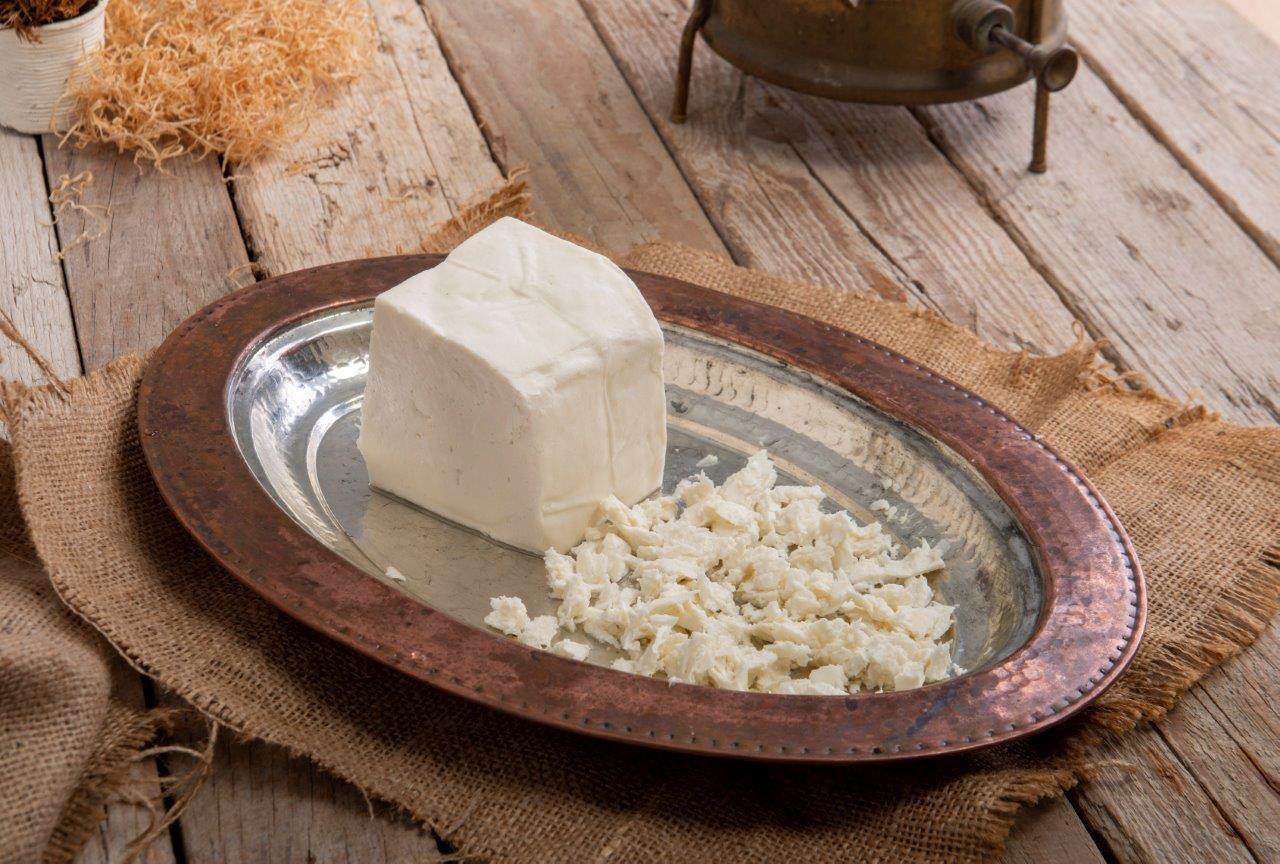
Antakya Künefe Cheese is a cheese variety registered as a geographical indication with registration number 979 by the Antakya Chamber of Commerce and Industry on 22 December 2021, within the geographical boundaries of Hatay Province. Although this product was originally produced using milk from small ruminants at the time of its application on 28 August 2018, increasing demand and a decline in small ruminant populations have led to its current production using exclusively cow’s milk. This cheese requires production methods specific to its geographical region and is particularly renowned for its essential role as the primary ingredient in certified Antakya künefe, establishing a strong regional association.
Antakya künefe cheese is marketed in two varieties: unsalted and salted (Chestnut Type). The unsalted version, as its name suggests, contains no salt and has a shelf life of only a few days, depending on storage temperature. The salted Chestnut Type, which contains a high concentration of salt, can be stored for up to six months at room temperature and up to one year in a refrigerator.
The color of the cheese varies from porcelain white to cream, depending on the animals’ diet and the season. The unsalted variety does not have a distinctive mold shape; instead, it is portioned into desired dimensions after pressing. The salted variety, however, is cut into 1 cm cubes after pressing to increase surface area and facilitate salt absorption.
The distinguishing features of the unsalted cheese include its elastic texture, the “chicken breast”-like structure formed during production when the pH reaches between 4.9 and 5.2, and its meltability at temperatures above 65°C. This meltability and fibrous structure define the functional role of the cheese in künefe. Similar textural properties are observed in the salted variety before salting, but the cheese hardens after the salting process.
In terms of composition, differences exist between the unsalted and salted varieties in moisture, dry matter, protein, fat, ash, and salt content; however, their pH values remain similar due to their meltability. For instance, the unsalted cheese has a moisture content ranging from 45.7% to 58.6%, fat content in dry matter between 37.3% and 52.2%, and a pH between 4.86 and 5.22. In the salted variety, moisture ranges from 30.2% to 43.8%, fat content in dry matter from 39.9% to 47.6%, and pH from 4.66 to 5.75. The salt content in the salted cheese is between 5.9% and 12.9%, while the salt content in dry matter ranges from 8.8% to 22.9%.
The sensory profile of the unsalted variety is dominated by a fresh cheese aroma. Since it is produced from raw milk and consumed shortly after production, it contains only limited amounts of the chemical compounds found in aged cheeses. Due to low lactic acid levels, it has a slightly sour taste; due to minimal lactose content, it is slightly sweet; and due to esters formed during short fermentation, it exhibits a mild fruity aroma. Neither variety is suitable for raw consumption; both are used exclusively after being cooked within künefe. Heating the cheese above 75°C during künefe preparation aims to eliminate any microbiological risks associated with raw milk. Before use in künefe, the salted cheese is soaked in drinking water for approximately one day, with the water changed several times, to remove excess salt.
The production of Antakya künefe cheese follows similar processes at both household and industrial scales; however, the salted variety is produced exclusively at an industrial level.
The unsalted Antakya künefe cheese is packaged immediately after fermentation and can be stored at 4–7°C for 2–3 days. For the production of salted Antakya künefe cheese, the teleme is cut into 1 cm cubes after fermentation to increase surface area. The cheese is then subjected to a dry salting process using 1–2% salt by weight of the original milk and allowed to rest for one day. Following this rest period, it is immersed in a brine solution containing 18–20% salt for an additional day.
In the final stage, the cheese undergoes a secondary dry salting of 0.2–0.5% before packaging. Salted cheeses produced by this method can be stored at 4–7°C for between two and 120 days. Packaging must clearly indicate the terms “salted” or “unsalted” and the phrase “produced from raw milk.”
The geographical boundary for Antakya künefe cheese is defined as Hatay Province. The unique characteristics of the product, along with its traditional production processes and methods, establish its link to this region. Consequently, all stages of production must occur within the geographical boundaries specified in the registration.
Monitoring of the product is conducted under the coordination of the Antakya Chamber of Commerce and Industry. The monitoring authority includes one expert each from the Department of Food Engineering at Hatay Mustafa Kemal University Faculty of Agriculture, the Hatay Provincial Directorate of Agriculture and Forestry, and the Antakya Chamber of Commerce and Industry. Monitoring is carried out annually on a regular basis, but may also be conducted at any time if deemed necessary or upon complaint.
The criteria for monitoring include compliance with the production method, overall product composition, packaging and storage conditions, and the proper use of the designation “Antakya künefe cheese” and its geographical indication emblem. The monitoring authority may obtain expert support or procure services from public or private institutions to carry out inspections. The registering institution is responsible for undertaking legal procedures to protect its rights.
Hatay Ticaret ve Sanayi Odası. "Antakya Künefelik Peyniri." Hatay Ticaret ve Sanayi Odası. Accessed November 18, 2025. https://www.hataytso.org.tr/tr/genel-sayfa/cografi-tescilli-urunler/antakya-kunefelik-peyniri-82.html.
Turk Patent and Trademark Office. "Antakya Künefelik Peyniri." *Geographical Indications Portal.* Accessed November 18, 2025. https://ci.turkpatent.gov.tr/cografi-isaretler/detay/38616.
Turk Patent and Trademark Office. *Antakya Künefelik Peyniri Coğrafi İşaret Sicil Belgesi.* Turk Patent and Trademark Office. Accessed November 18, 2025. https://ci.turkpatent.gov.tr/Files/GeographicalSigns/3dfef709-f4ed-497f-89ec-2678351dd002.pdf.

Type of Geographical Indication | Signpost | ||||||||
|---|---|---|---|---|---|---|---|---|---|
Registration Number | 979 | ||||||||
Registration Date | 22.12.2021 | ||||||||
Product / Product Group(s) | Cheeses | ||||||||
Province(s) | Hatay | ||||||||
Applicant/Registrant(s) | Hatay Chamber of Commerce and Industry | ||||||||
No Discussion Added Yet
Start discussion for "Antakya Künefelik Cheese" article
Product Characteristics
Production Method
Geographical Boundary
Monitoring