


This article was automatically translated from the original Turkish version.
+1 More
Antep İşi Nakış
Geographical Indication Type | Mahreç Sign | ||||||||
|---|---|---|---|---|---|---|---|---|---|
Application Date | 24.04.2012 | ||||||||
Registration Number | 200 | ||||||||
Registration Date | 06.12.2016 | ||||||||
Product / Product Group | Textiles | ||||||||
Province | Gaziantep | ||||||||
Applicant / Registrant | Gaziantep Development Foundation | ||||||||
UNESCO Register | 2025 | ||||||||
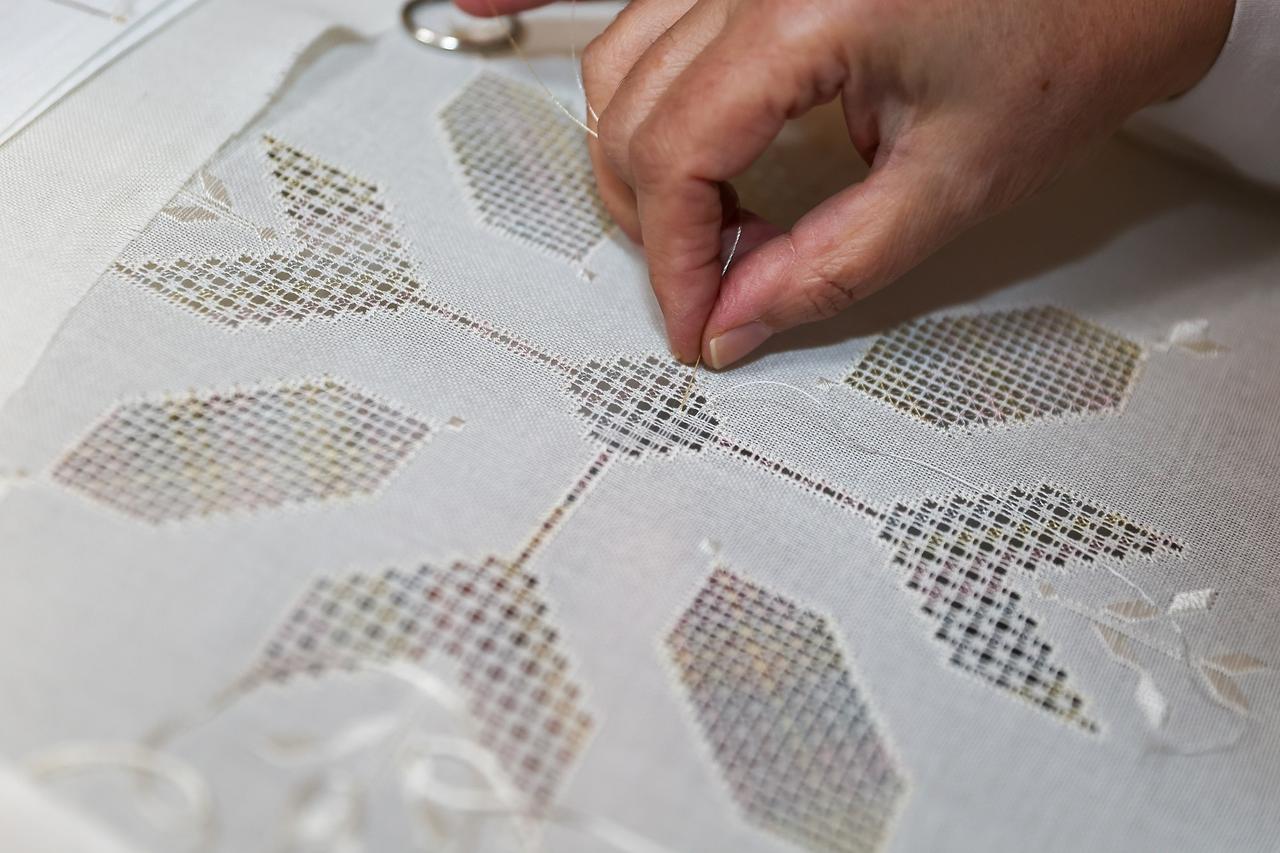
Antep İşi Embroidery is a type of embroidery unique to the Gaziantep region, created by pulling and counting threads from the fabric. Traditional Antep İşi is worked in white, yellow, and cream threads on white or cream fabric, while Colorful Antep İşi is enriched with threads of various colors using susma and ajur techniques. Designs are inspired by nature, geometric shapes, carpet and kilim motifs, and figurative elements. Each piece is individualized by the creativity of the artisan, resulting in models that cannot be replicated.
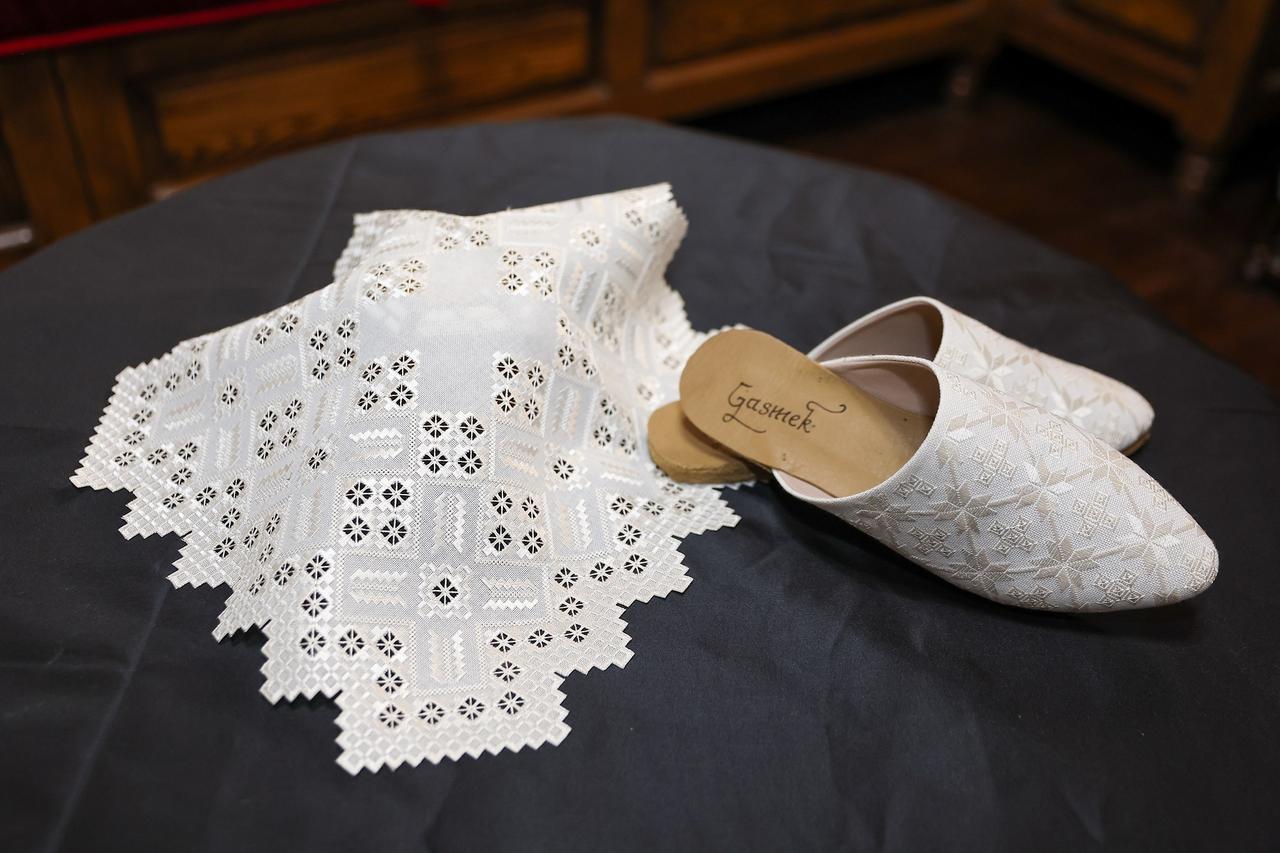
Antep İşi Embroidery (Gaziantep Metropolitan Municipality)
In the past, poplin, patiska, and kahke cloth were used; today, kutnu, havayan, crepe demor, mongol, crepe georgette, handwoven linen, and silk fabrics are preferred. Threads made of silk, ibrişim, floş, and cotton are used. Shiny, strong, and smooth threads are favored; embroidery can be executed using single-color or multicolored threads.
Antep İşi is entirely handmade. The fabric is stretched on a frame, threads are pulled with special scissors, and wound using various needle techniques. There are eight main ajur groups: mercimek, ciğerdeldi, cemelyan, örümcek, kartopu, çitime, badem, susma, and muşabak. These techniques create diverse motifs and add variety to the embroidery.
These techniques enable the creation of a wide range of motifs extending from geometric forms to natural figures. Each piece carries the artisan’s personal interpretation, making most models unique and difficult to replicate.
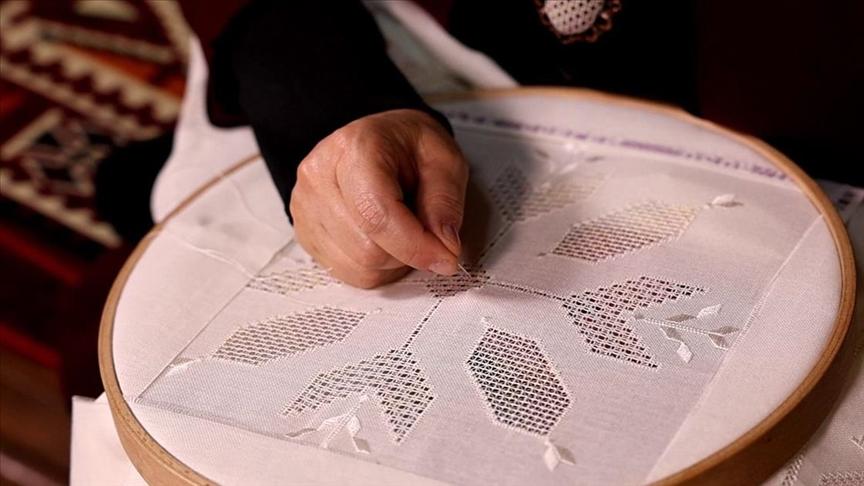
Antep İşi Embroidery (AA)
Antep İşi is a tradition practiced predominantly by women in Gaziantep and transmitted from generation to generation through the master-apprentice relationship. As an indispensable part of the dowry culture, it is stored in trunks and inherited from mother to daughter. This transmission process preserves not only technical skills but also cultural values and collective memory.
Embroidery serves as a space where women gather, socialize, share experiences, and strengthen cultural bonds. Therefore, Antep İşi is not merely a decorative art but an integral part of social interaction and cultural identity. UNESCO has emphasized in its evaluation process that this tradition significantly contributes to the social and economic empowerment of women. Since each piece is traditionally crafted by a single woman with meticulous care, the personal touch and uniqueness are distinguishing features of this cultural heritage.
Gaziantep, historically situated along the Silk Road, has experienced intense interaction with diverse cultures. This location played a decisive role in the development of Antep İşi. The fine craftsmanship and intricate motifs from Chinese culture, along with Russian embroidery techniques and motifs from other civilizations, have been incorporated into Antep İşi. These cultural exchanges have enriched the local art form and enhanced its international recognition.
Although its origins lie in Gaziantep, Antep İşi has been enriched by cutting and ajur techniques learned from other cultures, transforming it into both a local and universal art form. In this sense, Antep İşi is regarded as a vital element representing cultural continuity within Gaziantep’s 12,000-year historical heritage.
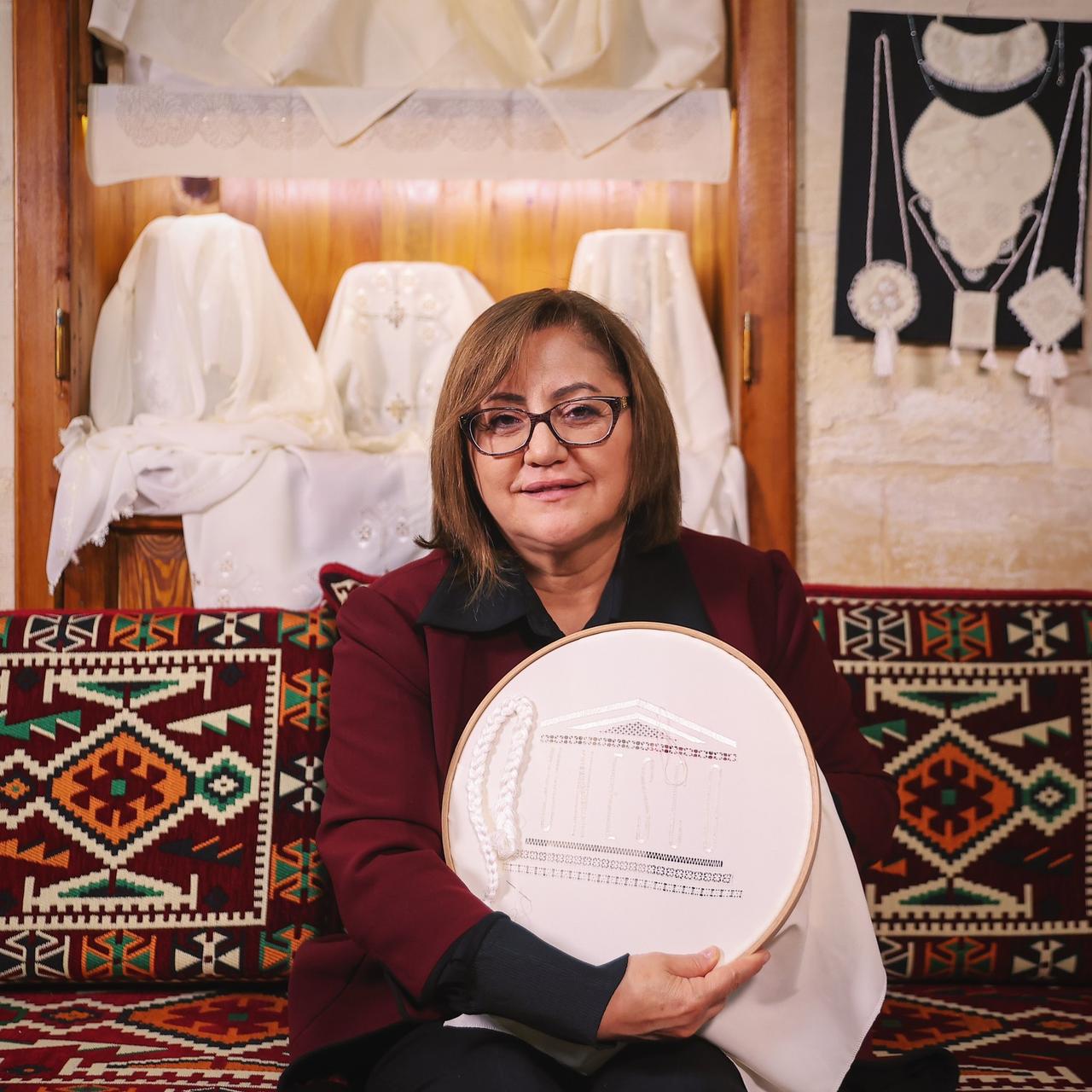
Antep İşi Embroidery (Gaziantep Metropolitan Municipality)
Antep İşi is not limited to dowries but is widely used in daily life and for decorative purposes. It is applied to items such as wall hangings, bags, bed and room sets, handkerchiefs, headscarves, shawls, tablecloths, curtains, prayer rugs, and sacks. It is also used in a wide variety of other products including presentation handkerchiefs, nightwear sets, dressing gowns, clocks, tea sets, scarves, shawls, runners, coasters, cocktail napkins, phone pouches, soap pouches, coin purses, prayer bead pouches, gold pouches, and tray covers.
While white and cream colors were traditionally preferred, today a variety of colors and modern designs are also employed. This diversity allows Antep İşi to preserve its traditional motifs while adapting to contemporary aesthetics. Additionally, it is used in filigree art; modern applications involving wrapping threads around nails exemplify its fusion with new artistic disciplines.
Antep İşi Embroidery is protected as a geographical indication under the mark of origin system following an application by the Gaziantep Development Foundation. The registration process began on 24 April 2012 and was officially completed on 6 December 2016. Designated as registration number 200, it was published in the Official Gazette on 4 September 2015. The geographical boundary is defined as Gaziantep Province, and usage is regulated through labeling.
Oversight is conducted by a commission composed of representatives from Gaziantep Metropolitan Municipality, Gaziantep University, and Gaziantep Provincial Directorate of National Education. Annual inspections, conducted at least twice a year, verify criteria including the use of white fabric, threads in white, yellow, or cream tones, the presence of ajur and susma techniques, fabric density and durability, thread pulling and extraction methods, use of natural-colored raw silk, and correct labeling. This system ensures the preservation of both the technical characteristics and traditional structure of Antep İşi Embroidery for future generations.
At the 20th Intergovernmental Committee for the Safeguarding of the Intangible Cultural Heritage meeting held in New Delhi, India, in 2025, Antep İşi Embroidery was inscribed on the Representative List of the Intangible Cultural Heritage of Humanity. With this inscription, the number of Turkish elements on UNESCO lists rose to 32, maintaining Türkiye’s position as the second country in the world with the most cultural elements registered. UNESCO’s report highlighted the completeness and strength of Türkiye’s dossier and commended its efforts to safeguard living heritage.
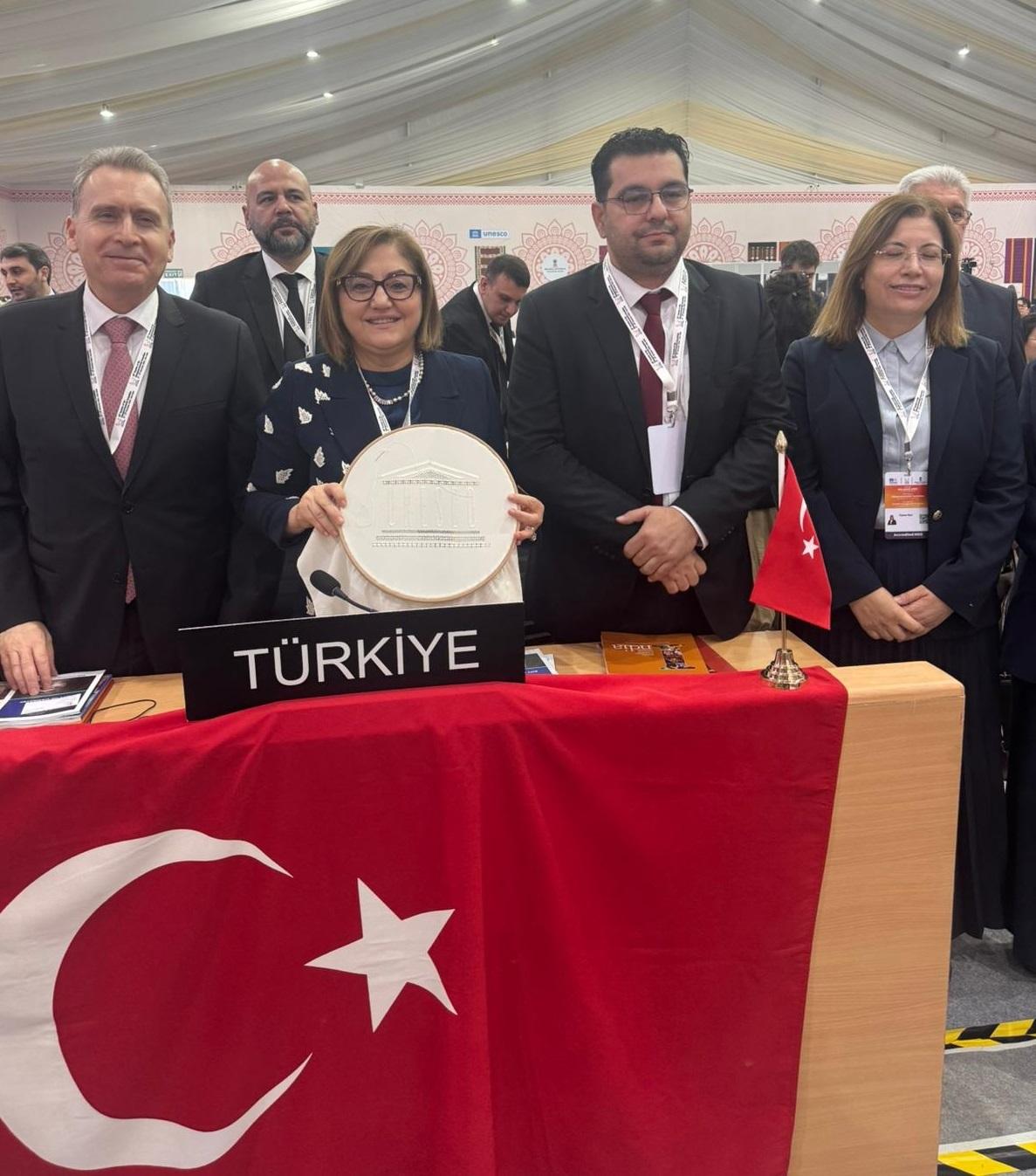
Antep İşi Embroidery at the 20th UNESCO Intergovernmental Committee for the Safeguarding of the Intangible Cultural Heritage Meeting (Gaziantep Metropolitan Municipality)
At the meeting, Gaziantep Metropolitan Municipality Mayor Fatma Şahin emphasized that Antep İşi has moved “from local to universal, from tradition to future,” underscoring its significance both as cultural heritage and as a tool for the social and economic empowerment of women.
Alpay, Türkan. “Somut Olmayan Kültürel Miras Bağlamında Antep İşi Nakışı Geleneği”. *Gaziantep Üniversitesi Ayıntab Araştırmaları Dergisi* 7, no. 2 (December 2024): 190–204. Accessed December 12, 2025.https://doi.org/10.71353/gunaad.1561599
Anadolu Ajansı. “Antep İşi Nakışı UNESCO İnsanlığın Somut Olmayan Kültürel Mirası Temsili Listesi'ne Kaydedildi”. December 11, 2025. Accessed December 12, 2025.https://www.aa.com.tr/tr/kultur/antep-isi-nakisi-unesco-insanligin-somut-olmayan-kulturel-mirasi-temsili-listesine-kaydedildi/3768006
Gaziantep Büyükşehir Municipality. “Başkan Şahin’in Girişimleriyle Antep İşi UNESCO Tarafından Tescillendi”. December 11, 2025. Accessed December 12, 2025.https://www.gaziantep.bel.tr/tr/haberler/baskan-sahinin-girisimleriyle-antep-isi-unesco-tarafindan-tescillendi
Turk Patent and Trademark Office. "Antep İşi." Coğrafi İşaretTescil No, Registration No: 200. December 6, 2016. Accessed December 12, 2025.https://ci.turkpatent.gov.tr/Files/GeographicalSigns/13ac1555-092f-466b-921d-9fe90663bccf.pdf
Turk Patent and Trademark Office. "Antep İşi." Coğrafi İşaretler Portalı, Registration No: 200. December 6, 2016. Accessed December 12, 2025.https://ci.turkpatent.gov.tr/cografi-isaretler/detay/%20%2038064

Antep İşi Nakış
Geographical Indication Type | Mahreç Sign | ||||||||
|---|---|---|---|---|---|---|---|---|---|
Application Date | 24.04.2012 | ||||||||
Registration Number | 200 | ||||||||
Registration Date | 06.12.2016 | ||||||||
Product / Product Group | Textiles | ||||||||
Province | Gaziantep | ||||||||
Applicant / Registrant | Gaziantep Development Foundation | ||||||||
UNESCO Register | 2025 | ||||||||
No Discussion Added Yet
Start discussion for "Antep İşi Embroidery" article
Fabric and Thread Characteristics
Production Method and Ajur Techniques
Cultural Context
Historical and Geographic Dimension
Applications
Registration and Oversight
UNESCO Listing