


This article was automatically translated from the original Turkish version.
+2 More
Location | Adakale Artvin / Türkiye Ardanuç | ||||||||
|---|---|---|---|---|---|---|---|---|---|
Other Name(s) | Gevhernik Castle | ||||||||
Establishment | Pre-Medieval, rebuilt in the 5th century | ||||||||
Building Type | Castle (inner and outer castle structure) | ||||||||
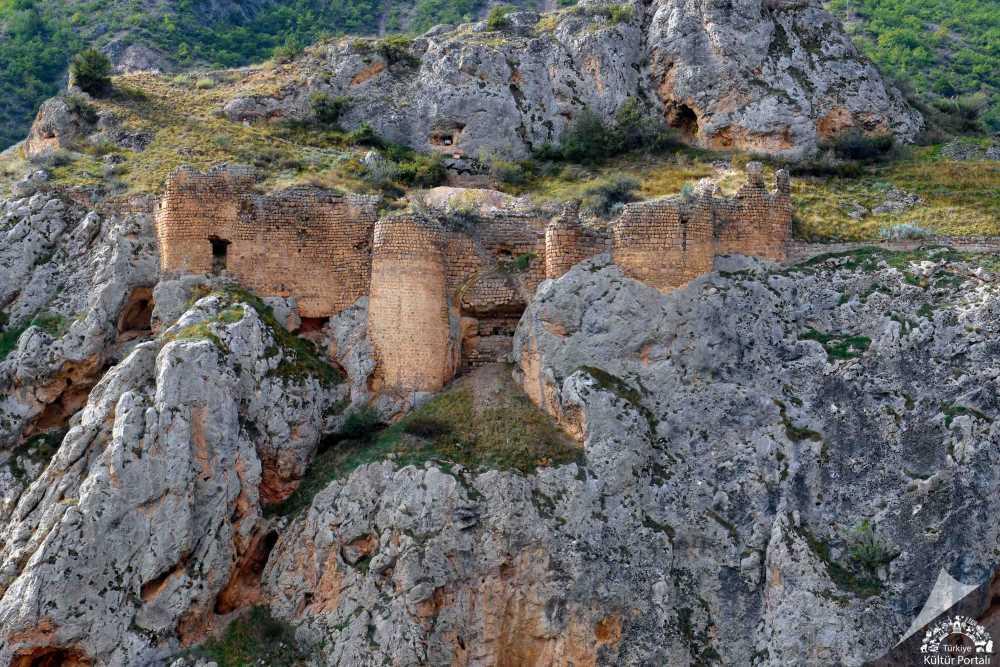
Ardanuç Castle is a medieval defensive structure located within the boundaries of Ardanuç district in Artvin province, Türkiye, at the Adakale site, notable for its integrated inner and outer fortification system. The castle consists of an inner fortress, known as Gevhernik Castle, and an outer fortress called Adakale. The inner castle is situated atop a steep rocky outcrop and is surrounded by walls. The castle and its surroundings constitute an important archaeological and historical site, featuring remains of a mosque, tomb, fountain, bathhouse, madrasa, and residential structures.

Ardanuç Castle (Türkiye Culture Portal)
The initial construction of the castle dates back to before the Middle Ages, likely to the pre-Christian era. The structure was rebuilt in the 5th century AD and served for a time as the capital of the Iberian Kingdom. Throughout its history, Ardanuç Castle came under the control of various political powers including the Sasanians, Byzantines, Abbasids, and the Georgian Bagratid Kingdom. It was conquered by the Ottoman Empire in 1551 and became the center of a sanjak. During Ottoman administration, the castle not only remained an important administrative center but also received various architectural additions from the 16th century onward. After the Russo-Turkish War of 1877–1878, it came briefly under Russian control.

Ardanuç Castle (Anadolu Agency)
Ardanuç Castle features a dual defensive system comprising an outer fortress (town) and an inner fortress (Gevhernik Castle). This layout represents a unique castle arrangement within Artvin province. The inner castle covers an area of approximately eight dunams and is built atop a steep rocky terrain. At the castle entrance, restored during the reign of Suleiman the Magnificent in 1563, an Arabic inscription commemorates this renovation.
Within and around the castle, remains of Ottoman-period structures include the İskender Paşa Camii, tombs, a bathhouse, a fountain, a madrasa, residences, and shops. The İskender Paşa Camii was constructed between 1553 and 1554, and over time, a külliye complex developed around it with the addition of a madrasa, tombs, and other buildings. The tombs contain the burials of beylerbeys of the Çıldır sanjak and their family members. Remains of a ruined church and madrasa are also found in the region.
The fountain, identified as dating to the 18th century, measures 3 by 3 meters and has a triangular pediment. According to Ottoman archives, this structure was commissioned by Hatice Hanım. At the southern foot of the inner castle, a cistern attributed to the Bagratid period has been uncovered. This vaulted structure, built with lime mortar, is 8 meters long and 3 meters wide.

Ardanuç Castle (Türkiye Culture Portal)
The first comprehensive archaeological excavations at Ardanuç Castle were initiated in 2021 through a collaboration between the Ministry of Culture and Tourism and Van Yüzüncü Yıl University. The excavations are conducted by faculty members of the Department of Art History, with the fourth season ongoing in 2025. During the excavations, a fountain, cistern, church remains, and various portable cultural artifacts such as ceramics, coins, and bullets have been uncovered.
Anadolu Ajansı. "Gevhernik Kalesi'ndeki kazılarda çeşme ve sarnıç bulundu." Accessed August 16, 2025. https://www.aa.com.tr/tr/kultur/gevhernik-kalesindeki-kazilarda-cesme-ve-sarnic-bulundu/3336548
Ministry of Culture and Tourism of the Republic of Türkiye. “Ardanuç / Gevhernik Kalesi - Artvin.” *Türkiye Kültür Portalı*. Accessed August 16, 2025. https://www.kulturportali.gov.tr/turkiye/artvin/gezilecekyer/gevhernik-kalesi-i-derece-arkeolojik-sit-alani
T.C. Ardanuç Kaymakamlığı. "Gevhernik Kalesi I. Derece Arkeolojik Sit Alanı." T.C. Ardanuç Kaymakamlığı Web Sitesi. Accessed August 16, 2025. http://ardanuc.gov.tr/gevhernik-kalesi-i-derece-arkeolojik-sit-alani
T.C. Ministry of Culture and Tourism. "Ardanuç Gevhernik Kalesi." *T.C. Artvin Provincial Directorate of Culture and Tourism*. Accessed August 16, 2025. https://artvin.ktb.gov.tr/TR-55864/ardanuc-gevhernik-kalesi.html

Location | Adakale Artvin / Türkiye Ardanuç | ||||||||
|---|---|---|---|---|---|---|---|---|---|
Other Name(s) | Gevhernik Castle | ||||||||
Establishment | Pre-Medieval, rebuilt in the 5th century | ||||||||
Building Type | Castle (inner and outer castle structure) | ||||||||
History
Architectural Features
Restoration and Archaeological Excavations