

This article was automatically translated from the original Turkish version.
Type of Geographical İndication | Mahreç Sign | ||||||||
|---|---|---|---|---|---|---|---|---|---|
Registration Number | 1747 | ||||||||
Registration Date | 24.06.2025 | ||||||||
Product / Product Group(s) | Meals and soups | ||||||||
Province(s) | Army | ||||||||
Applicant/Registrant(s) | Ordu Metropolitan Municipality | ||||||||
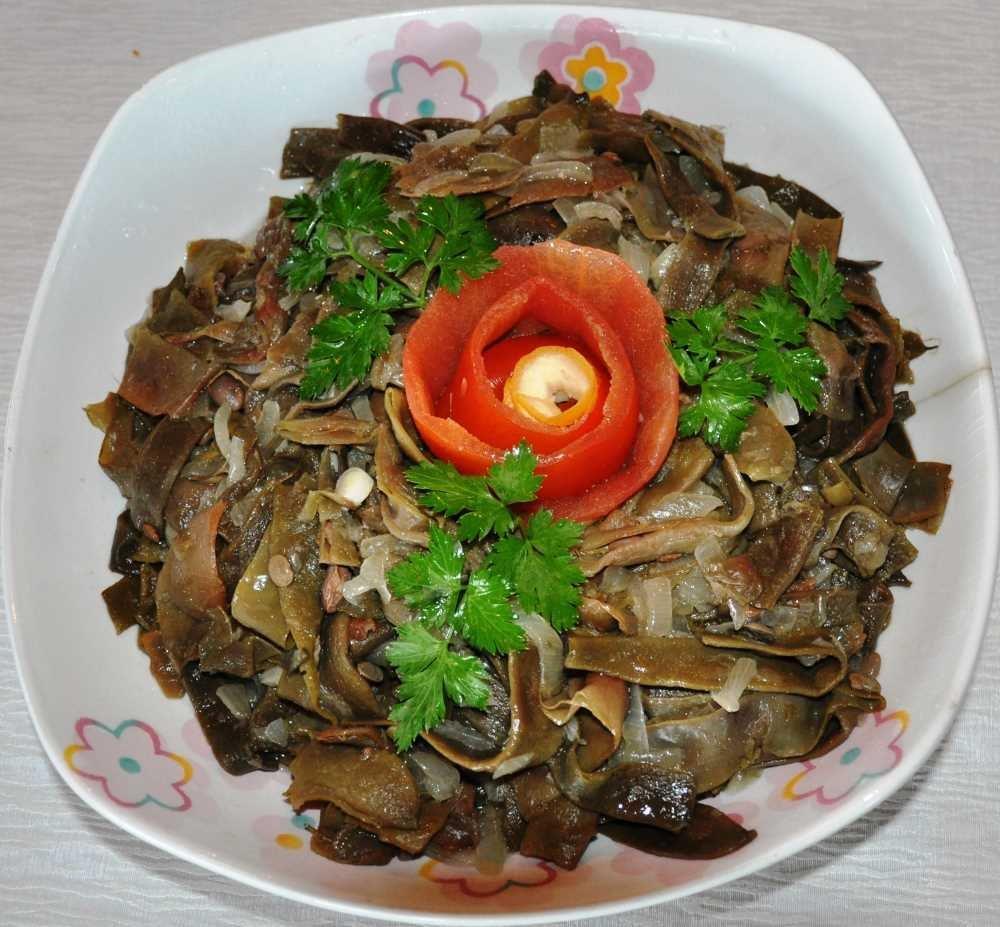
Ordu Fırın Fasulyesi Kavurması, Army province’s geographical boundaries within which green beans are harvested and sorted during the summer months, soaked, and then dried for 24 hours preferably in stone ovens, is a traditional dish made from these dried beans. This drying process produces a product known as “fırın fasulye,” which is stored in burlap sacks or cloth bags throughout the winter and remains usable year-round. This dish is an inseparable part of Ordu’s culinary culture and carries a long-standing geographical association; all production, processing, and preparation stages must take place within Ordu province.

Ordu Fırın Fasulyesi Kavurması (Ordu Metropolitan Municipality)
Ordu Fırın Fasulyesi Kavurması is a practice deeply intertwined with the region’s agricultural cycle. Fresh green beans harvested at the end of summer are dried in the low-humidity, controlled heat environment provided by traditional stone ovens, transforming them into winter food reserves. This method preserves nutritional value while developing the bean’s distinctive texture and aroma profile. Although the drying process intensifies during September and October, the official definition specifies a 24-hour duration. The dish exemplifies how local products outside Ordu’s dominant hazelnut-based agricultural economy have been integrated into its culinary traditions. Long consumed by the local population, it has become a fixed component of menus in women’s cooperatives and family-run enterprises.
Ordu Fırın Fasulyesi Kavurması has been registered as a geographical indication under Law No. 6769 on Industrial Property. The registration number is 1747, with application number C2024/000082, submitted on 19 February 2024 by the Ordu Metropolitan Municipality. The registration was officially published on 24 June 2025 and granted legal protection retroactively from 19 February 2024. The designation “Ordu Fırın Fasulyesi Kavurması” along with its geographical indication emblem must appear on the product itself or its packaging; if this is not feasible, it must be displayed prominently within the production facility. This registration ensures compliance with production, processing, and marketing standards directly linked to Ordu province’s geographical boundaries.
This standard is the mandatory production method under the geographical indication framework.
In some traditional local practices, additional ingredients not included in the official definition are used. For example:
In this variation, the onion and meat mixture is simmered with water; after the boiled beans are added, the process continues until the bulgur or rice is fully cooked. The drying process begins with the removal of bean strings followed by drying in stone ovens. While such variations are common in family kitchens and local businesses, they fall outside the official geographical indication standard.
Monitoring is conducted by a minimum three-member authority coordinated by the Ordu Metropolitan Municipality and including experts from the Ordu Provincial Directorate of Agriculture and Forestry.
The monitoring authority may receive expert support from public or private institutions. The registering body is responsible for initiating legal proceedings to protect the rights associated with the geographical indication.
Ordu Fırın Fasulyesi Kavurması holds a central place in the menus of local businesses, particularly those operated by women entrepreneurs’ cooperatives. It is a favored dish among both local residents and visitors to the region, ensuring its continuity in the culinary culture. The geographical indication registration enhances standardization and recognition, highlighting the gastronomic diversity of Ordu.
Culture Portal. "Fırın Fasulyesi Kavurması." Ministry of Culture and Tourism of the Republic of Türkiye. Last updated June 13, 2019. Accessed October 19, 2025. https://www.kulturportali.gov.tr/turkiye/ordu/neyenir/firin-fasulyesi-kavurmasi
Ordu Metropolitan Municipality. "Ordu Gastronomisi Büyükşehir ile Ün Kazanıyor." July 10, 2025. Accessed October 19, 2025. https://www.ordu.bel.tr/haber/ordu-gastronomisi-buyuksehir-ile-un-kazaniyor
Turk Patent and Trademark Office. "Ordu Fırın Fasulyesi Kavurması." Geographical Indications Portal. Accessed October 19, 2025. https://ci.turkpatent.gov.tr/cografi-isaretler/detay/11176
Turkish Patent and Trademark Office. "Ordu Fırın Fasulyesi Kavurması Coğrafi İşaret Sicil Belgesi, No: 1747." October 19, 2025. Accessed October 19, 2025. https://ci.turkpatent.gov.tr/Files/GeographicalSigns/7e1c50c3-7540-4d49-941e-1281103be91a.pdf

Type of Geographical İndication | Mahreç Sign | ||||||||
|---|---|---|---|---|---|---|---|---|---|
Registration Number | 1747 | ||||||||
Registration Date | 24.06.2025 | ||||||||
Product / Product Group(s) | Meals and soups | ||||||||
Province(s) | Army | ||||||||
Applicant/Registrant(s) | Ordu Metropolitan Municipality | ||||||||
No Discussion Added Yet
Start discussion for "Army Stewed White Beans" article
Historical and Cultural Context
Geographical Indication Registration
Official Production Standard (Serves 3–4)
Ingredients
Preparation Steps
Traditional Application Variations
Monitoring and Enforcement
Regional Significance and Usage