This article was automatically translated from the original Turkish version.
+2 More
Registration Number | 1197 | ||||||||
|---|---|---|---|---|---|---|---|---|---|
Registration Date | 18.08.2022 | ||||||||
Application Number | C2021/000281 | ||||||||
Application Date | 14.07.2021 | ||||||||
Name of the Geographical Indication | Arslanlar Pepper | ||||||||
Product / Product Group(s) | Pepper / Processed and Unprocessed Fruits Vegetables and Mushrooms | ||||||||
Type of Geographical Indication | Place of Origin | ||||||||
Applicant/Registrant(s) | Torbalı Chamber of Commerce | ||||||||
Address of the Registrant | Torbalı Mah. Aydın Cd. No:74 Torbalı İZMİR | ||||||||
Geographical Boundary | Arslanlar Village İzmir Province Torbalı District | ||||||||
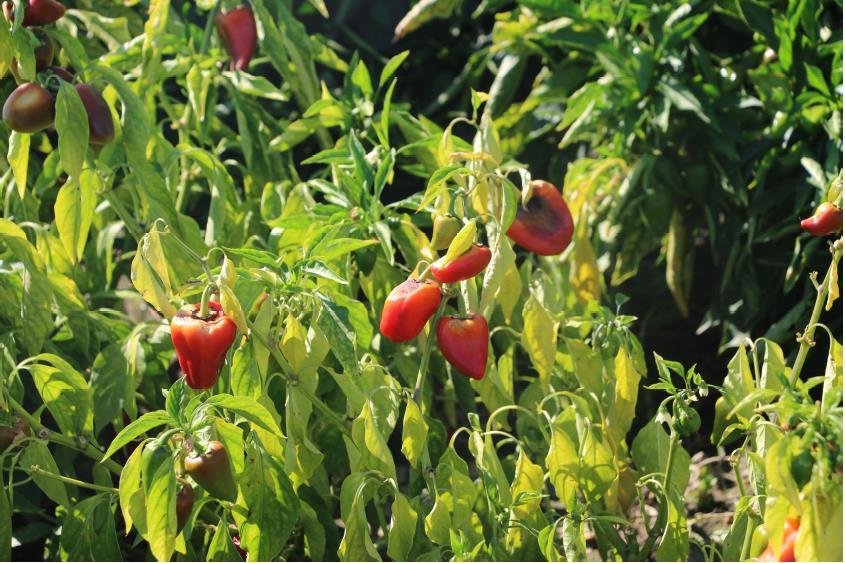
Arslanlar Pepper is a variety of Capsicum annuum Jalapeno pepper cultivated in Arslanlar Village of the Torbalı district in İzmir and protected under geographical indication. With a history of approximately 120 years, this pepper is typically green in color, rarely turning red when fully ripe, and is recognized for its mild spiciness and fruits measuring 5–9 cm in length. The plant thrives in the mild Mediterranean climate, on loamy-sandy soils with high water retention capacity, and does not require support due to its strong stem structure.
The cultivation of Arslanlar Pepper dates back approximately 120 years. It is also known locally as “yörük pepper.” The plant’s adaptation to the climatic and soil conditions of Torbalı district, combined with its long-standing cultivation in the same region, has strongly associated this product with the area.
The Arslanlar Pepper plant features a robust stem with an average thickness of 0.42 cm and a height of 90–115 cm. Due to its stem thickness, it can stand upright without the need for support stakes.
The fruit is typically green and only rarely turns fully red upon complete ripening. Fruit length ranges from 5–9 cm. Its flavor profile is mildly spicy, making it particularly preferred for the production of pul biber (crushed red pepper). The acidity level of the pepper, measured as L-ascorbic acid, ranges between 90–120 mg per 100 grams.
Arslanlar Pepper achieves optimal yield under mild Mediterranean climate conditions. During cultivation, temperatures should remain between 15°C and 33°C. When air temperature falls below these values—particularly below 0°C—the plant begins to rot. Soil temperature should ideally be around 10°C.
For cultivation, loamy-sandy, well-drained, high water-retention, and organic matter-rich garden soils are preferred.
The average nutritional values per 100 grams of Arslanlar Pepper are as follows:
These values demonstrate that Arslanlar Pepper is a low-calorie product rich in dietary fiber and vitamin C.
Arslanlar Pepper is a vegetable cultivated under warm and mild climatic conditions. It is sensitive to cold weather, and plant rot occurs when soil temperature drops below 0°C. Therefore, soil temperature must be approximately 10°C. Air temperature should ideally average around 26°C, as yields decline when temperatures fall below 15°C or rise above 33°C. The optimal planting period is spring, specifically April–May. The soil for sowing must be loamy-sandy, with high water retention and good permeability.
In production, seeds harvested from the first yield of the previous season are preferred. Germination is carried out in containers or trays filled with a mixture of fine-sieved soil and peat, leaving approximately one centimeter of space at the top. The medium is lightly watered to maintain moisture. After placing the seeds, the surface is covered with the same soil mixture and moistened again. To accelerate germination, the container is covered with transparent plastic film. Soil moisture is regularly monitored. Germination occurs within 12–20 days. Once seeds begin to sprout, the plastic film is removed, and seedlings are kept in an environment protected from direct sunlight.
After germination, plants reach the seedling stage within approximately two weeks. When seedlings reach a height of 10–15 cm, they are ready for transplanting to the field.
Before planting, the soil is plowed at least three times to aerate it. Furrows are created using a tractor, and planting is carried out in the furrow depressions. Animal manure is applied during soil preparation.
Seedlings are transplanted to the field in June. Spacing between furrows is maintained at 30–40 cm, and between planting rows at 40–75 cm. Seedlings are placed in the depressions of the furrows and covered with soil. After transplanting, a watering known as “can suyu” (life water) is applied.
After transplanting, plants begin to grow within 3–4 weeks. Initially, irrigation is performed once a week. Once the plants start fruiting, irrigation frequency increases to every 2–3 days. Drip irrigation is the most suitable method. Soil moisture content is maintained at approximately 75%.
Harvesting of Arslanlar Pepper begins when fruits reach a length of 5–9 cm and continues until September. Seeds for the next season’s planting are collected from selected healthy peppers, dried, and stored.
The designation “Arslanlar Pepper” and its geographical origin emblem must be used on the product itself or its packaging. If direct application to the product or packaging is not feasible, the emblem must be displayed in a clearly visible location within the production facility.
The production and marketing of Arslanlar Pepper are coordinated by the Torbalı Chamber of Commerce. Monitoring is conducted by a three-member inspection body composed of one expert each from the Torbalı Chamber of Commerce, the Torbalı District Directorate of Agriculture and Forestry, and the Torbalı Municipality. Inspections are carried out at least once annually. Additional inspections may be conducted in response to complaints or other justified circumstances.
During inspections, the following stages are verified: germination, seedling development, soil preparation, field transplanting, cultivation, harvesting, and the correct use of the designation and geographical origin emblem. Where necessary, chemical and nutritional analyses of the product are performed. The inspection body may obtain services from public institutions, private organizations, or their qualified personnel. Additionally, the registering entity undertakes legal procedures to protect rights related to the geographical indication.
Turkish Patent and Trademark Office. "Arslanlar Biberi Coğrafi İşaret Tescil Belgesi." Accessed July 13, 2025. https://ci.turkpatent.gov.tr/Files/GeographicalSigns/c583b162-4ea5-480c-921b-661ba7b041ad.pdf.
Turkish Patent and Trademark Office. "Arslanlar Biberi." Accessed July 13, 2025. https://ci.turkpatent.gov.tr/cografi-isaretler/detay/4664.

Registration Number | 1197 | ||||||||
|---|---|---|---|---|---|---|---|---|---|
Registration Date | 18.08.2022 | ||||||||
Application Number | C2021/000281 | ||||||||
Application Date | 14.07.2021 | ||||||||
Name of the Geographical Indication | Arslanlar Pepper | ||||||||
Product / Product Group(s) | Pepper / Processed and Unprocessed Fruits Vegetables and Mushrooms | ||||||||
Type of Geographical Indication | Place of Origin | ||||||||
Applicant/Registrant(s) | Torbalı Chamber of Commerce | ||||||||
Address of the Registrant | Torbalı Mah. Aydın Cd. No:74 Torbalı İZMİR | ||||||||
Geographical Boundary | Arslanlar Village İzmir Province Torbalı District | ||||||||
History and Geographical Origin
Botanical Characteristics and Morphology
Climate and Soil Requirements
Chemical and Nutritional Composition
Cultivation Method
Germination Process:
Seedling Stage:
Soil Preparation:
Transplanting Stage:
Cultivation Process:
Harvesting Process:
Labeling and Use
Monitoring Process