


This article was automatically translated from the original Turkish version.
+2 More
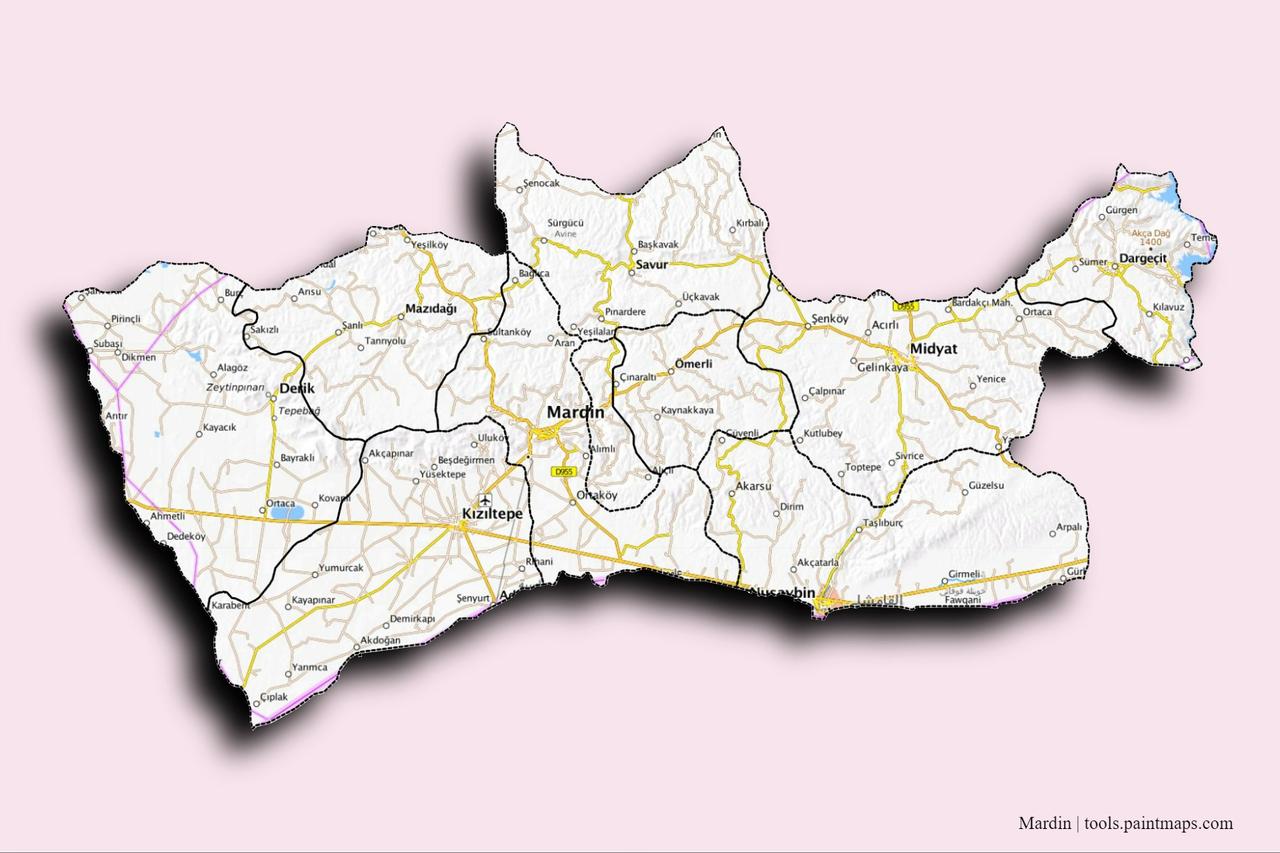
Artuklu (District)
Artuklu (District)
Location | Mardin Province Türkiye Southeastern Anatolia Region | ||||||||
|---|---|---|---|---|---|---|---|---|---|
Historical Origin | From the 4500s BCE to the present | ||||||||
Foundation | Artuklu Beylik, 1102 | ||||||||
Namesake | Turkmen bey Artuk Bey | ||||||||
Governing Branches | Mardin, Hasankeyf, Harput | ||||||||
Dominant Civilizations | Sumer, Akkad, Babylon, Assyria, Persia, Rome, Byzantium, Seljuk, Artuklu, Ottoman | ||||||||
Artuklu is a district of Mardin Province in southeastern Türkiye, renowned for its rich history, cultural heritage, and unique architecture. Situated on a hill overlooking the Mesopotamian Plain, Artuklu bears traces of countless civilizations spanning thousands of years. The district’s name derives from the Artuklu Beylik, which ruled the region between the 12th and 14th centuries.
The history of Artuklu extends back to 4500 BCE and it is among the oldest settlements in Upper Mesopotamia. Located between the Euphrates and Tigris rivers, this area has been home to numerous civilizations throughout history including the Sumerians Akkadians Babylonians Assyrians Mitanni Persians Romans Byzantines Arabs Seljuks Artuklids and Ottomans. Initially influenced by ancient Mesopotamian cultures the region became a significant military and religious center during the Roman and Byzantine periods. Numerous churches and monasteries were constructed here during this time reflecting its importance in early Christianity.
Conquered in the 11th century the region entered one of its golden ages with the founding of the Artuklu Beylik in 1102. Established by the Turkmen chief Artuk the beylik was governed through three branches centered in Mardin Diyarbakır and Hasankeyf. The founder of the Mardin branch was Ilghazi Bey. The Artuklu Beylik ruled the region from 1102 to 1409 and left significant contributions in architecture education and the arts. Particularly known for its stonework the beylik produced notable structures such as the Ulu Camii Zinciriye Medresesi and Kasımiye Medresesi. In 1517 Artuklu became part of the Ottoman Empire and after the founding of the Republic of Türkiye it became a district of the country. Today it continues to exist as a cultural mosaic where diverse religious and ethnic communities live together.
Artuklu is built on a rocky hill overlooking the Mesopotamian Plain. Its geographical location has historically conferred strategic importance for both defense and trade. The region lies between the Euphrates and Tigris rivers and is characterized by a rocky terrain composed of limestone. This stone has been extensively used in the district’s architecture. Artuklu’s narrow streets terraced houses and panoramic views of the plain are direct reflections of its geographical structure.
Artuklu experiences a continental climate with hot dry summers and cold wet winters. The natural vegetation is steppe dominated by drought-resistant plants. Sparse shrubs and grasses are found in higher elevations while agricultural lands cultivate wheat barley lentils and other crops. Additionally the saffron crocus which grows around the region’s name has historically been associated with the area.
Artuklu is a district where diverse ethnic and religious groups coexist. Communities such as Turks Kurds Arabs and Syriacs have lived together in this region for centuries. This diversity is one of the most important elements enriching the district’s social fabric. Traditional lifestyles continue particularly in the old city quarters. Stone houses enclosed passageways known as abbaras and bazaars form the center of social life. Furthermore the Mor Gabriel and Deyrulzafaran monasteries important religious centers for Syriac Orthodox Christians have significantly shaped the region’s religious identity.
Artuklu’s economy has historically been based on agriculture trade and handicrafts. Today agriculture continues with crops such as wheat barley lentils and chickpeas while animal husbandry remains an important source of income. Handicrafts also play a major role in the local economy. Metal engraving stone carving copperwork wood carving and carpet weaving are not only vital livelihoods for the local population but also key attractions for tourism. Shops in the Old Bazaar are the primary venues for selling these products. In recent years the growth of tourism has increased the significance of the service sector in the local economy.
Artuklu is a major tourist destination due to its historical and cultural richness. Listed on UNESCO’s Tentative World Heritage List the district attracts domestic and international tourists through its architectural structures archaeological remains and visual appeal. Major tourist sites include Mardin Castle Ulu Camii Zinciriye Medresesi Kasımiye Medresesi Deyrulzafaran Monastery Mor Gabriel Monastery Kırklar Church and the Mardin Archaeological Museum. Additionally nearby historical sites such as the ancient city of Dara further enhance the region’s tourism potential. With its stone houses narrow streets and panoramic views Artuklu offers an atmosphere where time seems to stand still.
Artuklu’s population is notable for its ethnic and religious diversity. Turks Kurds Arabs and Syriacs live together in the district. Although the majority of the population is Muslim the Syriac Orthodox Christian community holds a significant place. Population density is higher in the historic old city area where traditional life persists while new residential areas have developed in recent years. Artuklu maintains a demographic structure that preserves its historical fabric while embracing modernization.
As a district where history culture and nature intertwine Artuklu is among Türkiye’s most distinctive settlements. Through its architectural heritage handicrafts and multicultural character it fulfills a vital role connecting the past with the present.
Artuklu Belediyesi. "Kültürel Zenginlik." Accessed April 9, 2025. https://artuklu.bel.tr/icerik/kulturel-zenginlik.
Artuklu Belediyesi. “El Sanatları.” Accessed April 9, 2025. https://artuklu.bel.tr/icerik/el-sanatlari.
Artuklu Belediyesi. “Tarihçe.” Accessed April 9, 2025. https://artuklu.bel.tr/icerik/tarihce.
Artuklu Kaymakamlığı. "Gezilecek Yerler." Accessed April 9, 2025. http://artuklu.gov.tr/gezilecek-yerler.
Mardin Valiliği. “Artuklu.” Accessed April 9, 2025. http://www.mardin.gov.tr/artuklu.
Artuklu (District)
Artuklu (District)
Location | Mardin Province Türkiye Southeastern Anatolia Region | ||||||||
|---|---|---|---|---|---|---|---|---|---|
Historical Origin | From the 4500s BCE to the present | ||||||||
Foundation | Artuklu Beylik, 1102 | ||||||||
Namesake | Turkmen bey Artuk Bey | ||||||||
Governing Branches | Mardin, Hasankeyf, Harput | ||||||||
Dominant Civilizations | Sumer, Akkad, Babylon, Assyria, Persia, Rome, Byzantium, Seljuk, Artuklu, Ottoman | ||||||||
History
Geographical Structure
Climate and Vegetation
Social Structure
Economic Structure
Tourism Potential
Demographic Structure