

This article was automatically translated from the original Turkish version.
Foundation Date | 13 March 1967 | ||||||||
|---|---|---|---|---|---|---|---|---|---|
Founder(s) | Latif Kerimov | ||||||||
Previous Names | 1967–1993: State Museum of Azerbaijani Carpets and Folk Applied Art, 1993–2014: State Museum of Azerbaijani Carpets and Folk Applied Art named after Latif Kerimov | ||||||||
Current Name | Azerbaijani Carpet Museum (2014–present) | ||||||||
Architect(s) | Franz Janz | ||||||||
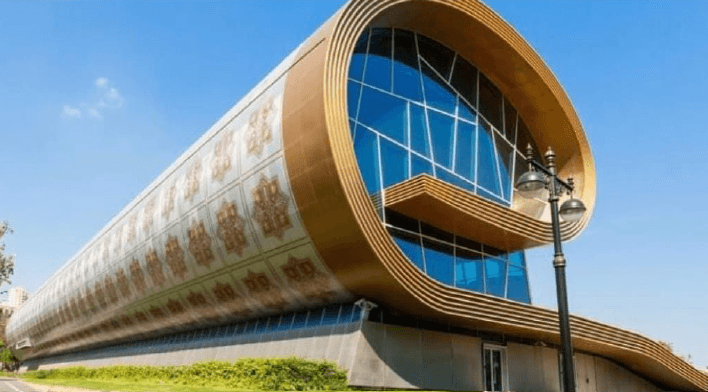
Architectural Feature(s) | Modern museum building in the shape of a carpet roll | ||||||||
Significance | The world's first carpet museum | ||||||||
Director(s) | Aziz Aliyev (1967–1982) Şirin Melikova (2016–present) Röya Tağıyeva (1982–2016) | ||||||||
Azerbaijan Carpet Museum is a specialized museum established to preserve, study, and promote Azerbaijan’s weaving and folk art traditions. It holds the distinction of being the world’s first museum dedicated exclusively to the art of carpet weaving.
The museum, through its collection of historical carpets, flat-woven textiles, ethnographic artifacts, and contemporary examples, not only keeps alive the art of carpet weaving as an essential part of national identity but also functions as a center for scientific research, education, and cultural exchange.
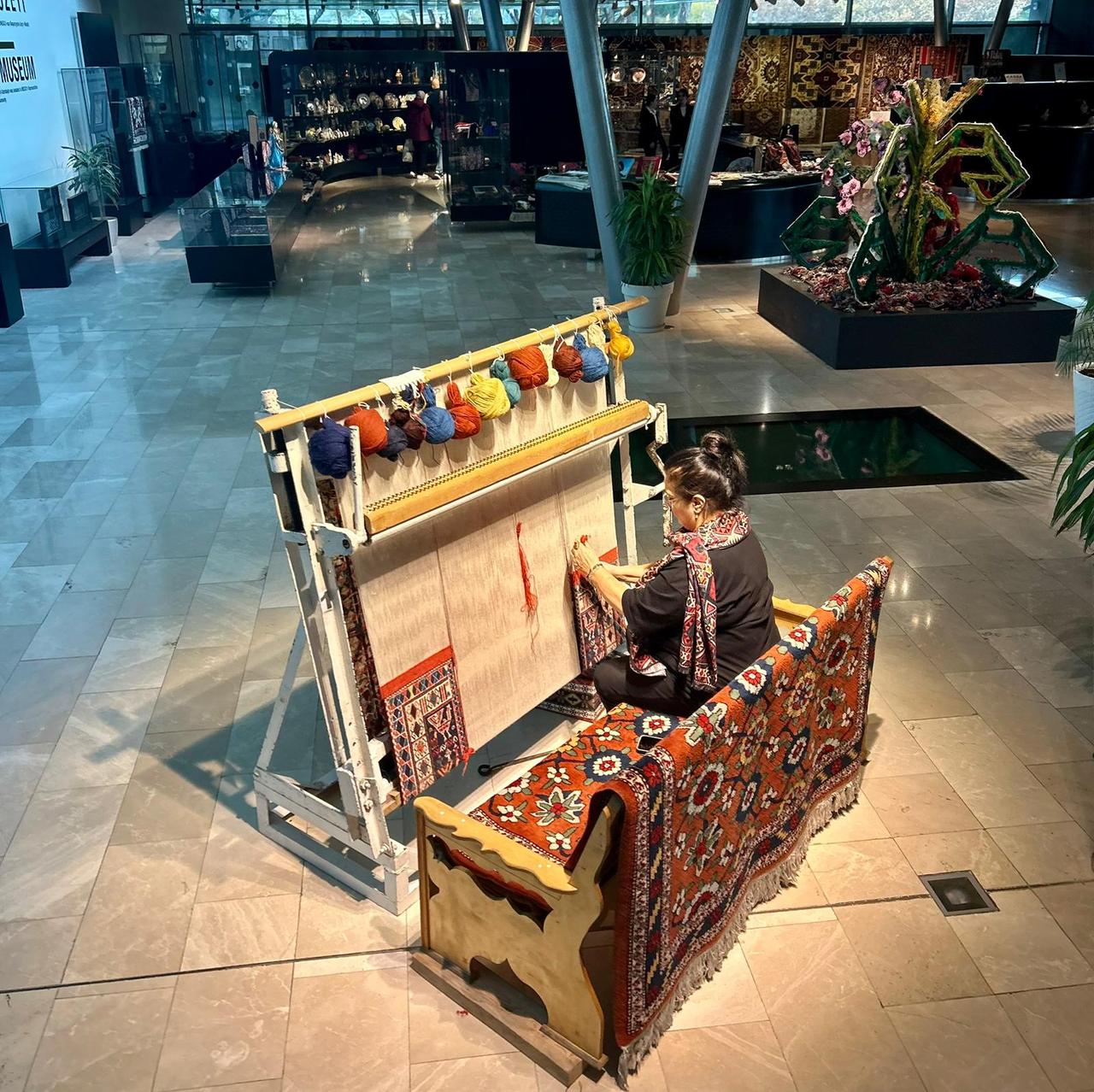
Artists Actively Continuing Carpet Weaving in Various Areas of the Museum (Photo: Duygu Şahinler)
The Azerbaijan Carpet Museum was established on 13 March 1967 by Decision No. 130 of the Council of Ministers of the Azerbaijan SSR. The pioneering idea for its creation came from Latif Kerimov, a leading researcher, painter, and teacher of Azerbaijani carpet art. His scholarly works, particularly his book "Azərbaycan Xalçası", are regarded as the most important foundational sources of the museum.
Since its founding, the museum has undergone several name changes. From 1967 to 1993, it operated under the name "Azərbaycan Xalçası və Xalq Tətbiqi Sənəti Dövlət Muzeyi". Between 1993 and 2014, it was renamed in honor of Latif Kerimov as "Azərbaycan Xalçası və Xalq Tətbiqi Sənəti Dövlət Muzeyi". Since 2014, it has been known by its current name, Azərbaycan Xalça Muzeyi.
The museum’s first exhibition opened on 26 April 1972 in the Friday Mosque, a 19th-century architectural monument located in the Inner City district of Baku. The then-leader Heydar Aliyev attended the opening ceremony and, through his subsequent support, enabled the museum to enrich its collection. During the 1970s and 1980s, numerous carpets and artistic pieces were collected from various regions of Azerbaijan and added to the museum’s holdings.
Following the dissolution of the Soviet Union, the museum relocated in 1992 to its current main building on Neftchiler Avenue, where a new exhibition layout was created featuring spacious halls for carpets and ethnographic artifacts. In 2007, by decision of President Ilham Aliyev and with the support of UNESCO and the Heydər Əliyev Foundation, construction began on a new building within the Seaside National Park. This modern museum building, designed by Austrian architect Franz Janz in the form of a rolled carpet, was opened to the public in 2014. The new structure was built to meet the most up-to-date museum standards and includes all essential components of a modern museum: exhibition halls, temporary exhibition spaces, conference and educational rooms, a children’s museum, conservation and restoration laboratories, storage areas, and a library. The interior design incorporates climate control and lighting systems specifically engineered to preserve carpets.
Today, the Azerbaijan National Carpet Museum continues to serve as a vital center for the preservation and promotion of Azerbaijani cultural heritage, having operated for over half a century since its founding.
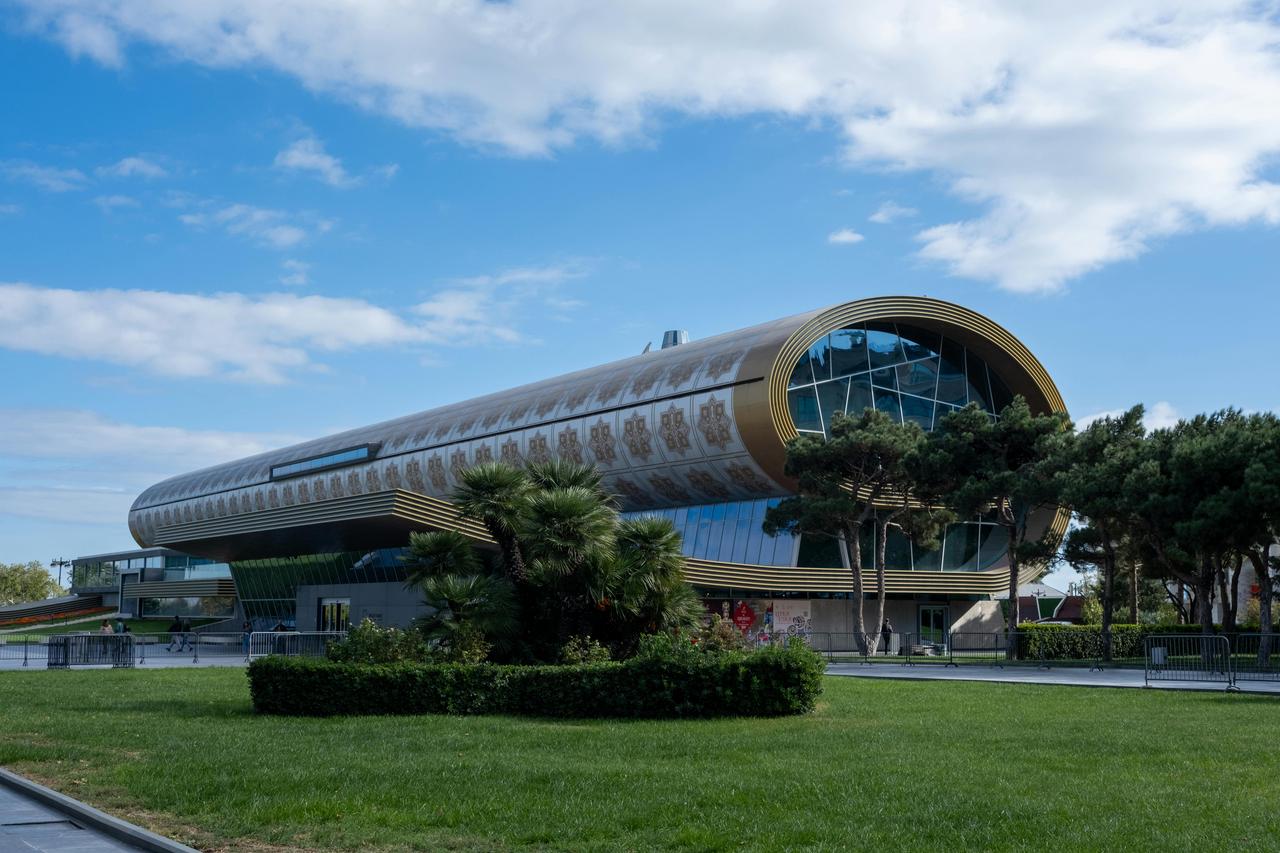
Azerbaijan Carpet Museum Designed by Franz Janz (Emrecan Algül, Pexels)
The collection of the Azerbaijan Carpet Museum has been enriched not only by examples of carpets and flat-woven textiles but also by ethnographic artifacts, jewelry, textile items, and archaeological finds. Today, the museum houses a collection of more than 6,000 objects.
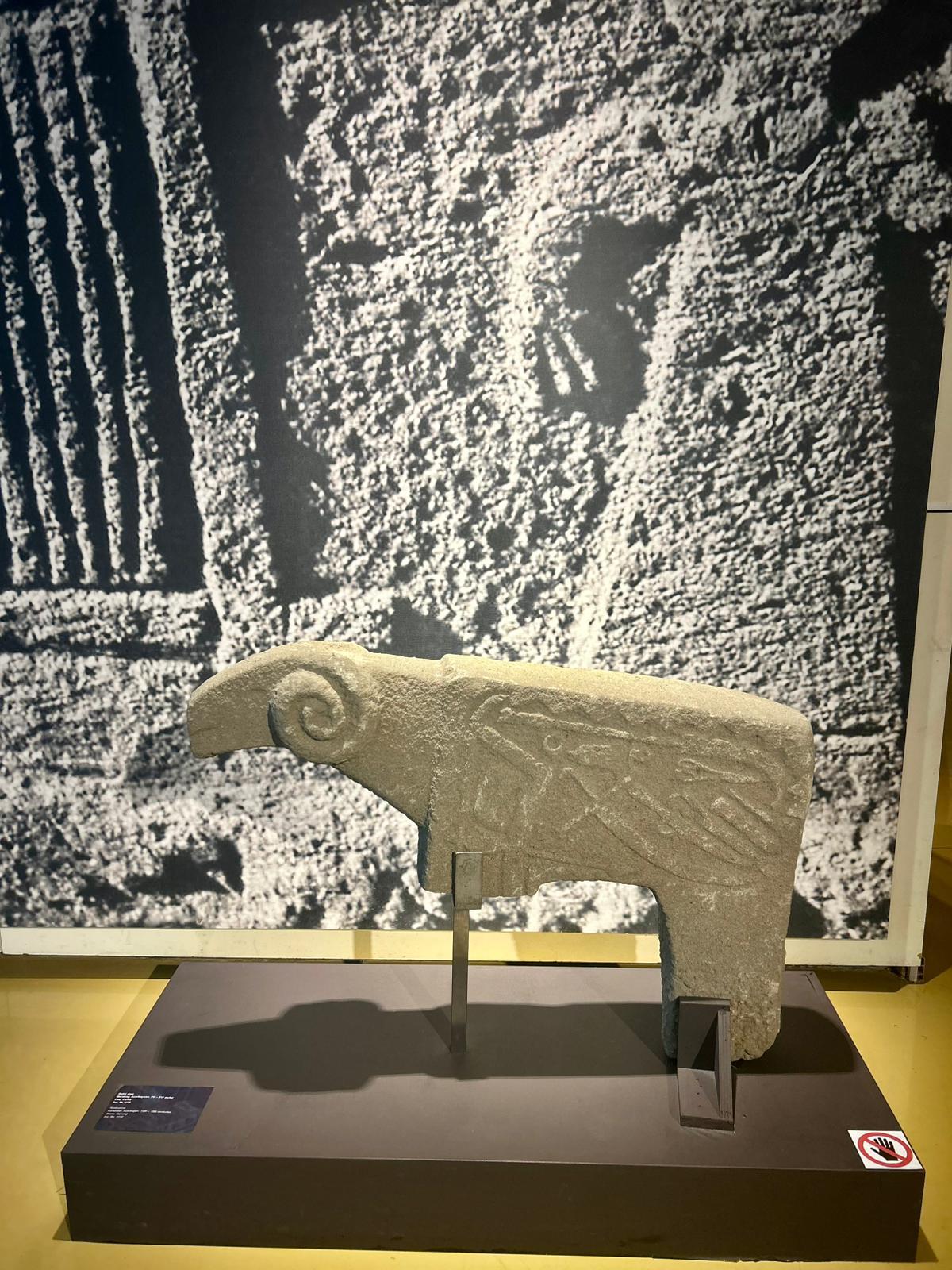
Grave Stone from the Karabakh Region, 15th–16th Century (Photo: Duygu Şahinler)
The most significant portion of the museum’s collection consists of carpets and flat-woven textiles from different regions of Azerbaijan. These pieces are displayed according to the regional classification developed by Latif Kerimov. Carpets reflecting the stylistic characteristics of major weaving centers such as Karabakh, Shirvan, Quba, Tabriz, Nakhchivan, Ganja, and Kazak reveal the diversity of Azerbaijani carpet art.
Among flat-woven textiles are traditional types such as kilim, palaz, zili, verni, şedde, sumak, and cecim. Additionally, ethnographic items such as bags, pouches, salt containers, and spoon holders are included in the collection.
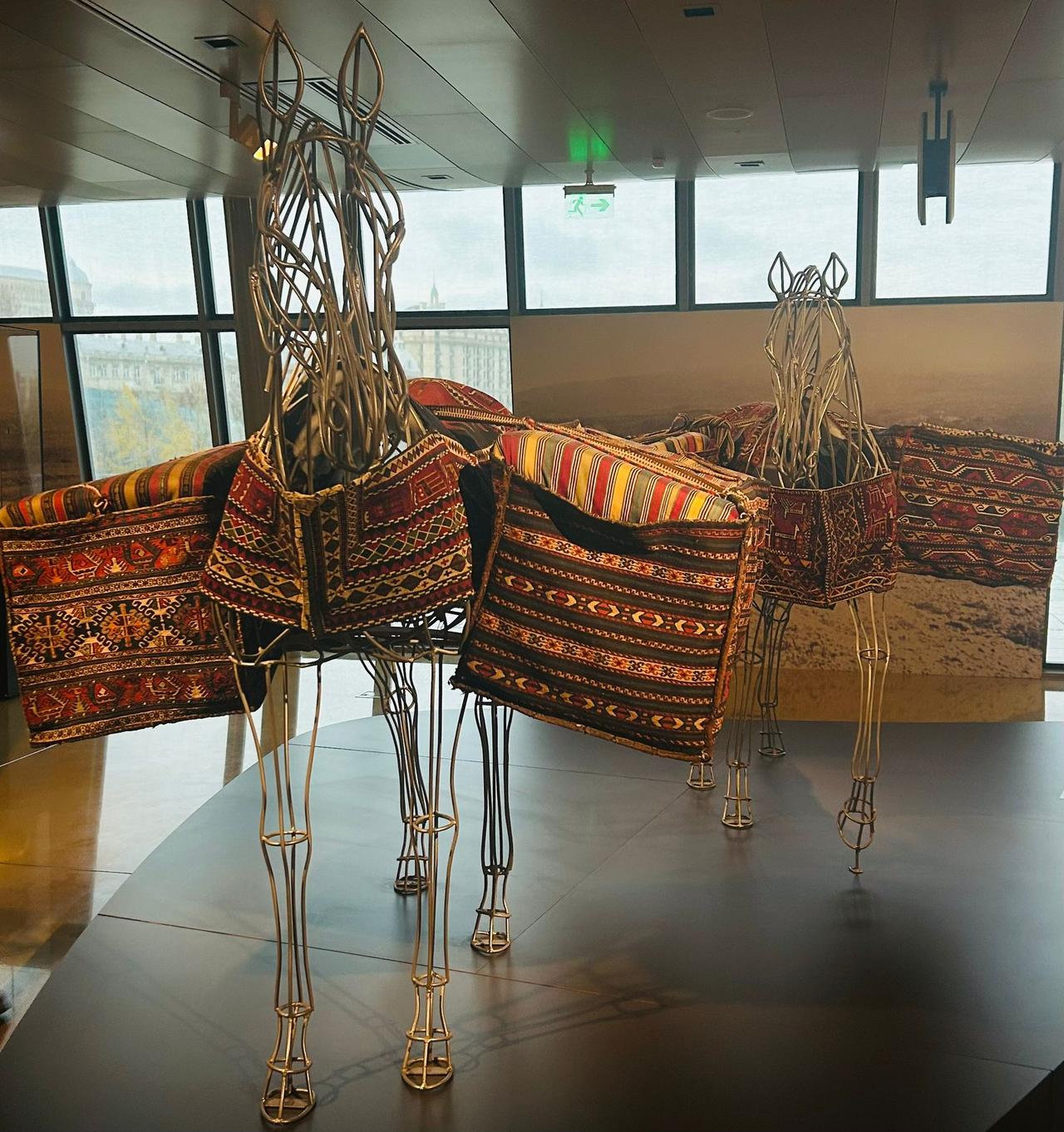
Textile Examples on Display at the Museum (Photo: Duygu Şahinler)
The museum displays not only carpets but also tools and equipment related to carpet weaving. Spindles, combs, loom parts, hammers, shearing scissors, and yarn-spinning devices document the production process of this traditional art. Furthermore, tombstones and archaeological materials dating back to the Neolithic period, which attest to the long history of textile culture, are among the collection’s most notable items.
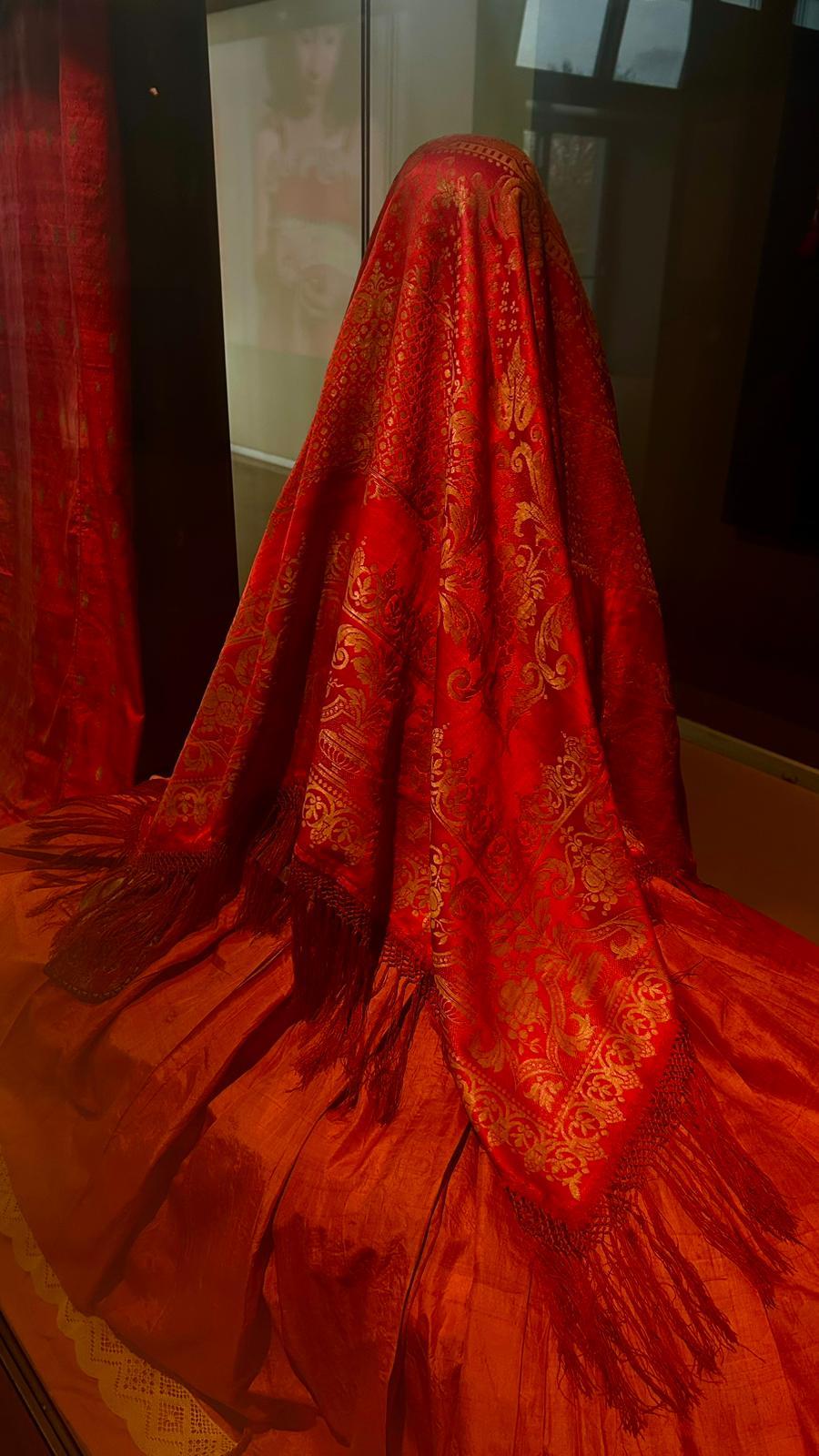
One of the Traditional Clothing Examples on Display at the Museum (Photo: Duygu Şahinler)
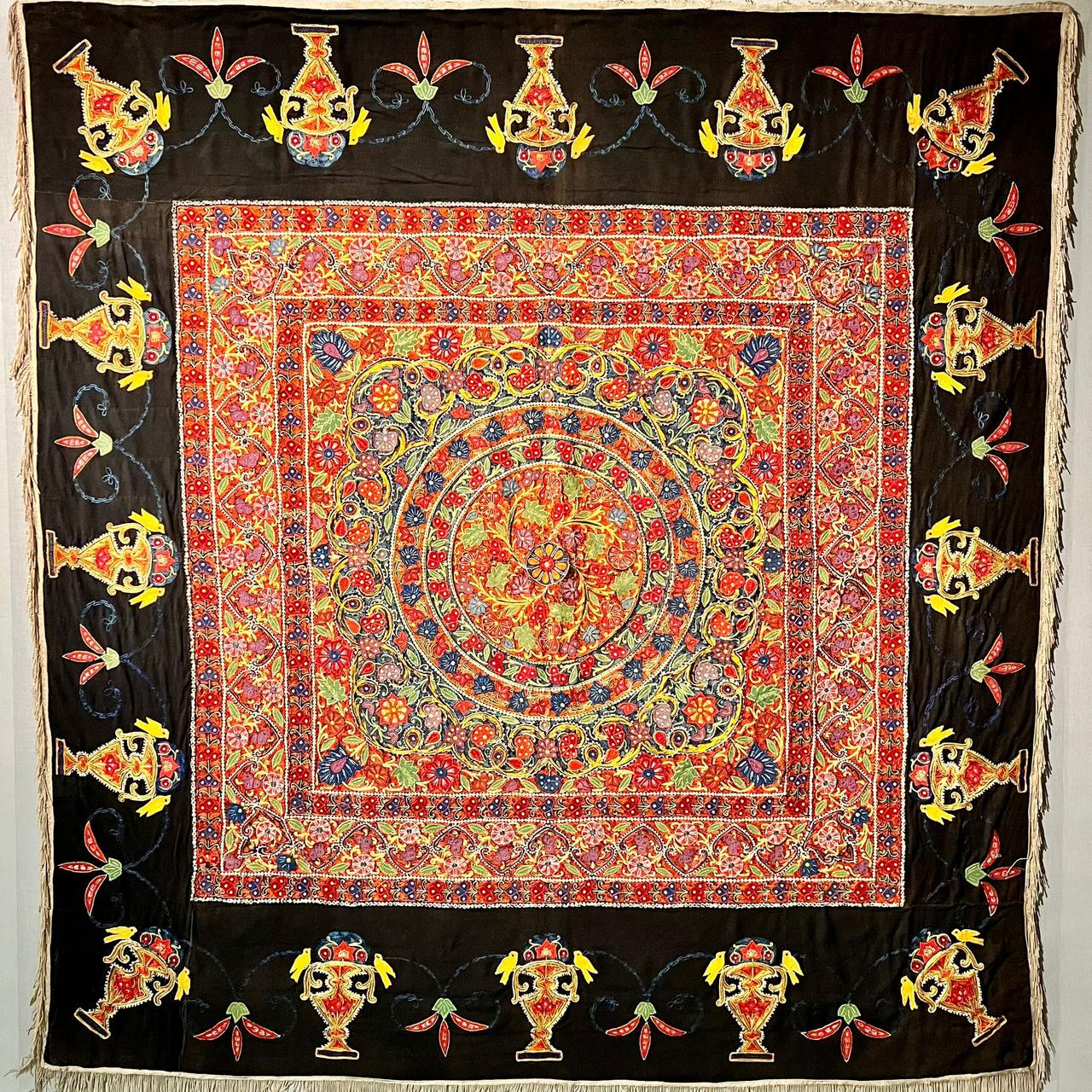
Example of Kelagayi on Display at the Museum (Photo: Duygu Şahinler)
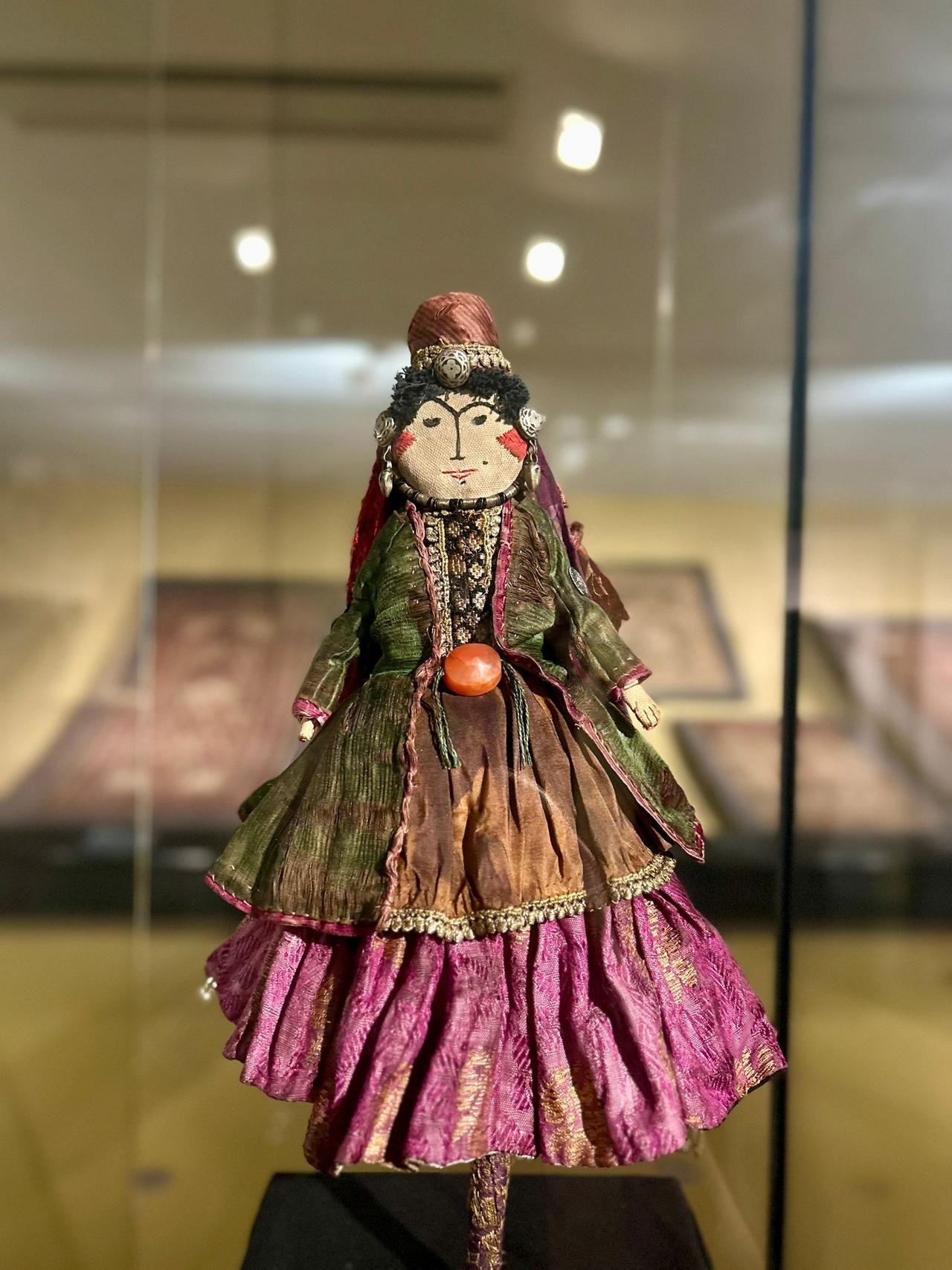
One of the Puppet Examples on Display at the Museum (Photo: Duygu Şahinler)
The museum’s collection also includes gold and silver jewelry from various regions of Azerbaijan, as well as traditional garments and textile samples. These artifacts are typically displayed in dedicated exhibition rooms. The textile storage unit serves as the facility for preserving and storing ethnographic items beyond carpets and flat-woven textiles.
Contemporary carpet examples produced from the second half of the 20th century to the present are also exhibited at the museum. Additionally, carpets designed by Azerbaijani carpet artists, particularly those by Latif Kerimov, form part of the museum’s collection.
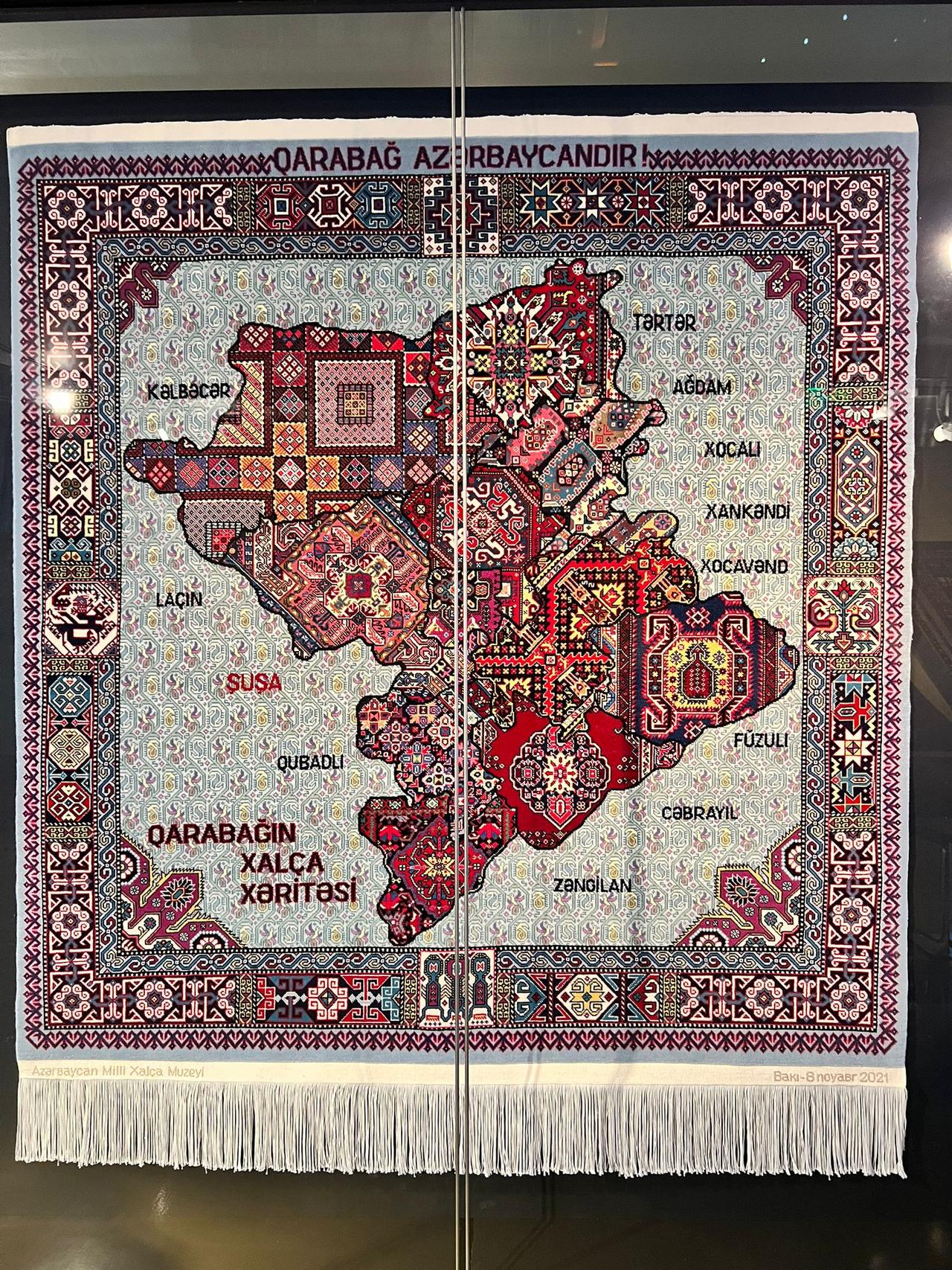
Carpet Map of Karabakh on Display at the Museum (Photo: Duygu Şahinler)
The Azerbaijan Carpet Museum presents its collection by combining traditional museum practices with contemporary exhibition techniques. The layout is designed to ensure the preservation of textiles while enabling visitors to experience the full aesthetic richness of the artworks.
The textile storage unit of the museum is located on this level, where carpets, flat-woven textiles, and ethnographic artifacts are preserved. The conservation and restoration laboratory, washing room, and a special exhibition room housing the jewelry collection are also situated here. Visitors can view this valuable jewelry collection on designated days.
The entrance area houses a gift shop, administrative offices, and the children’s museum. This section also features live weaving demonstrations by master weavers and workshops where visitors can try their hand at weaving on small looms. These activities transform the museum from a mere exhibition space into an interactive learning environment.
This floor displays examples of flat-woven textiles (pile-less carpets). Kilims, palazes, şeddes, zilis, vernis, sumaks, and cecims, as well as ethnographic items such as bags, pouches, spoon holders, and salt containers, are presented here. Tools used in weaving are also exhibited on this floor.
This floor is one of the museum’s most extensive sections. Pile carpets (classic carpets) are displayed according to Latif Kerimov’s regional classification. Groups of carpets from regions such as Karabakh, Shirvan, Quba, Tabriz, Nakhchivan, and Ganja are arranged separately, highlighting their distinctive motifs and compositional features.
The upper floor is dedicated to contemporary carpets and unique works by carpet artists. Here, modern carpets produced from the second half of the 20th century to the present, along with designs by artists such as Latif Kerimov, are exhibited. This floor demonstrates that carpet art remains a living and evolving tradition.
The Azerbaijan Carpet Museum is not merely an institution for displaying its collection; it is also a center for scientific research, educational initiatives, and international cultural events. The museum’s activities aim to promote, preserve, and transmit Azerbaijani carpet art to future generations.
Since its founding, the museum has hosted numerous international scientific events.
In 1983, the first international symposium on the theme “The Art of Oriental Carpets” was organized in Baku through the initiative of Heydar Aliyev and with the support of UNESCO.
In 1988, the symposium “Azerbaijan Carpet Art” was held.
In 2003, a symposium on “Azerbaijan Carpet and Folk Applied Art” took place.
In 2007, an international symposium was held at UNESCO’s headquarters in Paris in honor of the 100th anniversary of Latif Kerimov’s birth.
These events have facilitated the global recognition of Azerbaijani carpet art and enabled researchers and experts from different countries to exchange knowledge.
Over the past five decades, the museum has organized exhibitions in more than 30 countries worldwide. These exhibitions have introduced Azerbaijani carpets to international audiences and made a significant contribution to promoting the country’s cultural heritage. In addition, the museum organizes workshops, public lectures, and thematic exhibitions for both local and foreign visitors.
The museum also plays a vital role as an educational institution. Through its children’s museum, educational programs on carpet weaving are implemented for young audiences. Lectures, workshops, and seminars are organized for youth and researchers. Live weaving demonstrations allow visitors to actively participate in the process and contribute to the learning of traditional techniques.
The museum houses a conservation and restoration laboratory where scientific methods are employed to clean, repair, and preserve carpets. Additionally, the museum functions as a research and practical center for experts working in the field of carpet weaving.
The museum is a member and active participant in several major international institutions:
ICOM (International Council of Museums): Contributes to the development of global museum standards.
UNESCO: Participates in projects aimed at safeguarding intangible cultural heritage and leads efforts to promote Azerbaijani carpet art worldwide.
IFESCCO (Intergovernmental Fund for Cooperation in Education, Science and Culture): Engages in activities within the framework of education, science, and cultural cooperation.
European Textile Network (ETN): Facilitates information exchange on textiles and carpet weaving.
European Museum Forum (EMF): Enables exchange of experience on contemporary museum practices.
In 2004, with the initiative and contribution of the museum, the “National Law on the Protection and Development of Azerbaijani Carpets” was adopted. This law provides for state support in preserving and developing Azerbaijani carpets and outlines the training of scientific and methodological specialists. This legislative measure represents one of the most important steps taken at the state level to protect carpet art.
Azerbaijani carpet art was inscribed on UNESCO’s Representative List of the Intangible Cultural Heritage in 2010. This recognition affirmed that Azerbaijani carpet art is not only a national treasure but also a shared cultural heritage of humanity. The efforts of the Heydər Əliyev Foundation and the active work of Azerbaijan’s delegation at UNESCO played a key role in this process.
Algül, Emrecan. "Halı Müzesi." Pexels. Accessed September 14, 2025. https://www.pexels.com/tr-tr/fotograf/29232873/
ICOM Azerbaijan National Committee. "Azərbaycan Milli Xalça Muzeyi." Accessed September 14, 2025. https://icomaz.az/az/Az%C9%99rbaycan%20Milli%20Xal%C3%A7a%20Muzeyi
Yanar, Ayşem. “Azerbaycan Halı Müzesi.” *Akademik Sanat: Sanat, Tasarım ve Bilim Dergisi* 2019/Yaz: 26–33. Accessed September 14, 2025. https://dergipark.org.tr/tr/pub/akademiksanat/issue/47268/542675
Çolpan, Gizem. "Kültürel Mirasın Korunması Kapsamında Tarih ve Kültürün Dijital Aktarımı: ‘Azerbaycan Milli Halı Müzesi Örneği.' Premium Sosyal Bilimler E-Dergisi 8, no. 49 (2024): 1708–1716. Accessed September 14, 2025. https://zenodo.org/records/14585796
Çolpan, Gizem. *Azerbaycan Milli Halı Müzesi ve İstanbul Türk ve İstanbul İslam Eserleri Müzesi’ndeki Halı Eserlerin Korunma ve Sergilenme Yöntemleri.* Master's thesis, Süleyman Demirel University, Institute of Fine Arts, Department of Art and Design, 2024. Accessed September 14, 2025. https://tez.yok.gov.tr/UlusalTezMerkezi/TezGoster?key=usXiZIM9Lp0wk-YzRoaT-8_1ZH8AW1-xXCrKyr28bcO-TSnWVpZ6qZf8mkCOIZx_

Foundation Date | 13 March 1967 | ||||||||
|---|---|---|---|---|---|---|---|---|---|
Founder(s) | Latif Kerimov | ||||||||
Previous Names | 1967–1993: State Museum of Azerbaijani Carpets and Folk Applied Art, 1993–2014: State Museum of Azerbaijani Carpets and Folk Applied Art named after Latif Kerimov | ||||||||
Current Name | Azerbaijani Carpet Museum (2014–present) | ||||||||
Architect(s) | Franz Janz | ||||||||
Architectural Feature(s) | Modern museum building in the shape of a carpet roll | ||||||||
Significance | The world's first carpet museum | ||||||||
Director(s) | Aziz Aliyev (1967–1982) Şirin Melikova (2016–present) Röya Tağıyeva (1982–2016) | ||||||||
No Discussion Added Yet
Start discussion for "Azerbaijan Carpet Museum" article
Establishment of the Museum
Museum Collection
Carpets and Flat-Woven Textiles
Ethnographic and Archaeological Artifacts
Jewelry and Textile Storage
Contemporary Carpets and Artist Works
Exhibitions and Floor Plan
Floor Plan and Organization
Basement Level (−1)
Ground Floor
First Floor
Second Floor
Third Floor
Scientific and Cultural Activities
International Symposia and Conferences
Exhibitions and Cultural Events
Educational Activities
Conservation and Research
Cooperation with International Organizations
National Legal Framework