

 Recently Added:
This article was automatically translated from the original Turkish version.
The Azerbaijan–Armenia–United States Trilateral Summit was an international peace meeting held on 8 August 2025 at the White House in Washington D.C. the capital of the United States of America. The summit was attended by Azerbaijani President Ilham Aliyev Armenian Prime Minister Nikol Pashinyan and U.S. President Donald Trump. The purpose of the meeting was to sign a peace agreement aimed at ending the decades-long conflict between Azerbaijan and Armenia.

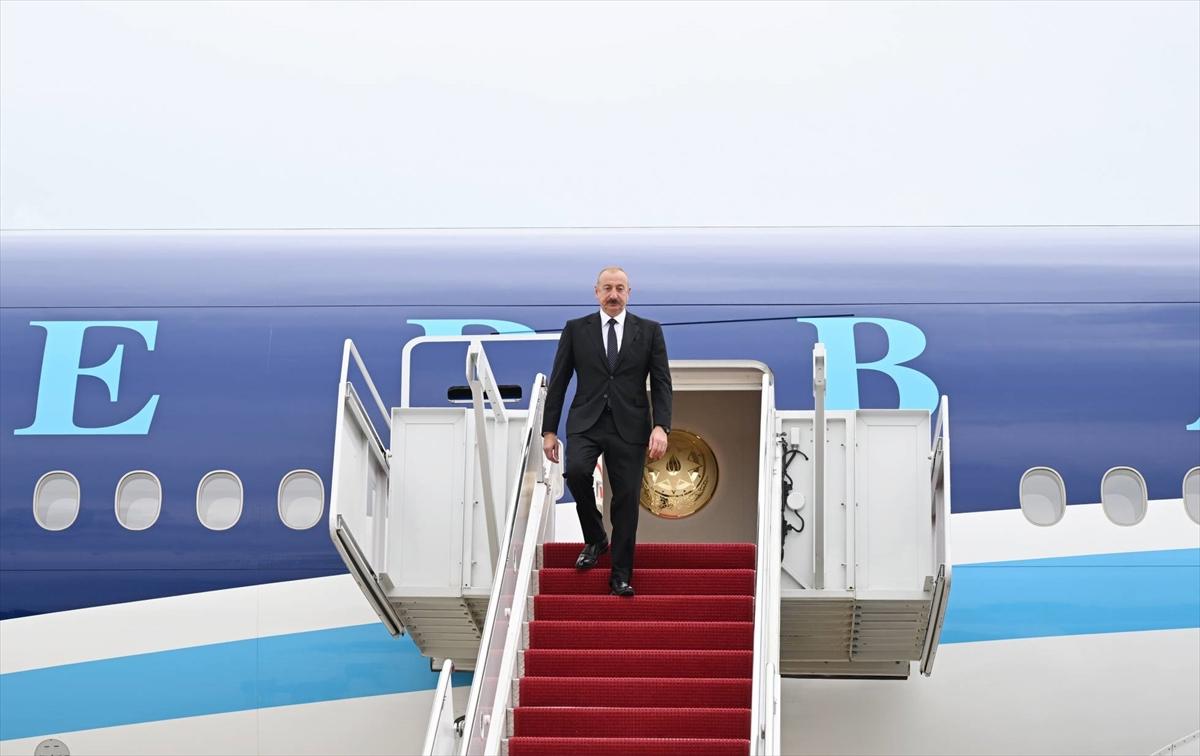
Azerbaijani President Aliyev in the United States on 7 August 2025 – (Anadolu Agency)
As a result of the summit the parties signed a joint declaration agreeing to the complete cessation of hostilities the initiation of commercial travel and diplomatic relations and mutual respect for sovereignty and territorial integrity.
The conflict between Azerbaijan and Armenia began in the late 1980s following the dissolution of the Soviet Union. Disputes over the ethnic Armenian population of the Nagorno-Karabakh region which was part of Azerbaijan escalated into the First Karabakh War between 1992 and 1994. During this period forces backed by Armenia gained control over Nagorno-Karabakh and seven surrounding districts. A ceasefire was declared with the signing of the Bishkek Protocol in 1994.
In 2020 Azerbaijan regained control of some occupied territories following the Second Karabakh War which took place between 27 September and 10 November and is known as the “44-Day War.” Hostilities ended with a ceasefire agreement signed on 10 November 2020 under Russian mediation.
In 2021 Azerbaijan formally offered Armenia a peace proposal and presented a five-point draft framework. Meetings held in Moscow Brussels and Washington in 2022 and 2023 maintained dialogue between the parties. By 2023 Azerbaijan had established full control over Nagorno-Karabakh and approximately 100000 ethnic Armenians from the region migrated to Armenia.
In March 2025 the parties reached a preliminary agreement on a 17-point draft peace text. The draft included principles such as mutual recognition of territorial integrity the absence of third-country military presence along the border the renunciation of international judicial proceedings and the denial of special status to Karabakh. Talks held in Abu Dhabi in July 2025 marked the final diplomatic step before the Washington summit.
The trilateral summit program in Washington took place on 7–8 August 2025. Bilateral and trilateral meetings were held at the White House as part of the summit. In the first phase U.S. President Donald Trump held a bilateral meeting with Armenian Prime Minister Nikol Pashinyan. Subsequently Trump held a separate bilateral meeting with Azerbaijani President Ilham Aliyev.

Azerbaijan and Armenia sign a joint declaration “for peace” at the White House summit on 8 August 2025 – (Anadolu Agency)
Following these bilateral meetings the leaders moved to a trilateral format and a joint signing ceremony was held at the White House. During the ceremony the peace agreement and joint declaration documents were signed and photo opportunities open to the press were conducted.
The Armenian delegation included the Minister of Foreign Affairs the Secretary of the Security Council deputy ministers and the Minister of High-Tech Industry. The Azerbaijani delegation consisted of senior diplomatic representatives and relevant ministers.
A signing and initialing session was held at the White House on 8 August 2025. Attended by Azerbaijani President Ilham Aliyev Armenian Prime Minister Nikol Pashinyan and U.S. President Donald Trump the session resulted in the signing of a joint declaration by the parties.
The signed document provided for the complete cessation of hostilities the initiation of commercial and diplomatic relations and mutual respect for territorial integrity. It also included provisions on the absence of third-country military presence along the border the withdrawal of pending cases before international judicial bodies and the denial of special status to Karabakh.
The joint declaration has been drafted as a framework agreement encompassing provisions aimed at opening regional transport routes, defining borders through mutual consent, and developing mechanisms for economic cooperation. Following the signing ceremony, the U.S. Department of State issued a written statement describing this step as a significant advancement toward lasting peace.
One of the key elements of the peace agreement is the Transit Corridor Arrangement, known as the “Trump Route for International Peace and Prosperity” (TRIPP). This arrangement envisions the creation of a connection route between the main territory of Azerbaijan and the Nakhchivan Autonomous Republic, passing through Armenian territory.
Different sources cite the length of the corridor as either 32 kilometers or 43 kilometers. The route is planned to include a railway line as well as oil and natural gas pipelines and fiber-optic communication infrastructure. According to the agreement, the United States will hold exclusive development and operational rights within this corridor, with these rights defined under a long-term concession framework. The U.S. is also granted the option to transfer these rights to third-party companies through leasing or consortium models.
The security, customs, and transit regime of the corridor will be subject to Armenian legislation, with Armenia exercising oversight within the framework of its territorial integrity and sovereignty. The parties have emphasized that this arrangement is based not on the concept of a “corridor” but on the principle of mutual and sovereign use of roads. Interest from U.S. and other international companies in the project has already emerged, with nine firms—including three based in the United States—expressing interest in developing the corridor.
The route envisioned under TRIPP passes through the Megri region, also known as the Zangezur Corridor. This has reignited longstanding debates over “transit rights” between the parties. Azerbaijan has demanded the establishment of an unimpeded and secure connection between its main territory and Nakhchivan, reinforcing this demand with emphasis on the continuity of transit and the absence of any obstruction.
Armenia, however, has stated that the route will remain under its sovereign control and that all security and customs inspections will be conducted in accordance with Armenian law. The Yerevan administration has affirmed that no third-country or foreign security presence will be permitted along the route. Within this framework, the principle adopted is that while U.S. or other international companies may operate the corridor, Armenia will retain full oversight authority.
According to statements made by leaders during the summit, negotiations on the technical details and implementation procedures of the route will continue after the signing of the agreement. It has been decided that this issue will be one of the top priorities for the technical committees to be established in Washington following the summit.
The United States assumed a central role during the trilateral summit in Washington, acting both as host and mediator. The process included direct involvement by U.S. President Donald Trump and the participation of special envoy and mediator Steve Witkoff. The U.S. side not only facilitated the signing of the peace agreement between Azerbaijan and Armenia but also introduced additional arrangements aimed at advancing bilateral relations.
During the summit, a memorandum of understanding was signed between the United States and Azerbaijan, outlining cooperation in energy, technology, and artificial intelligence. Similarly, bilateral agreements covering trade, technology, and transportation sectors were concluded between the United States and Armenia.
The foundation of the joint declaration signed in Washington is a 17-article draft peace text agreed upon in March 2025. This draft envisions mutual recognition by both parties of each other’s sovereignty and territorial integrity. It emphasizes that the borders of Azerbaijan and Armenia must be determined based on the administrative boundaries existing at the time of the dissolution of the Soviet Union.
The peace draft also stipulates that Karabakh will not be granted any special status and that no third-country military forces will be stationed in the region. The parties have agreed to withdraw lawsuits filed against each other in international judicial bodies. It is specified that direct diplomatic dialogue will serve as the primary means for resolving disputes and that such dialogue may be supported by international mediation.
The draft text also includes provisions for the implementation of confidence-building measures in border areas, the acceleration of mine-clearance operations, and the promotion of cooperation in economic, transport, and communication fields. These articles form the technical framework of the joint declaration signed at the Washington summit.
The joint declaration signed in Washington has been positively received by numerous countries and international organizations. The Ministry of Foreign Affairs of the Republic of Türkiye, in a written statement, expressed satisfaction with the progress achieved toward establishing lasting peace between Azerbaijan and Armenia and with the will recorded in Washington. The statement highlighted that a historic opportunity has been seized to achieve peace and prosperity in the South Caucasus and affirmed Türkiye’s continued commitment to contributing to this process.
European Council President Antonio Costa and European Commission President Ursula von der Leyen, in a joint written statement, characterized the political declaration signed in Washington as a significant development for both Armenia and Azerbaijan, stating that it paves the way for lasting peace. The statement also emphasized the importance of timely implementation of the agreed steps toward full normalization of relations between the two countries.
The Austrian Federal Ministry for European and International Affairs, in a written statement on social media, expressed its support for the step taken in Washington and noted that it would benefit the entire region. The statement also indicated Austria’s readiness to assist in subsequent phases. The U.S. Department of State, in its official statement, assessed the agreement as an opportunity to unlock the economic potential of the South Caucasus.
AP News. “Trump Announces Peace Agreement between Azerbaijan, Armenia.” Accessed August 9, 2025. https://apnews.com/article/donald-trump-white-house-armenia-azerbaijan-069379e9c4a058c96af38afbf4684829
Al Jazeera. "Trump to Host Azerbaijan, Armenia Leaders to Sign US-Brokered Deal." Accessed August 8, 2025. https://www.aljazeera.com/news/2025/8/8/trump-to-host-azerbaijan-armenia-leaders-to-sign-us-brokered-deal
Al Jazeera. “Azerbaijan and Armenia Sign Accord Overseen by Trump at the White House.” Accessed August 9, 2025. https://www.aljazeera.com/news/2025/8/8/azerbaijan-and-armenia-sign-accord-overseen-by-trump-at-the-white-house
Anadolu Ajansı. "Azerbaycan ile Ermenistan Arasında İmzalanan Ortak Deklarasyon Birçok Ülke ve Kuruluş Tarafından Memnuniyetle Karşılandı." Accessed August 9, 2025. https://www.aa.com.tr/tr/dunya/azerbaycan-ile-ermenistan-arasinda-imzalanan-ortak-deklarasyon-bircok-ulke-ve-kurulus-tarafindan-memnuniyetle-karsilandi/3654669
Anadolu Ajansı. "Azerbaycan ve Ermenistan Barış Anlaşmasını Parafladı." Accessed August 9, 2025. https://www.aa.com.tr/tr/dunya/azerbaycan-ve-ermenistan-baris-anlasmasini-parafladi/3654523#
Anadolu Ajansı. "Azerbaycan-Ermenistan Barış Süreci Kapsamında Washington’daki Üçlü Zirvede Barış Anlaşmasının Paraflanması Bekleniyor." Accessed August 8, 2025. https://www.aa.com.tr/tr/dunya/azerbaycan-ermenistan-baris-sureci-kapsaminda-washingtondaki-uclu-zirvede-baris-anlasmasinin-paraflanmasi-bekleniyor/3653097#
Anadolu Ajansı. "Trump to Announce Initial Deal to End Azerbaijan-Armenia Conflict." Accessed August 8, 2025. https://www.aa.com.tr/en/world/trump-to-announce-initial-deal-to-end-azerbaijan-armenia-conflict/3653359#
Anadolu Ajansı. “Azerbaijan’s President Arrives in US ahead of Trilateral Peace Talks with Armenia.” Accessed August 8, 2025. https://www.aa.com.tr/en/world/azerbaijan-s-president-arrives-in-us-ahead-of-trilateral-peace-talks-with-armenia/3653225#
Anadolu Ajansı. “Dışişleri Bakanlığı: Azerbaycan ile Ermenistan Arasında Kalıcı Barışa Yönelik Atılan Adımdan Memnuniyet Duyuyoruz.” Accessed August 9, 2025. https://www.aa.com.tr/tr/gundem/disisleri-bakanligi-azerbaycan-ile-ermenistan-arasinda-kalici-barisa-yonelik-atilan-adimdan-memnuniyet-duyuyoruz/3654606
Anadolu Ajansı. “Trump to Host Leaders of Azerbaijan, Armenia at White House for Historic Peace Summit.” Accessed August 8, 2025. https://www.aa.com.tr/en/politics/trump-to-host-leaders-of-azerbaijan-armenia-at-white-house-for-historic-peace-summit/3653524#
Anadolu Ajansı. “Trump to Host Trilateral Peace Talks with Azerbaijan, Armenia in Washington.” Accessed August 8, 2025. https://www.aa.com.tr/en/americas/trump-to-host-trilateral-peace-talks-with-azerbaijan-armenia-in-washington/3651824#
Aze.Media. “Armenia Has Disclosed the Text of the Peace Agreement with Azerbaijan.” Accessed August 8, 2025. https://aze.media/armenia-has-disclosed-the-text-of-the-peace-agreement-with-azerbaijan/
BBC. “Armenia and Azerbaijan Sign Historic Peace Agreement.” Accessed August 9, 2025. https://www.bbc.com/news/articles/c39dzl1lzrgo
Reuters. "Trump Announces Peace Agreement between Azerbaijan, Armenia." Accessed August 9, 2025. https://www.reuters.com/world/trump-announces-peace-agreement-between-azerbaijan-armenia-2025-08-08/
Reuters. “US Secures Strategic Transit Corridor in Armenia-Azerbaijan Peace Deal.” Accessed August 8, 2025. https://www.reuters.com/world/us-secures-strategic-transit-corridor-armenia-azerbaijan-peace-deal-2025-08-07/
The Guardian. “Trump claims to have reached ‘historic’ peace deal between Armenia and Azerbaijan.” Accessed August 8, 2025. https://www.theguardian.com/world/2025/aug/08/armenia-azerbaijan-peace-deal-trump-summit-claim
U.S. Department of State. “Peace Deal between Armenia and Azerbaijan.” U.S. Department of State. Accessed August 9, 2025. https://www.state.gov/releases/office-of-the-spokesperson/2025/08/peace-deal-between-armenia-and-azerbaijan

On 8 August 2025 in Washington the President of Azerbaijan Ilham Aliyev and the Prime Minister of Armenia Nikol Pashinyan met under the hosting of U.S. President Donald Trump. The leaders signed a joint declaration foreseeing the complete cessation of hostilities mutual respect for territorial integrity and the initiation of diplomatic and commercial relations. Under the agreement a transit corridor named the Trump Route for International Peace and Prosperity connecting Azerbaijan and Nakhchivan through Armenian territory was established. The summit concluded with the transition of the 17-point peace draft agreed upon by the parties in March 2025 to the signing stage.
No Discussion Added Yet
Start discussion for "Azerbaijan–Armenia–USA Trilateral Summit (2025)" article
August 8, 2025
Historical Background and Previous Negotiations
August 8, 2025
Washington Program and Protocol Flow
August 8, 2025
Signing and Initialing Session and Core Documents
August 8, 2025
Transit Corridor Arrangement (TRIPP)
August 8, 2025
Zangezur/Megri Route Debate and Party Demands
August 8, 2025
The Role of the United States and Bilateral Arrangements
August 8, 2025
Principles and Articles of the Peace Text (March 2025 Agreement Framework)
August 8, 2025
International Reactions and Official Statements