This article was automatically translated from the original Turkish version.
+1 More
Type(s) | Sweet without syrup / Traditional flour-based dessert | ||||||||
|---|---|---|---|---|---|---|---|---|---|
Geographical Indication Type(s) | Mahreç Sign | ||||||||
Registration Date | 6 November 2017 | ||||||||
Registering Institution | Samsun Metropolitan Municipality | ||||||||
Place of Production / Geographical Boundary | Bafra district, Samsun province, Türkiye | ||||||||
Field of Use | Served as a gift during holidays, weddings, and special occasions; consumed with tea | ||||||||
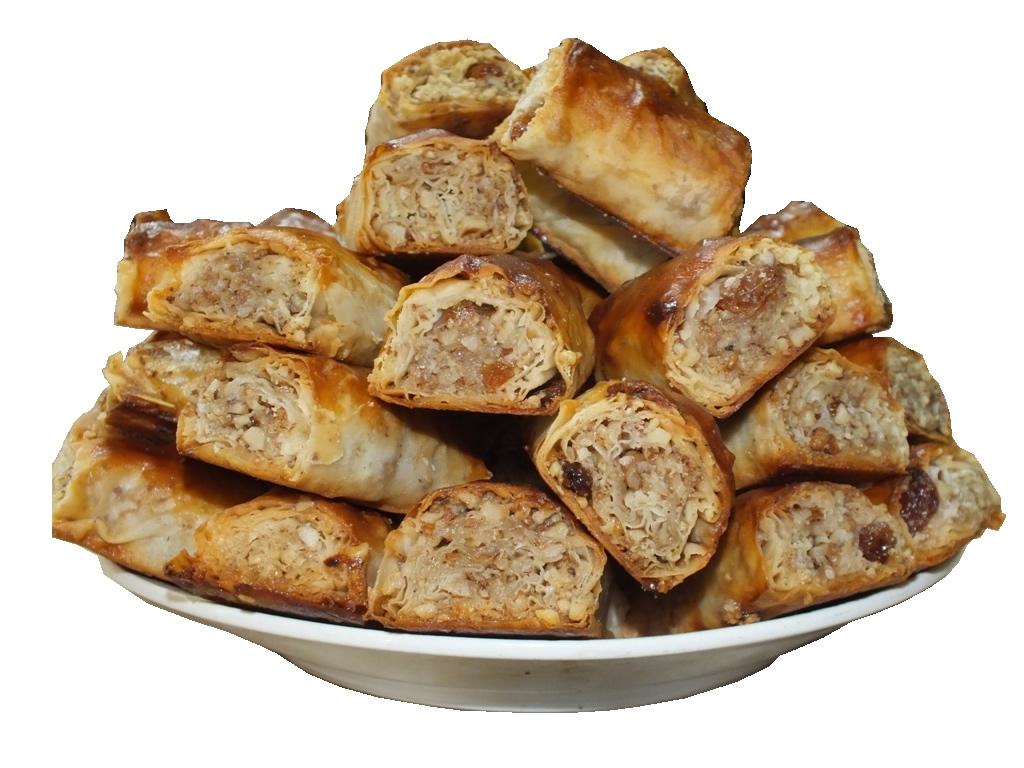
Bafra Nokulu is a traditional sweet bread from the Bafra district of Samsun province in Türkiye’s Black Sea Region, made from yeast-leavened dough without syrup. This delicacy is commonly offered during religious holidays, weddings, and special occasions, and has become culturally and geographically synonymous with the region. Shaped by rolling the dough into cylinders and slicing it into approximately 10 cm pieces before baking, Bafra Nokulu possesses distinctive characteristics in terms of ingredients and production technique.

Bafra Nokulu ( Culture Portal)
Bafra Nokulu reflects the multicultural social fabric of Bafra. This sweet bread carries traces of Turkish, Greek, and Circassian culinary traditions and has been passed down through generations as a local recipe. Traditions such as offering it to neighbors during holidays and gifting it upon return from pilgrimage have given it a special place in the sociocultural life of the community. It is also traditionally presented in a local basket known as the Bafra Zembili, preserving the regional custom of serving.
The main features that distinguish Bafra Nokulu from similar sweet breads are:
The basic ingredients required to produce Bafra Nokulu for approximately 10 people (about 30 pieces) are:
After the dough is kneaded and allowed to rest, it is rolled out into thin sheets using a rolling pin. Each sheet is brushed with the oil mixture and sprinkled with the filling. The sheets are then rolled into cylinders, cut into pieces, and brushed with the egg yolk and oil mixture before being baked in a preheated oven at 180°C until golden brown. After cooling, it is typically served in the regional Bafra Zembili basket.
The Bafra Zembili is a traditional woven basket made from “kındıra grass,” grown in the Kızılırmak Delta, and corn husks. Serving Bafra Nokulu in this basket is a customary practice that reinforces the cultural context of the dish.
Bafra Nokulu was officially registered with a geographical indication by the Turkish Patent and Trademark Office on 6 November 2017 (Registration No: 227). The registering institution is the Samsun Metropolitan Municipality. Monitoring activities regarding production and the use of the geographical indication are carried out by a commission composed of representatives from Ondokuz Mayıs University, the Bafra Directorate of Food, Agriculture and Livestock, and the Bafra Chamber of Commerce and Industry, under the coordination of the Samsun Metropolitan Municipality.
Bafra Nokulu is produced both domestically and through local bakeries and pastry shops. This sweet bread is displayed at regional product markets and gastronomy festivals, contributing to Bafra’s local economy. Additionally, as a gift or token carried away from home, it serves as a cultural link for those living abroad.
Ministry of Culture and Tourism, Republic of Türkiye. "Bafra Nokulu." *Kültür Portalı*. Accessed July 10, 2025. https://www.kulturportali.gov.tr/turkiye/samsun/neyenir/bafra-nokulu.
Samsun Büyükşehir Municipality. *Bafra Nokulu Coğrafi İşaret Tescil Belgesi*. Ankara: Türk Patent ve Marka Kurumu, November 6, 2017. Accessed July 10, 2025. https://ci.turkpatent.gov.tr/Files/GeographicalSigns/227.pdf.
Turkish Patent and Trademark Office. "Bafra Nokulu." *Geographical Indications and Traditional Products Database*. Accessed July 10, 2025. https://ci.turkpatent.gov.tr/cografi-isaretler/detay/38068.

Type(s) | Sweet without syrup / Traditional flour-based dessert | ||||||||
|---|---|---|---|---|---|---|---|---|---|
Geographical Indication Type(s) | Mahreç Sign | ||||||||
Registration Date | 6 November 2017 | ||||||||
Registering Institution | Samsun Metropolitan Municipality | ||||||||
Place of Production / Geographical Boundary | Bafra district, Samsun province, Türkiye | ||||||||
Field of Use | Served as a gift during holidays, weddings, and special occasions; consumed with tea | ||||||||
Origin and Cultural Value
Distinctive Features
Production Process
Serving with Bafra Zembili
Geographical Indication and Regulation
Economic and Sociocultural Significance