

This article was automatically translated from the original Turkish version.
Balıkesir Pullusu
Type of Geographical İndication | Mahreç Sign | ||||||||
|---|---|---|---|---|---|---|---|---|---|
Application Date | 26.04.2021 | ||||||||
Registration Number | 984 | ||||||||
Registration Date | 23.12.2021 | ||||||||
Product / Product Group(s) | Handicraft products other than carpets kilims and textiles | ||||||||
Province(s) | Balıkesir | ||||||||
Applicant/Registrant(s) | Balıkesir Metropolitan Municipality | ||||||||
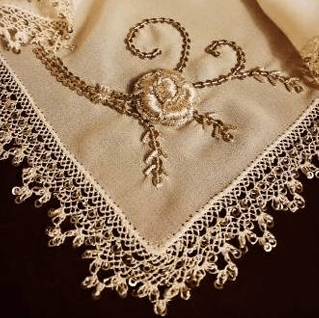
Balıkesir Pullusu is a distinctive traditional woven fabric from Türkiye’s Balıkesir province and one of the most notable examples of the region’s textile heritage. It is characterized by ornate patterns created using shiny threads. The fabric derives its name from its bright, scale-like motifs. Produced using the pullama technique, this fabric has played a significant role in both everyday life and special occasions, particularly in traditional attire.
The origins of Balıkesir Pullusu trace back to the Ottoman period. Women in rural areas traditionally used it to embellish bridal trousseau items such as headscarves and bindallı garments. This fabric reflects the local population’s craftsmanship, patience, and aesthetic sensibility.
The production of Balıkesir Pullusu typically involves the following materials:
The traditional production process of Balıkesir Pullusu consists of the following stages:
Balıkesir Pullusu is not merely a fabric within Balıkesir’s folk culture; it is also a vehicle for transmitting tradition. It is commonly worn by women as headscarves or shawls during traditional weddings and is used as a costume element in folk dances.
Balıkesir Pullusu has been officially registered as a geographical indication by the Turkish Patent and Trademark Office. This registration prevents fabrics produced outside Balıkesir from being marketed under this name, thereby protecting local producers and traditional craftsmanship.
Although interest in hand weaving has declined due to the proliferation of modern textile machinery and ready-to-wear fashion, efforts are underway to revive the production of Balıkesir Pullusu through Balıkesir Community Education Centers, vocational high schools, and women’s cooperatives. Additionally, some fashion designers are integrating traditional weaves into contemporary designs.
Accessed November 26, 2025.
Accessed November 26, 2025.
Akça, A. (2024). Gelenekten Geleceğe Balıkesir Pullusu. Akademik Birikim Dergisi, 7(2), 231–245.
Balıkesir Pullusu Coğrafi İşaret Tescil Bilgisi (2023). Türk Patent ve Marka Kurumu.
Balıkesir Pullusu Teknik Şartnamesi (PDF). Türk Patent ve Marka Kurumu.
Sarıtaş, Selma. 2023. “Coğrafi İşaretleri Açısından Balıkesir İli Üzerine Bir Değerlendirme.” Kültür Araştırmaları Dergisi, no. 19: 308–25.

Balıkesir Pullusu
Type of Geographical İndication | Mahreç Sign | ||||||||
|---|---|---|---|---|---|---|---|---|---|
Application Date | 26.04.2021 | ||||||||
Registration Number | 984 | ||||||||
Registration Date | 23.12.2021 | ||||||||
Product / Product Group(s) | Handicraft products other than carpets kilims and textiles | ||||||||
Province(s) | Balıkesir | ||||||||
Applicant/Registrant(s) | Balıkesir Metropolitan Municipality | ||||||||
History and Origins
Production Features and Materials Used
Production Steps
Cultural Significance and Geographical Indication Registration
Current Status