


This article was automatically translated from the original Turkish version.
+2 More
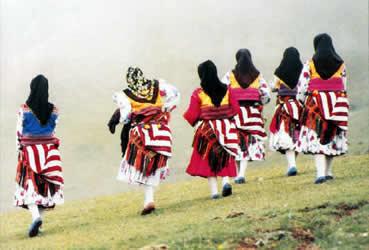
Ağasar/Şalpazarı Regional Clothing
Registration Number | 1729 | ||||||||
|---|---|---|---|---|---|---|---|---|---|
Registration Date | 28.04.2025 | ||||||||
Application Number | C2024/000036 | ||||||||
Application Date | 02.02.2024 | ||||||||
Name of the Geographical Indication | Ağasar Traditional Clothing / Şalpazarı Traditional Clothing | ||||||||
Product / Product Group(s) | Handicraft Products Excluding Clothing Rugs and Textiles Carpets | ||||||||
Type of Geographical Indication | Mahreç Mark | ||||||||
Applicant/Registrant(s) | Ağasar Folklore Research Youth and Sports Club Association | ||||||||
Address of the Registrant | Kirazlıtepe Neighborhood Municipal Neighborhood Market 5 Üsküdar İSTANBUL | ||||||||
Geographical Boundary | Şalpazarı District of Trabzon Province | ||||||||
Ağasar / Şalpazarı Regional Clothing refers to traditional garments worn by women in daily life in the Şalpazarı district of Trabzon Province, with a long historical tradition. These garments stand out as an intangible cultural heritage element that reflects Şalpazarı’s cultural identity, historical continuity, and social structure.
In 2025, as a result of an application submitted by the Ağasar Folklore Research Youth and Sports Club Association, these garments were registered as a geographical indication under Law No. 6769 on Industrial Property. The registration was approved on 28 April 2025, with the condition that production must occur within the geographical boundaries of Şalpazarı.

Ağasar / Şalpazarı Regional Clothing (Türk Patent)
The Ağasar regional women’s attire consists of numerous components, each carrying both functional and symbolic significance:
The çember, worn as a headscarf, is square-shaped (100 x 100 cm). It is typically decorated with beads, sequins, needle lace, and firkete lace. Binding styles include “guşkuyruk” (open throat) and “gukul” (closed throat). Sequins are placed along the forehead area.
The kırmalı fistan comprises four parts: robe, bodice, sleeves, and skirt. Satin, jarse, velvet, and crepe fabrics are preferred. Although the skirt is narrow, it appears voluminous due to gathered pleats. The front bodice and skirt edges are embellished with ornamental strips called “sutaşı.” The robe section is usually made with a dominant collar, to which “pat” or “biye” trims are sewn.
The yelek consists of three parts: front-front-back. It has a U-shaped neckline that reveals the robe portion of the fistan. The lining is typically made of divitin fabric; the outer surface is crafted from satin, jarse, or crepe. Fringe pieces are sewn along the neckline and hem, to which triangular muska shapes are applied using the appliqué technique. Hand-embroidered motifs feature plant and geometric patterns. Tearing seams are located at the junctions of the front and back panels.
The dizlik, worn beneath the fistan, resembles wide trousers. It is sewn from 2.20 meters of divitin fabric, forming right and left legs with a meshed upper section. Elastic bands are attached at the waist and legs to help maintain the fistan’s voluminous silhouette.
The kuşak is formed by folding a 115 x 115 cm square fabric into a triangle. It features tasselled buckles on two sides and ribbon ties for fastening around the waist. In addition to its aesthetic function, it provides physical support by protecting the lower back and reducing strain during carrying loads. The ends of the kuşak are finished with “kuşak çapanı (gazez).”
The kuşak tokası is made from cardboard, beads, and flosh thread. Beads are wound onto the cardboard with thread; the thread is knotted at the end and further decorated. The finished piece is mounted on the back of the kuşak.
The peştamal, wrapped over the kuşak, is woven in patterns of burgundy-black or white-burgundy. It is tied from the left side of the waist. The ends are folded toward the center of the kuşak to reveal the kuşak tokası.
A woven band approximately 2.5–3 meters long and 1.5 cm wide, the kılık bağı is wrapped over the peştamal. Its ends are tasselled and beaded. The weaving is done on traditional handlooms. The color sequence follows a pattern of 40 rows black, 16 red, 8 yellow, and 4 white. At the end, telki bağı knots are woven onto the ends to attach the tassels.
The bel bağı is knitted using acrylic yarn and knitting needles with a knit-purl technique. It measures 2 meters in length and 15 stitches in width. Fringes are added to the ends and decorated with beads.
White socks reaching below the knee are worn with shoes featuring “kara lastik” or “naylon lastik” soles. The shoes are simple in design, prioritizing functionality.
The çentik, worn on the arm, serves as an accessory.
Ağasar regional garments are largely based on handcrafting:
The entire production process of these garments must take place exclusively within the boundaries of Şalpazarı district, Trabzon Province. The garments are directly linked to the region’s historical, cultural, and socio-economic context and carry a geographical indication.
The registration holder is the Ağasar Folklore Research Youth and Sports Club Association.
Address: Kirazlıtepe Mah. Belediye Semt Pazarı 5, Üsküdar / İSTANBUL
The production methods and proper use of the emblem are inspected at least once annually by a three-member oversight body coordinated by the Şalpazarı District National Education Directorate. This board consists of representatives from the Şalpazarı Community Education Center and the Chamber of Agriculture.
Ağasar Folklor Araştırma Gençlik ve Spor Kulübü Derneği. "Ağasar Yöresel Giysileri / Şalpazarı Yöresel Giysileri (Mahreç İşareti Başvuru Belgesi). Tescil No: 1729." Türk Patent ve Marka Kurumu. Accessed May 20, 2025. https://webim.turkpatent.gov.tr/file/bfaddd34-b04b-4302-bfa9-ab62627a0981?download=&name=197.
Ağasar Folklor Araştırma Gençlik ve Spor Kulübü Derneği. "Ağasar Yöresel Giysileri / Şalpazarı Yöresel Giysileri." Türk Patent ve Marka Kurumu Coğrafi İşaretler Portalı. Accessed May 20, 2025. https://ci.turkpatent.gov.tr/cografi-isaretler/detay/11071.

Ağasar/Şalpazarı Regional Clothing
Registration Number | 1729 | ||||||||
|---|---|---|---|---|---|---|---|---|---|
Registration Date | 28.04.2025 | ||||||||
Application Number | C2024/000036 | ||||||||
Application Date | 02.02.2024 | ||||||||
Name of the Geographical Indication | Ağasar Traditional Clothing / Şalpazarı Traditional Clothing | ||||||||
Product / Product Group(s) | Handicraft Products Excluding Clothing Rugs and Textiles Carpets | ||||||||
Type of Geographical Indication | Mahreç Mark | ||||||||
Applicant/Registrant(s) | Ağasar Folklore Research Youth and Sports Club Association | ||||||||
Address of the Registrant | Kirazlıtepe Neighborhood Municipal Neighborhood Market 5 Üsküdar İSTANBUL | ||||||||
Geographical Boundary | Şalpazarı District of Trabzon Province | ||||||||
No Discussion Added Yet
Start discussion for "Ağasar / Şalpazarı Regional Clothing" article
Components and Garment Elements
Çember
Fistan
Yelek
Dizlik
Kuşak
Kuşak Tokası
Peştamal
Kılık Bağı
Bel Bağı
Ayakkabı ve Çorap
Çentik
Production Techniques
Geographical Link and Registration
Monitoring Mechanism