


This article was automatically translated from the original Turkish version.
+2 More
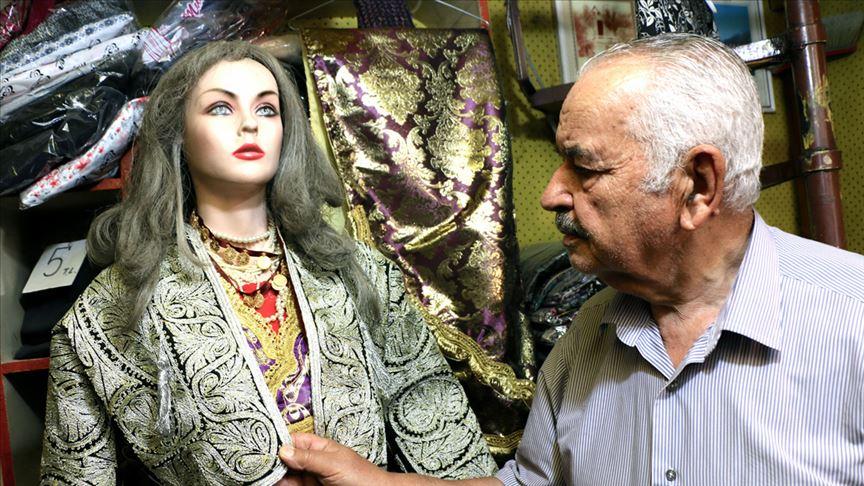
Sivrihisar Sarkası (AA)
Registration Number | 1161 | ||||||||
|---|---|---|---|---|---|---|---|---|---|
Application Number | C2021/000310 | ||||||||
Application Date | 11.08.2021 | ||||||||
Registration Date | 05.07.2022 | ||||||||
Applicant/Registrant(s) | Sivrihisar Belediyesi | ||||||||
Product / Product Group(s) | Cepken / El Sanatları | ||||||||
Sivrihisar sarkası is a traditional garment produced in the Sivrihisar district of Eskişehir province, crafted on wool, cotton, velvet, or sof fabric using embroidery techniques with sequins, metallic thread, beads, and paillettes in a cepken style.
Sivrihisar sarkası belongs to the category of handcrafted products. It has been registered by the Turkish Patent and Trademark Office as a "mahreç işareti". A mahreç işareti identifies a product that is distinctly associated with a specific geographical area due to its unique qualities, reputation, or other characteristics, and requires at least one stage of production to take place within the defined geographical region.
Sivrihisar sarkası is a cepken with a narrow fitted collar, long sleeves, and an open front, with a length reaching the waistline or shorter. One of its distinctive features is the lining, made from a silk and cotton blend fabric known locally as "hera". The embroidery technique involves applying cords formed by twisting metallic thread using a specialized fastening method. Another distinguishing trait is the absence of embroidery along the underarm seam. Various motifs are used in the embroidery, incorporating colors such as red, purple, navy blue, cherry red, and black. Traditionally, Sivrihisar sarkası is worn as a set with savayi şalvar (pesent), an undershirt (dikolta-dekolte), and a belt.
The embroiderer inscribes the date of completion at the center of the main motif on the back of the sarka. The unembroidered fabric left around the motif’s edges forms a contour that outlines the design. The embroidery thread is predominantly silver in color. One tassel, called "tura", is attached to the front chest area and another to the center of the back as decorative elements. Additionally, three tassels known as "tura" are suspended from the back of the garment. Depending on the motif used, three types of sarka are recognized in the region: apple sarka, pear sarka, and swallow sarka.
All stages of Sivrihisar sarkası production are carried out within the defined geographical boundary of the Sivrihisar district. The production method consists of the following steps:
The geographical boundary of Sivrihisar sarkası is defined as the Sivrihisar district of Eskişehir province. The production method, materials used, and the transmission of craftsmanship across generations define the product’s association with the Sivrihisar region under the geographical indication framework.
The application for the geographical indication of Sivrihisar sarkası was submitted by the Sivrihisar Municipality. The application, numbered C2021/000310, was filed on 11 August 2021. Following the evaluation process, the product was officially registered as a "mahreç işareti" on 5 July 2022 under registration number 1161. The registrant’s address is recorded as Cumhuriyet Mahallesi, Süleyman Demirel Caddesi No:1, Sivrihisar, Eskişehir.
Anadolu Ajansı. 2019. “Sivrihisar Sarkası’nın 74 Yıllık Ustası.” Anadolu Ajansı, July 14, 2019. Accessed May 26, 2025. https://www.aa.com.tr/tr/yasam/sivrihisar-sarkasinin-74-yillik-ustasi/1531130.
Türk Patent ve Marka Kurumu. 2022. *Sivrihisar Sarkası Mahreç İşareti Tescil Belgesi*. Tescil No. 1161. Ankara: Türk Patent ve Marka Kurumu. Accessed May 26, 2025. https://ci.turkpatent.gov.tr/Files/GeographicalSigns/e245f90e-5ca7-45e4-bc24-be6230e915e9.pdf.

Sivrihisar Sarkası (AA)
Registration Number | 1161 | ||||||||
|---|---|---|---|---|---|---|---|---|---|
Application Number | C2021/000310 | ||||||||
Application Date | 11.08.2021 | ||||||||
Registration Date | 05.07.2022 | ||||||||
Applicant/Registrant(s) | Sivrihisar Belediyesi | ||||||||
Product / Product Group(s) | Cepken / El Sanatları | ||||||||
Product Profile and Geographical Indication Type
Product Definition and Distinctive Features
Production Method
Geographical Origin and Boundaries
Registration Process and Details