


This article was automatically translated from the original Turkish version.
+2 More
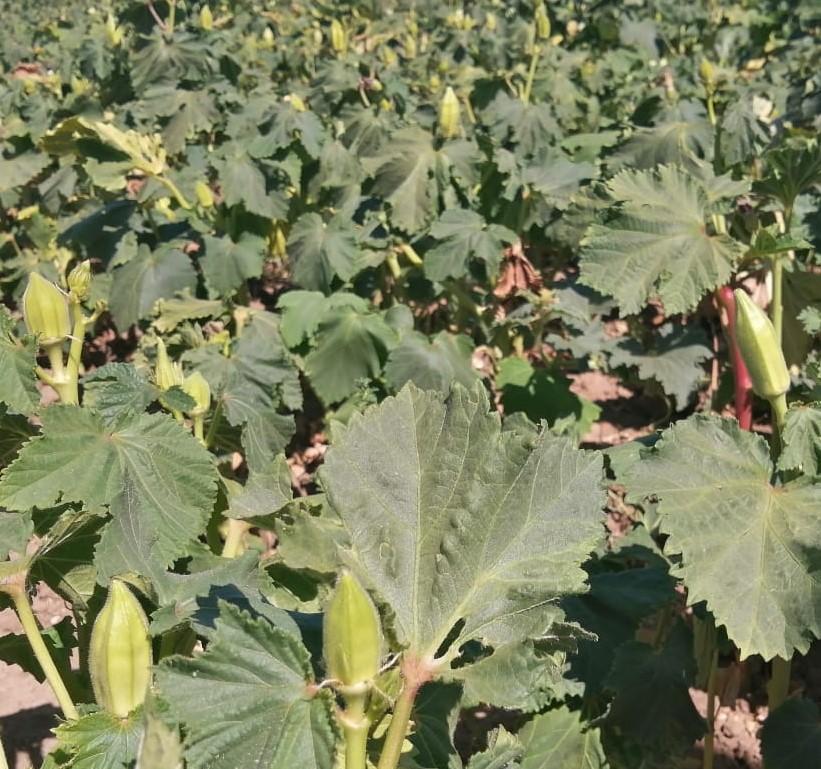
Balıkesir Round Eggplant
Product / Product Group(s) | Processed and unprocessed fruits and mushrooms vegetables | ||||||||
|---|---|---|---|---|---|---|---|---|---|
Applicant/Registrant(s) | Balıkesir Metropolitan Municipality | ||||||||
Registration Date | 29.04.2024 | ||||||||
File Number | C2023/000216 | ||||||||
Registration Number | 1580 | ||||||||
Place of Production | Balıkesir, Türkiye | ||||||||
Balıkesir Round Okra is a local variety of okra cultivated in Balıkesir Province, Türkiye. It is characterized by its six- to eight-angled, plump fruits with low mucilage content. It was officially registered as a “Geographical Indication” by the Turkish Patent and Trademark Office on 29 April 2024.
Balıkesir Round Okra belongs to the species Abelmoschus esculentus L. and is typically marketed as a fresh vegetable or in dried form. Its fruit is distinguished by its short, blunt-ended shape. The six- to eight-angled, fleshy structure constitutes one of its primary distinctive features.
The fruit color is green. Plant height varies between 40–110 cm depending on irrigation conditions. The stem is thick and sturdy, with a light green to yellowish-green hue. Protein content in the fruit ranges from 2.5–4.0% on a fresh weight basis, while fat content ranges from 0.17–0.25% on a dry matter basis. Additionally, the low level of mucilage (slimy texture) inside the fruit enhances its ease of use.
Seed color is white, with each fruit containing 4–40 seeds. Fruit length ranges from 2–10 cm and width from 12–40 mm. It contains significant proportions of oleic acid (C18:1) and linoleic acid (C18:2) in its fatty acid composition.

Balıkesir Round Okra (Balıkesir Municipality)
Sowing begins in mid-April. After preparing the soil, seeds are planted at a depth of 3–5 cm with row spacing of 70–80 cm. Typically, three seeds are placed in each hill and covered with composted farm manure to support germination. Seeds are often pre-soaked in damp cloth to enhance germination rates.
Although the crop can be grown without irrigation, drip irrigation during critical growth stages can improve yield. Fertilizer requirements are low, but supplementary application of compost and farm manure positively affects productivity.
Harvesting of Balıkesir Round Okra typically begins in early June and continues until mid-September. Gloves or fabric are worn during harvesting to protect the hands. Harvested fruits are sorted by size and marketed in small bags or crates.
Drying is carried out between July and September, either under direct sunlight or in modern drying tunnels. Recommended storage conditions are a temperature of 7–10 °C and relative humidity of 90–95%. Products are placed on the market in food-safe packaging with labeling that complies with applicable regulations.

Balıkesir Round Okra Harvest (Generated by Artificial Intelligence)
The production area of Balıkesir Round Okra is limited exclusively to Balıkesir Province. The control process is conducted by a minimum three-member commission composed of representatives from the Balıkesir Metropolitan Municipality, the Balıkesir Vegetable and Fruit Traders’ Chamber, and the Balıkesir Provincial Directorate of Agriculture and Forestry.
Anadolu Ajansı. "Balıkesir Bamyasında 2 Bin 250 Ton Rekolte Bekleniyor." Accessed May 27, 2025. https://www.aa.com.tr/tr/turkiye/balikesir-bamyasinda-2-bin-250-ton-rekolte-bekleniyor/1552431
Balıkesir Büyükşehir Municipality. "Balıkesir’s Gömeç Bamyası in the World Market." Balıkesir Metropolitan Municipality. Accessed May 27, 2025. https://balikesir.bel.tr/haberler/balikesirin-gomec-bamyasi-dunya-pazarinda
TRT Haber. "Altı Köşeli Balıkesir Bamyasında Hasat Dönemi." Accessed May 27, 2025. https://www.trthaber.com/foto-galeri/alti-koseli-balikesir-bamyasinda-hasat-donemi/27407/sayfa-3.html
Turk Patent and Trademark Office. Balıkesir Tombul Bamyası – Coğrafi İşaret Sicil Belgesi No: 1580.
Turk Patent and Trademark Office. Accessed May 27, 2025. https://ci.turkpatent.gov.tr/cografi-isaretler/detay/10002

Balıkesir Round Eggplant
Product / Product Group(s) | Processed and unprocessed fruits and mushrooms vegetables | ||||||||
|---|---|---|---|---|---|---|---|---|---|
Applicant/Registrant(s) | Balıkesir Metropolitan Municipality | ||||||||
Registration Date | 29.04.2024 | ||||||||
File Number | C2023/000216 | ||||||||
Registration Number | 1580 | ||||||||
Place of Production | Balıkesir, Türkiye | ||||||||
No Discussion Added Yet
Start discussion for "Balıkesir Round Eggplant" article
Product Description and Distinctive Characteristics
Production Method
Sowing and Cultivation
Harvesting and Post-Harvest Handling
Geographical Boundary and Control