

This article was automatically translated from the original Turkish version.
+1 More
Origin(s) | Bali Indonesia | ||||||||
|---|---|---|---|---|---|---|---|---|---|
Type(s) | Mythological Figure / Sacred Dance-Drama | ||||||||
Other Name(s) | Banaspati Raja (Lord of the Forests) Pota Egeg | ||||||||
Opposite Figure | Rangda (Evil / Widow Witch) | ||||||||
Origin Language | Sanskrit | ||||||||
Related Myths | Calonarang, Ratu Gede Mechaling | ||||||||
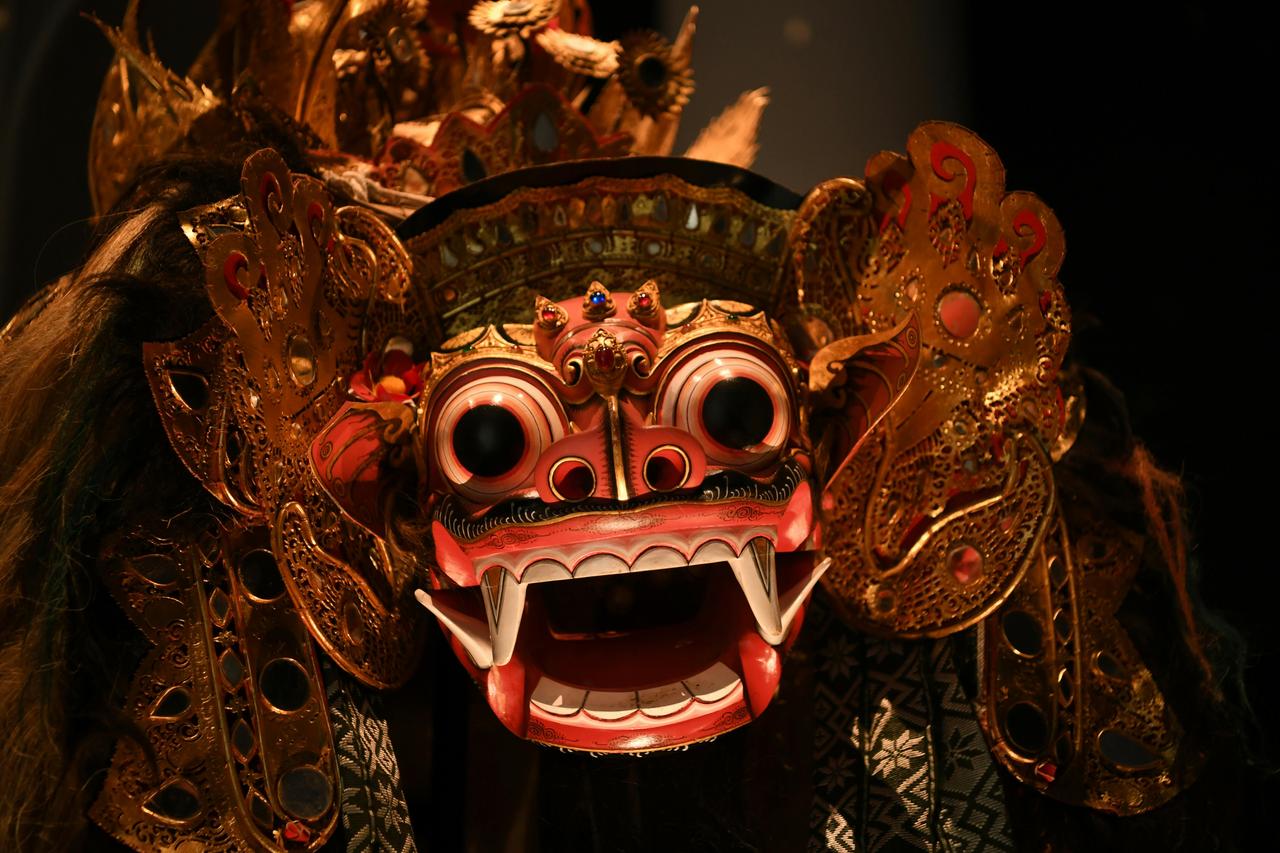
Barong is a sacred figure in Balinese mythology, representing goodness, protection, and the leadership of spirits. It is the eternal adversary of Rangda, the symbol of evil and destruction (the witch widow), and is believed to possess great spiritual power that protects the Balinese people from epidemics, black magic, and malevolent spirits.
There are two differing approaches regarding the origin of the word "Barong":
The term is thought to derive from the Sanskrit word bahrwang, meaning "bear." Although bears do not exist in Bali, this name signifies a mythological protective force.
The word may have originated from the Sanskrit root Barong Bhairawa, meaning "terrifying," or from the Balinese word Brerong, which refers to a type of forest cat.
The existence and protective role of Barong are based on various legends:
On the island of Nusa Penida, off the southeast coast of Bali, the demon queen Ratu Gede Mechaling attacked Bali in the form of Barong, spreading disease. In response, a priest possessing white magic (kanda-empat) revived Banaspati Raja, the "Lord of the Forests." Banaspati Raja assumed the true form of Barong and expelled the evil spirits from the island. Since this event, Barong has become a symbol invoked to protect villages during times of illness.
According to one account, the god Shiva descended to earth after his wife transformed into a terrifying entity, taking the form of a giant Pota Egeg or Barong.
In different regions of Bali, Barongs appear in various animal forms corresponding to the local protective spirits. Each type has distinct physical characteristics:
The Barong Dance is one of Bali’s most important ritual and performing arts, centered on the Barong figure. Its origins trace back to pre-Hindu times, and it preserves movements imitating nature, such as the lion’s neck motions (ngeraja singa) and the leaping of birds (gelatik nuwut papah).

Barong Dance (Flickr)
The dance typically dramatizes the struggle between Barong (good) and Rangda (evil), particularly drawing from the Calonarang story.
Bandem, I Made. "Barong Dance." *The World of Music* 18, no. 3 (1976): 45-52. Accessed January 6, 2026. https://www.jstor.org/stable/pdf/43563555.pdf?refreqid=fastly-default%3A1ab791ecd61b6ebf84304ae932f5eb90&ab_segments=&initiator=&acceptTC=1
Kebudayaan Indonesia. "Tari Barong." Archived March 24, 2015. Accessed January 6, 2026. https://web.archive.org/web/20150324203035/http://kebudayaanindonesia.net/kebudayaan/882/tari-barong.
Wisdom Library. "Barong and Rangda Mythology." *Bhuta-Daiva Worshipping Cult.* Accessed January 6, 2026. https://www.wisdomlib.org/history/essay/bhuta-daiva-worshipping-cult/d/doc1238895.html.

Origin(s) | Bali Indonesia | ||||||||
|---|---|---|---|---|---|---|---|---|---|
Type(s) | Mythological Figure / Sacred Dance-Drama | ||||||||
Other Name(s) | Banaspati Raja (Lord of the Forests) Pota Egeg | ||||||||
Opposite Figure | Rangda (Evil / Widow Witch) | ||||||||
Origin Language | Sanskrit | ||||||||
Related Myths | Calonarang, Ratu Gede Mechaling | ||||||||
Etiymology
Sanskrit Origin
Alternative Origin
Mythological Origins and Legends
The Ratu Gede Mechaling Legend
The Shiva Legend
Types of Barong
Barong Dance (Tari Barong)
Performance Content