

This article was automatically translated from the original Turkish version.
+2 More
Origin(s) | Randa (Old Balinese / Kawi) — 'widow' | ||||||||
|---|---|---|---|---|---|---|---|---|---|
Ritual Dance | Barong–Rangda dance drama | ||||||||
Opposing Figure | Barong (protective force) | ||||||||
Artistic Representation | Grotesque mask, long tongue, sharp claws | ||||||||
Ritual Function | Gathering and transforming negative energy (Marūpa Somya) | ||||||||
Prominent Feature | Black magic, disease, and chaotic power | ||||||||
Mythological Basis | The Calon Arang story (11th century, East Java) | ||||||||
Cosmological Role | Rwa Bhineda — balance between good and evil | ||||||||
Theological Identity | Local and fearsome manifestation of the goddess Durga | ||||||||
Culture / Belief | Balinese Hinduism | ||||||||
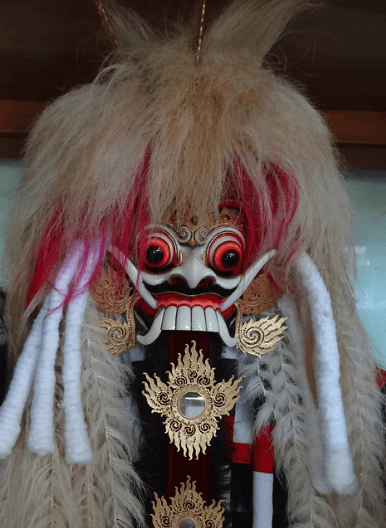
Rangda is a mythological figure in Balinese Hinduism, representing negative energy, death, and destruction, often depicted as a witch or sorceress. The name derives from the Old Balinese and Old Javanese (Kawi) word randa, meaning "widow." In Balinese cosmology, Rangda is regarded as a terrifying manifestation of the goddess Durga, integrated into local culture, and serves as a fundamental element of the "Rwa Bhineda" (dualism) concept, symbolizing the eternal struggle between good and evil forces in the universe. She is particularly known for her ritual battles with the lion-like Barong.
The figure of Rangda originates from the Calon Arang narrative, which dates back to the 11th century during the reign of King Airlangga of East Java. According to this text, Rangda is a widow sorceress from the village of Girah who, enraged that her daughter Ratna Manggali could not marry, used rituals performed with the goddess Durga (Bhagawati) in a cemetery to gain destructive power and unleashed a plague upon the kingdom. Her historical origins are sometimes linked to Queen Mahendradatta, mother of King Airlangga, whose exile on charges of practicing black magic established the social foundation of Rangda’s identity as the "angry widow."
In another theological narrative, Rangda is portrayed as the terrifying form Ra Nini of the goddess Uma, cursed and condemned to live for twelve years in a cemetery after being accused of infidelity. This transformation lies at the heart of the central purpose in Balinese rituals: "Marūpa Somya" (the restoration of the terrifying form to its original compassionate essence).
In mythological accounts, Rangda is not alone; she is accompanied by disciples known as "Sisya," whom she has taught the art of black magic (pangiwa). In Balinese folk belief, these entities are known as "Leyak"—spiritual beings who obey Rangda’s commands. Leyaks are entities that dwell in cemeteries and can possess humans by assuming various forms at night, such as monkeys, tigers, pigs, or fireballs. As the supreme "Queen" of this hierarchy, Rangda embodies the source of the Leyaks’ transformative and magical powers.
The visual depiction of Rangda features stylized grotesque elements designed to instill fear. Her mask (tapel) is typically carved from wood considered spiritually potent, such as Kayu Kepuh or Kayu Pule. The key components of her costume are:
The Rangda dance belongs to both sacred (Wali) and semi-sacred (Bebali) categories in Bali. The ritual spaces where these performances occur are not chosen arbitrarily; they are held at locations considered energetically charged with the forces of death and transformation—specifically at Pura Dalem (Temple of Death) or directly within cemetery grounds (Setra).
This ritual, commonly staged as the Calonarang drama, follows a specific choreographic structure. The performance begins with the entrance of characters accompanied by a Gamelan orchestra: first the "Condong" (attendant), followed by the "Sisya" (disciples/leyaks). This opening section (Pepeson) establishes the atmosphere. At the climax of the drama, the dancer wearing the Rangda mask enters the stage. Rangda’s dance style, called "Bapang," consists of aggressive, broad, and jerking movements with feet turned outward. The dancer’s hand gestures and posture reflect the figure’s dual nature—both terrifying and commanding.
A new Rangda mask undergoes a complex ritual called "Ngereh" to transform it from an ordinary artistic object into a sacred entity. During this ceremony, the mask is infused with spiritual energy in cemeteries or sacred temples.
The primary purpose of these rituals is "Marūpa Somya"—the restoration of negative energy to its original compassionate form. Rangda draws malevolent spirits into herself, trapping them and removing them from the community. The battle between Rangda and Barong never ends in decisive victory for either side; this symbolizes the necessity of maintaining the cosmic balance between chaos and order. At the conclusion of the battle, followers of Barong enter a trance state (kerauhan) and stab themselves with daggers (kris) in the Ngurek ritual, yet remain unharmed due to Barong’s protective power.
Agus Putu Dharma Putra, Pande, I Gede Budasi, and Dewa Putu Ramendra. "Lexicon of Costumes in the Rangda Dance." *Journal of Applied Linguistics and Literacy* 7, no. 1 (2023): 164–173. Accessed January 12, 2026. https://jurnal.unigal.ac.id/jall/article/download/9872/pdf
Edi Purwanto, Susilo. "Mysticism of Barong and Rangda in Hindu Religion." *Vidyottama Sanatana: International Journal of Hindu Science and Religious Studies* 3, no. 2 (2019): 258–283. Accessed January 12, 2026. https://pdfs.semanticscholar.org/5bdf/a0c856bc772664ff37477e566951a8a897b0.pdf
Hopkinsii. "Rangda." Flickr. Accessed January 12, 2026. https://www.flickr.com/photos/hopkinsii/9863264674
Indra Wirawan, Komang. "Liturgi Sakralisasi Barong-Rangda: Eksplorasi Teo-Filosofis Estetik Mistik Bali." *Mudra Jurnal Seni Budaya* 34, no. 3 (2019): 417-427. Accessed January 12, 2026. https://jurnal.isi-dps.ac.id/index.php/mudra/article/view/800/413
Kautto, Jukka. "Barong, Rangda and Calonarang." *Disco: Theatre, Dance and Music in Asia*. Finlandiya Tiyatro Akademisi. Accessed January 12, 2026. https://disco.teak.fi/asia/barong-rangda-and-calonarang/
Weiss, Sarah. "Rangda and the Goddess Durga in Bali." *Fieldwork in Religion* 12, no. 1 (2017): 50-77. Accessed January 12, 2026. https://doi.org/10.1558/firn.33750

Origin(s) | Randa (Old Balinese / Kawi) — 'widow' | ||||||||
|---|---|---|---|---|---|---|---|---|---|
Ritual Dance | Barong–Rangda dance drama | ||||||||
Opposing Figure | Barong (protective force) | ||||||||
Artistic Representation | Grotesque mask, long tongue, sharp claws | ||||||||
Ritual Function | Gathering and transforming negative energy (Marūpa Somya) | ||||||||
Prominent Feature | Black magic, disease, and chaotic power | ||||||||
Mythological Basis | The Calon Arang story (11th century, East Java) | ||||||||
Cosmological Role | Rwa Bhineda — balance between good and evil | ||||||||
Theological Identity | Local and fearsome manifestation of the goddess Durga | ||||||||
Culture / Belief | Balinese Hinduism | ||||||||
Mythological Origins and Narratives
Symbolic Description and Costume Terminology
Ritual Space, Choreography, and Dance
Sacralization and Ritual Function