


This article was automatically translated from the original Turkish version.
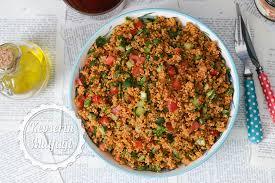
Barren
Material(s) | Fine bulgur spices olive oil lemon juice cucumber parsley onion tomato paste | ||||||||
|---|---|---|---|---|---|---|---|---|---|
Origin(s) | Southern and Southeastern Anatolia | ||||||||
Service | Cold, with lettuce leaves or lavash | ||||||||
Cultural Significance | Tea times, social gatherings, suitable for vegan diets | ||||||||
Kısır is a traditional dish in Turkish cuisine, consumed as a meze or salad made primarily from bulgur, commonly served during tea hours, gatherings, and social events. It is prepared with fine bulgur, tomato paste, onion, parsley, cucumber, and various spices. Due to its simple preparation and suitability for different settings, kısır is widely consumed in Türkiye. This dish reflects the regional diversity of Turkish cuisine, with variations in ingredients and preparation methods across different areas. As a light and healthy option, kısır is frequently found on tables especially in Mediterranean and Aegean culinary traditions.
The origins of kısır are rooted in the long history of bulgur in Anatolian cuisine. Bulgur is a cereal product made by cracking and parboiling wheat, and has been used in the Middle East and Anatolia for thousands of years. Kısır is believed to have emerged particularly in the South and Southeastern Anatolia regions, though pinpointing its exact origin remains difficult. The existence of various bulgur-based dishes in Ottoman cuisine points to recipes that may have served as precursors to kısır. By the 20th century, kısır had become a popular meze in modern Turkish cuisine and spread throughout Türkiye with urbanization.
The name kısır may derive from the Arabic word “qisr,” meaning “broken” or “crushed,” referring to the texture of bulgur. The dish is prepared both for daily home consumption and served at communal events such as weddings and engagements. Its preparation using affordable and readily available ingredients has made it an accessible dish among the general population.
Kısır is prepared in various forms across different regions of Türkiye. In Southeastern Anatolia, pomegranate molasses and isot (Urfa pepper) are commonly used, giving the dish a spicier and more tangy flavor. In the Aegean region, olive oil and fresh herbs such as dill and mint take center stage. In some areas, additional ingredients like walnuts, raisins, or cucumber are added to the mixture.
Fine bulgur, tomato paste, hot water, olive oil, lemon juice, pomegranate molasses, fresh onion, parsley, mint, salt, black pepper, red pepper flakes. Lettuce and cucumber may also be added optionally.
A standard recipe for kısır can be summarized as follows:
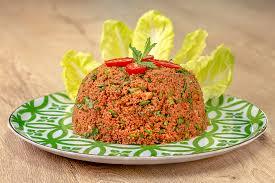
Kısır, a Turkish meze, served with lettuce leaves. (Yemek.com)
The core ingredients of kısır are fine bulgur, tomato paste, onion, parsley, cucumber, lemon juice, olive oil, and spices (typically red pepper flakes, black pepper, and salt). Some recipes also include green onion, mint, or pomegranate molasses. Preparation begins by soaking the bulgur in hot water until it swells. Then, the paste and spices are added, and finely chopped ingredients are mixed in. Kısır is usually served cold and can be presented with lettuce leaves or lavaş bread.
Several factors are important when preparing kısır. The type of bulgur (fine or medium) affects the flavor; fine bulgur is generally preferred. The quality and freshness of the tomato paste determine the color and taste of the dish. Additionally, finely chopping the vegetables and thoroughly kneading the mixture are essential for achieving a uniform texture. Pomegranate molasses or lemon juice enhances the dish’s freshness.
Kısır holds a place in Turkish cuisine beyond being merely a food item—it is an integral part of social gatherings. It is commonly prepared and shared during women’s gatherings known as “gün,” tea hours, and picnics. It is often made in large quantities to serve crowds. Due to its suitability for vegan and vegetarian diets, it is also consumed by people with diverse dietary preferences. Kısır is made from basic and widely available ingredients. Bulgur is known for its high fiber content, while the vegetables provide various vitamins. Its preparation method and ingredient list make it accessible to people across all income groups.
Karaca. “Lezzetli ve Kolay Kısır Tarifi.” Karaca Blog. Accessed May 26, 2025. https://www.karaca.com/blog/lezzetli-ve-kolay-kisir-tarifi/
“Hatay Usulü Enfes Kısır Tarifi.” *Milliyet*, April 18, 2018. https://www.milliyet.com.tr/gundem/hatay-usulu-enfes-kisir-tarifi-2650556
“Kısır Tarifi: Lezzetli ve Kolay Kısır Nasıl Yapılır, Malzemeleri Neler?” Habertürk, July 24, 2024. https://www.haberturk.com/kisir-tarifi-lezzetli-ve-kolay-kisir-nasil-yapilir-malzemeleri-neler-ymk-3752155
“Kısır: Türk Mutfağının Vazgeçilmez Lezzeti.” *Gaziantep Time*, November 17, 2024. https://gazianteptime.com.tr/haber/22385370/kisir-turk-mutfaginin-vazgecilmez-lezzeti

Barren
Material(s) | Fine bulgur spices olive oil lemon juice cucumber parsley onion tomato paste | ||||||||
|---|---|---|---|---|---|---|---|---|---|
Origin(s) | Southern and Southeastern Anatolia | ||||||||
Service | Cold, with lettuce leaves or lavash | ||||||||
Cultural Significance | Tea times, social gatherings, suitable for vegan diets | ||||||||
History and Origins
Regional Variations
Recipe and Techniques
Ingredients
Preparation
Key Tips
Cultural Significance