

This article was automatically translated from the original Turkish version.
+2 More
Name(s) | Battle of Lihula | ||||||||
|---|---|---|---|---|---|---|---|---|---|
Date(s) | August 1220 | ||||||||
Place | Western Estonia Läänemaa Lihula (Leal) | ||||||||
Parties | Estonian Tribes Kingdom of Sweden | ||||||||
The Battle of Lihula was one of the focal points of the military, religious, and political struggles that persisted in the eastern shores of the Baltic Sea during the first quarter of the 13th century. This conflict was not merely a clash between the Kingdom of Sweden and local Estonian tribes but is also regarded as part of the broader Crusades waged by the Latin Christian world against peoples deemed pagan. The battle, which took place in 1220, caused the settlement of Lihula to rapidly become a key military and symbolic site for the Baltic Crusade movement.
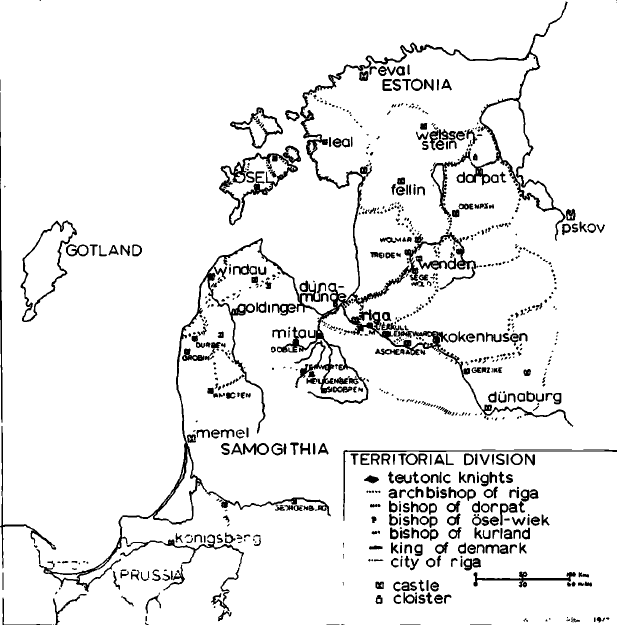
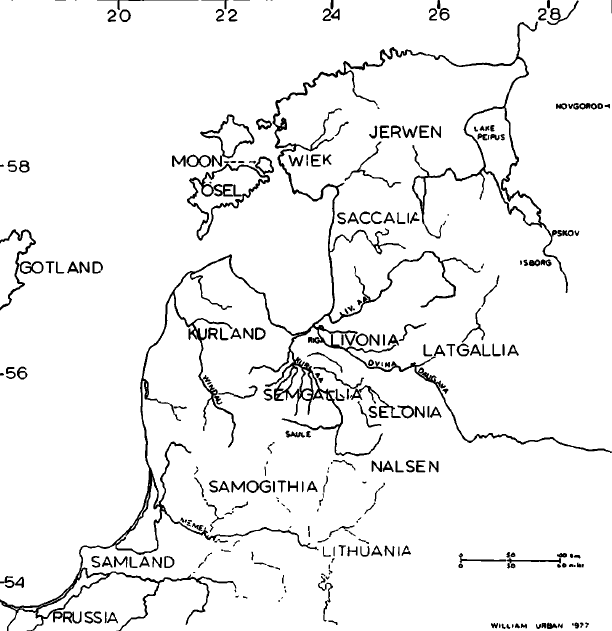
【1】
The significance of Lihula does not stem solely from its strategic location. Despite centuries having passed since the battle, this small town re-emerged on the agenda in early 21st century Estonia. Thanks particularly to a monument erected in 2004 and swiftly removed, Lihula became a symbol questioning Estonia’s historical identity, the memory of World War II, and the identity politics shaped around that memory. In this context, the Battle of Lihula is not merely a historical engagement but an event deeply intertwined with contemporary Estonian society’s historical memory.
From the late 12th century onward, Estonian territories stood out as one of the vast pagan regions in Europe that had not yet come under the influence of the Latin Church. The Estonians, as tribal communities belonging to the Finno-Ugric language group, lacked a centralized state structure and were organized around local chieftaincies, maintaining their own indigenous belief systems. This religious framework was shaped around local traditions incorporating animist and polytheistic elements. Nevertheless, this cultural autonomy proved vulnerable in the face of Christian Western missionary and conquest efforts.
The proximity of Estonia’s western and northern coasts to trading centers in Gotland and Scandinavia made the region economically and strategically significant. This interest soon created fertile ground for missionary activities and subsequent military interventions. By the end of the 12th century, bishoprics centered in Denmark, Sweden, and Northern Germany accelerated their religious expansion efforts along the Baltic coast; communities that refused to accept Christianity were declared “infidels” and targeted in Crusades.
Particularly the Archbishops of Bremen-Hamburg and the missionaries under their patronage initiated a systematic Christianization project in the Eastern Baltic. In Livonia (modern-day southern Estonia and Latvia), figures such as Meinhard, Berthold, and later Albert von Buxhövden established both religious and military campaigns, founding new bishoprics; merchants, knights, and monastic members joined this endeavor. Military-religious orders such as the Livonian Brothers of the Sword formed the armed wing of this expansion.
The Kingdom of Denmark also showed particular interest in Estonian territories, especially conducting military operations targeting the Reval region (modern Tallinn) in the north. The Danish king Valdemar II’s conquest of Tallinn in 1219 marked one of the high points of this expansion. Meanwhile, the Kingdom of Sweden focused primarily on the western coastal region of Läänemaa, specifically the area around Lihula. The construction of Lihula Castle and the Swedish presence in the region were the result of this strategic planning.
During this period, Estonian territories simultaneously displayed fragmented but fierce resistance against external interventions and faced intense military, religious, and cultural pressure from Latin Western powers seeking to Christianize the region and transform it into a feudal structure. The Battle of Lihula would become one of the clearest examples of this pressure being locally repelled, ending in a temporary defeat for the Crusader forces in the face of organized native resistance.
To understand the background of the Battle of Lihula, one must consider the military and religious dynamism in the Baltic region at the beginning of the 13th century. During this period, the Kingdoms of Germany, Denmark, and Sweden competed for both missionary influence and political control over Estonian lands. By 1219, northern Estonia had largely fallen under Danish control following King Valdemar II’s capture of Tallinn. At the same time, German bishoprics and the Livonian Brothers of the Sword were strengthening their military-religious structures in southern Estonia and Latvia. This situation generated competition among Western powers over the division of Baltic territories.
To avoid being excluded from this division, Sweden launched a military expedition in 1220 to the Läänemaa (Leal) region of western Estonia, aiming to establish a dependent bishopric and base. Lihula was chosen as the center of this operation due to its status as an ancient tribal center and its strategic coastal location. Swedish forces, led by Bishop Karl Magnusson and Crusade count Jarl Karl Döve, landed in the region and constructed a castle on an existing settlement. Sources indicate that the structure built there was stone-based and defensible.
However, this initiative provoked immediate resistance among Estonian tribes, triggering a rapid and organized counteroffensive. Tribes from the island of Oesel (Saaremaa) joined forces with local Läänemaa communities to plan an assault on the castle. The weakness of Swedish relations with the local population and the high levels of ethnic and religious tension facilitated the growth of this resistance.
During this period, scattered but fierce resistance against the Crusades led by the Livonian Brothers of the Sword and German bishops was evident across various regions of Estonia. Yet the conflict at Lihula became one of the few instances where this resistance succeeded in favor of the locals; native forces succeeded in completely expelling a foreign army from their territory.
The Battle of Lihula, which occurred in August 1220, is recorded as one of the most serious military failures in Sweden’s Crusading campaigns in Estonian territories. A Swedish force of approximately 500 men, commanded by Bishop Karl Magnusson and Count Karl Döve, landed in western Estonia and constructed a stone fortification at Lihula, replacing what was likely a simpler native stronghold, with the intention of establishing a permanent presence. This initiative was not only missionary in nature but also part of a broader feudal occupation plan.
However, the Swedish presence in the region was quickly perceived as a threat by local Estonian tribes, prompting a unified attack. Estonian forces from the seafaring island of Oesel (modern Saaremaa) joined with Läänemaa tribes advancing overland and laid siege to the castle. According to Henry of Livonia’s account, the Estonians encircled the fortress completely, blocking any escape for those inside.
The battle quickly turned against the Swedes due to the effective application of local tactics. Estonian forces set fire to the castle, collapsing its defenses; Swedish soldiers trapped within were either burned alive or killed while attempting to flee. One of the most striking outcomes of the battle was the near-total annihilation of the Swedish force. Numerous nobles and clergy, including Bishop Karl Magnusson, perished in the conflict. Only a few managed to escape, and news of this defeat reached Sweden swiftly.
This decisive victory at Lihula held symbolic importance as it demonstrated the strength of Estonian local resistance. The united struggle of the native population slowed Sweden’s expansionist policy in the region, at least in the short term. Simultaneously, the battle prompted Sweden to withdraw temporarily from its Baltic Crusade activities, paving the way for Denmark and German influence to come to the fore.
The Battle of Lihula marked a critical turning point in Sweden’s failed attempt to establish a permanent base in Estonian territories during the 13th century. Following the 1220 defeat, Sweden largely suspended its military activities in the Baltic region and maintained limited involvement in Crusade projects for many years. This situation further strengthened the influence of Denmark and German powers in the Baltic.
The Kingdom of Denmark consolidated its dominance over northern Estonia, particularly around Tallinn, filling the vacuum left by Sweden’s withdrawal. Meanwhile, German bishoprics and the Livonian Brothers of the Sword achieved systematic military and religious advances in southern Estonia and Latvia. Although the victory at Lihula provided a short-term morale boost for the local population, it did not guarantee long-term independence. On the contrary, Western powers returned to the region with more organized and enduring structures, and in subsequent decades much of Estonian territory fell under foreign domination.
Socially, the battle’s consequences triggered a temporary sense of solidarity and defensive awareness among Estonian tribes. The cooperation between the Oesel (Saaremaa) and Läänemaa tribes demonstrated how fragmented tribal structures could unite under threat. However, the failure to institutionalize this unity remained an obstacle to sustained resistance against external interventions.
The consequences for Sweden were not only military but also political. Karl Magnusson, who died in the battle, was among Sweden’s leading nobles and a grandson of King Sverre II of Norway. This fact led many in the Swedish aristocracy to remember Lihula not merely as a defeat but as a kind of “noble catastrophe.” Thus, Lihula came to represent not only a temporary retreat in Sweden’s Baltic policy but also a significant loss of prestige.
Centuries after the 1220 battle, Lihula re-emerged not through physical conflict but through symbolic, political, and social struggles centered on a monument. In the late 20th century, following the dissolution of the Soviet Union and Estonia’s restoration of independence, a process of reconstructing historical memory began across the country, particularly evident in memorials and narratives related to World War II.
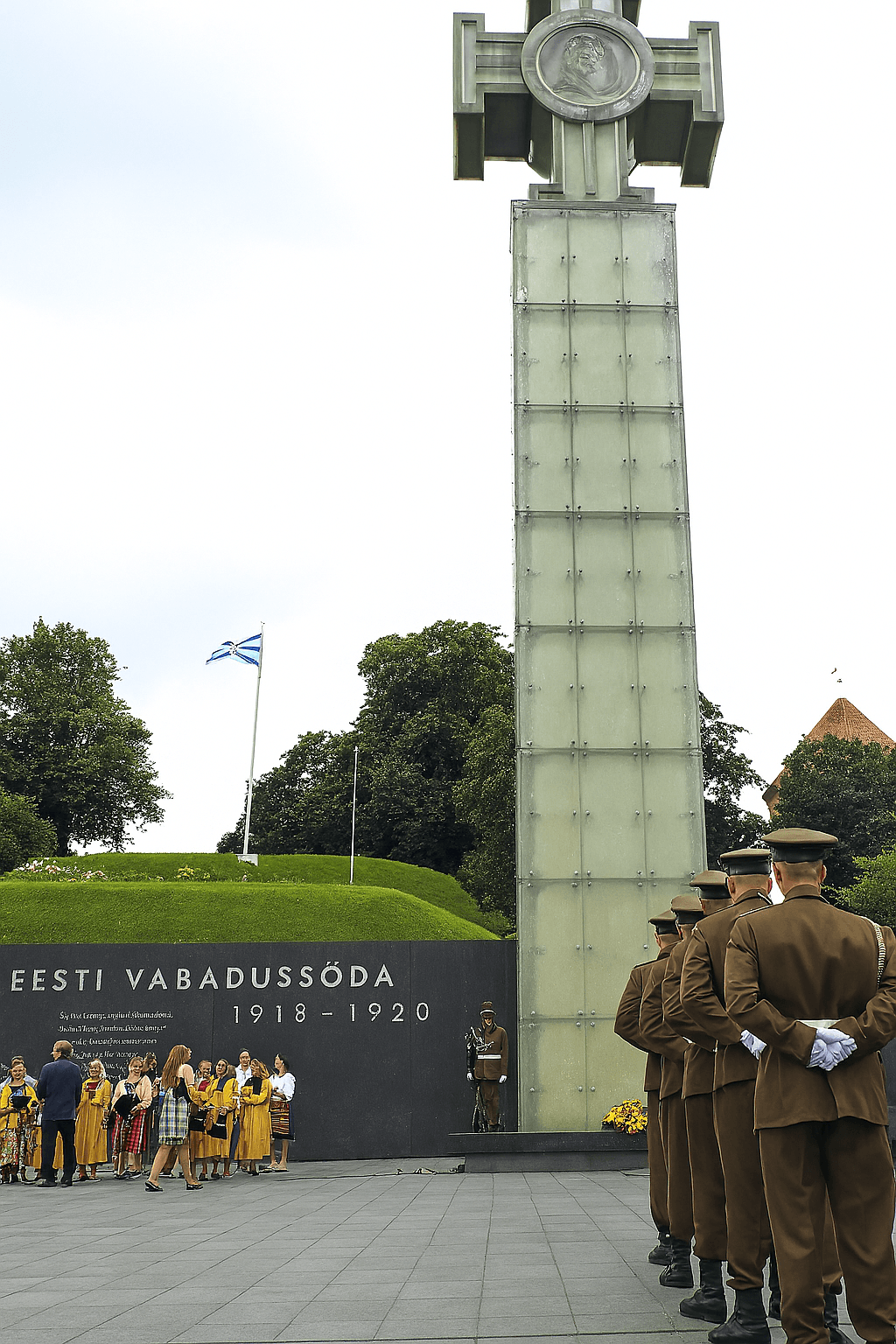
Monument to the War of Independence at Freedom Square in Tallinn Politics of Memory in Estonia)
【2】
In 2004, a monument erected in Lihula became one such example of this memory restoration. The monument depicted Estonian volunteers who fought alongside Nazi Germany against the Soviet Union during World War II. The statue, featuring a soldier dressed in a uniform resembling that of the SS, was viewed by some in Estonia as a symbol of the struggle for independence but was perceived by Russian-speaking communities and the international public as an glorification of Nazi collaboration.
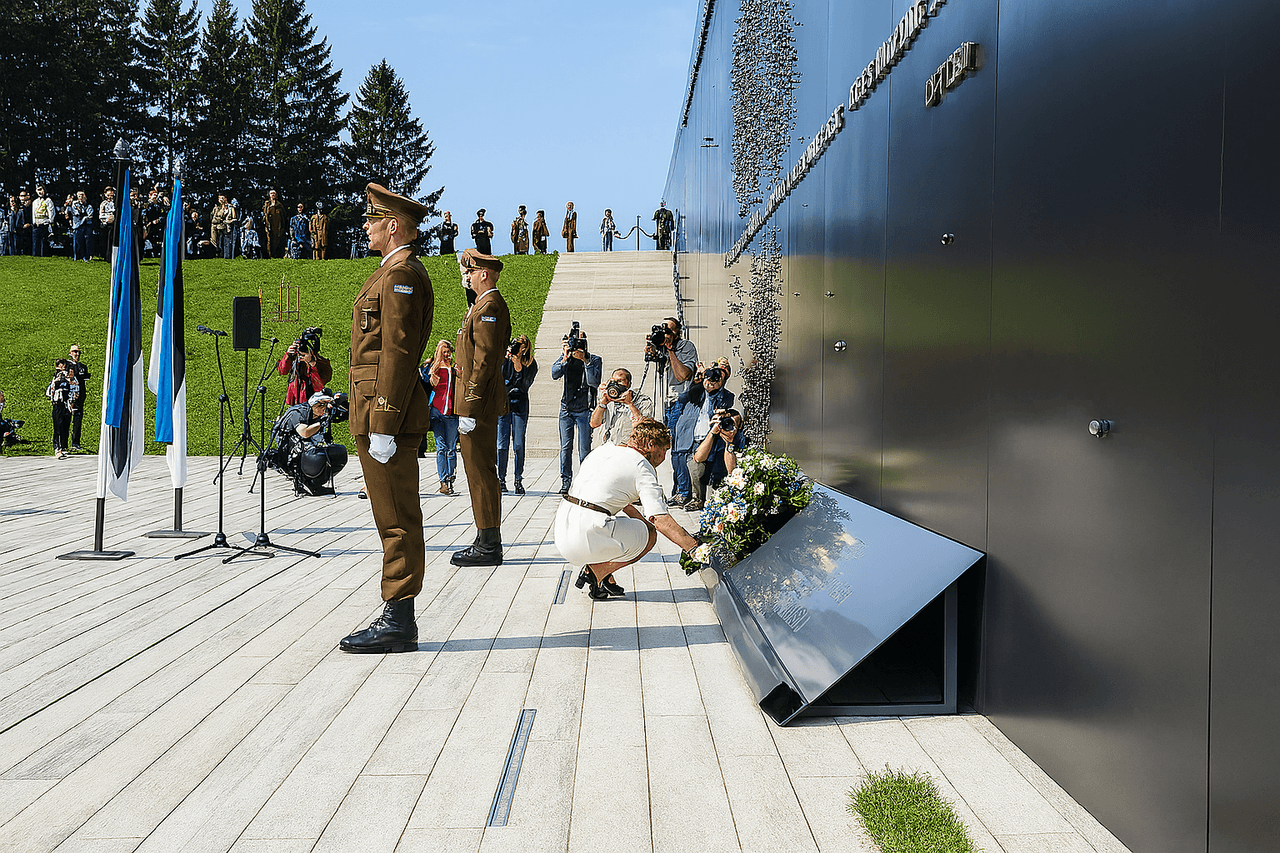
Estonian President at the War of Independence Monument (Politics of Memory in Estonia)
【3】
Shortly after its erection, the Estonian government removed the monument, triggering a serious domestic political crisis and attracting widespread international media attention. Estonia’s Russian minority argued that the monument insulted Soviet military victory, while Estonian nationalists defended it as a symbol of resistance against Soviet occupation. Thus, Lihula became a symbol of the division within Estonian society over competing historical narratives.
This incident affected not only Estonia’s domestic politics but also its relations with Russia. The Estonian government’s swift removal of the monument was positively received by Russia; however, some nationalist circles within Estonia interpreted the decision as capitulation to external pressure.
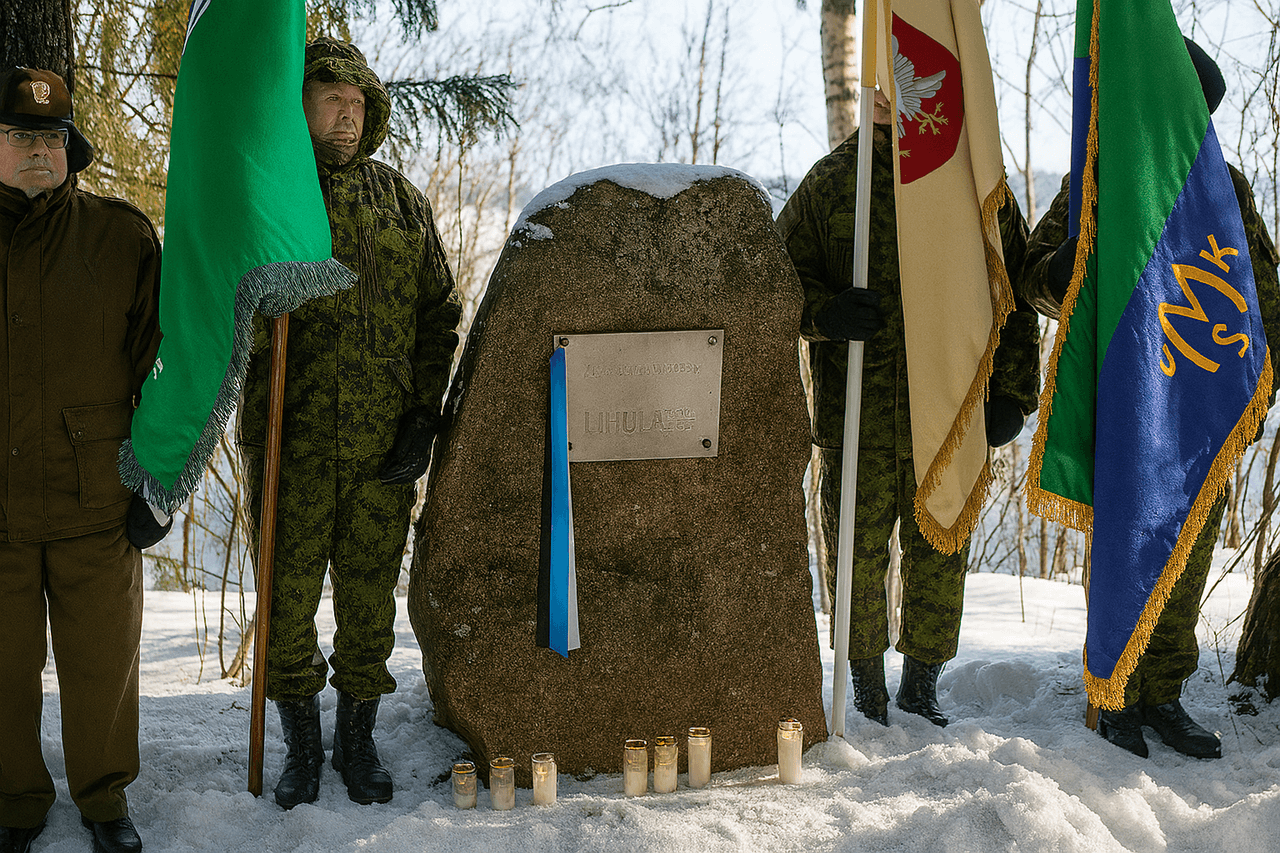
Commemoration Ceremony at the Memorial for the Nine Killed in 1949 (Politics of Memory in Estonia
【4】
The monument crisis became part of a broader social and political debate later termed the “War of Monuments” in Estonia. Similar protests and crises occurred, notably with the removal of the “Bronze Soldier” statue in Tallinn in 2007. Such developments reflect the tensions between Estonia’s historical heritage and contemporary ideologies, and how the past is continually reshaped according to present-day political needs.
Burch, Stuart, and David J. Smith. “Empty Spaces and the Value of Symbols: Estonia’s ‘War of Monuments’ from Another Angle.” *Europe-Asia Studies* 59, no. 6 (2007): 913–936. Accessed August 7, 2025. https://www.researchgate.net/publication/29818205_Empty_Spaces_and_the_Value_of_Symbols_Estonia's_'War_of_Monuments'_from_Another_Angle.
Hiio, Toomas. “On the Historical Identity of Estonians and the Politics of Memory in Estonia.” *Institute of National Remembrance Review* 1 (2019): 65–115. Accessed August 7, 2025. https://bibliotekanauki.pl/articles/1956014.pdf.
Kõresaar, Ene. “Introduction: Remembrance Cultures of World War II and the Politics of Recognition in Post-Soviet Estonia: Biographical Perspectives.” In *Remembrance Cultures of World War II and the Politics of Recognition in Post-Soviet Estonia: Biographical Perspectives*, 1–8. Leiden: Brill, 2011. Accessed August 7, 2025. https://www.researchgate.net/publication/234035457_Introduction_Remembrance_Cultures_of_World_War_II_and_the_Politics_of_Recognition_in_Post-Soviet_Estonia_Biographical_Perspectives.
Murray, Alan V. “Henry of Livonia and the Christianisation of the Eastern Baltic Lands (Twelfth-Thirteenth Centuries).” *Studia Humanitatis Mrongoviensis* 2 (2024): 25–44. Accessed August 7, 2025. https://eprints.whiterose.ac.uk/id/eprint/212016/10/Alan-V.-Murray-3.pdf.
Poleshchuk, Vadim. *The War of the Monuments in Estonia: The Challenges of History and the Minority Population.* Report from the Åland Islands Peace Institute, no. 1-2009. Mariehamn: The Åland Islands Peace Institute, 2009. Accessed August 7, 2025. https://peace.ax/publ-publikation/no-1-2009-the-war-of-the-monuments-in-estonia-the-challenges-of-history-and-the-minority-population/.
Pääbo, Heiko. “War of Memories: Explaining ‘Memorials War’ in Estonia.” *Baltic Security & Defence Review* 10 (2008): 5–26. Accessed August 7, 2025. https://www.researchgate.net/publication/239919044_War_of_Memories_Explaining_Memorials_War_in_Estonia.
Smith, David J. “‘Woe from Stones’: Commemoration, Identity Politics and Estonia’s ‘War of Monuments’.” *Journal of Baltic Studies* 39, no. 4 (2008): 419–430. Accessed August 7, 2025. https://www.researchgate.net/publication/38415253_'Woe_from_Stones'_Commemoration_Identity_Politics_and_Estonia's_'War_of_Monuments'.
Smith, Jerry C., and William L. Urban, trans. *The Livonian Rhymed Chronicle*. Indiana University Publications: Uralic and Altaic Series, vol. 128. Bloomington: Indiana University, 1977. Accessed August 7, 2025. https://archive.org/details/livonian-rhymed-chronicle.-1977.
[1]
Jerry C. Smith ve William L. Urban (çev.), The Livonian Rhymed Chronicle, Indiana University Publications: Uralic and Altaic Series, vol. 128 (Bloomington: Indiana University, 1977), s. 8.
[2]
Toomas Hiio, “On the Historical Identity of Estonians and the Politics of Memory in Estonia,” Institute of National Remembrance Review 1 (2019): 65–115, s. 73.
[3]
Toomas Hiio. (a.g.e), s. 79.
[4]
Toomas Hiio. (a.g.e), s. 91.

Name(s) | Battle of Lihula | ||||||||
|---|---|---|---|---|---|---|---|---|---|
Date(s) | August 1220 | ||||||||
Place | Western Estonia Läänemaa Lihula (Leal) | ||||||||
Parties | Estonian Tribes Kingdom of Sweden | ||||||||
Political and Religious Situation in Medieval Estonia
The Path to the Battle of Lihula
The Battle of Lihula (1220)
Consequences and Regional Impacts of the Battle
Lihula and Collective Memory: The War of Monuments