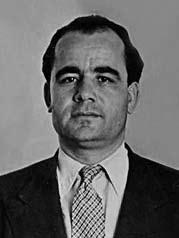
Date and Place of Birth | 23 July 1908, Tepecek, Erzincan | ||||||||
|---|---|---|---|---|---|---|---|---|---|
Date and Place of Death | 24 October 1969, Istanbul | ||||||||
Profession(s) | Poet Member of Parliament Engineer Writer | ||||||||
Education | Zonguldak Mines Engineering School | ||||||||
Positions Held | Halkevleri Inspector, Erzincan Member of Parliament (1943–1949), Constituent Assembly Member, TRT Board of Directors Chairman | ||||||||
Literary Pseudonym | Ankaralı Âşık Ömer | ||||||||
Notable Work | 10th Year March (with Faruk Nafiz Çamlıbel) | ||||||||
Behçet Kemal Çağlar was a poet, writer, engineer, and member of parliament who played an active role in the political and cultural life of the Republic era. He held various positions including inspector of Halkevleri, deputy of Erzincan, teacher, and manager of TRT. In his poetry he explored Anatolia, folk culture, and the values of the Republic. He co-authored the “10th Year March” with Faruk Nafiz Çamlıbel and incorporated simple language and folk poetry forms into his literary output. His devotion to Atatürk was evident both thematically and in his institutional activities.
Behçet Kemal Çağlar was born on 23 July 1908 in Tepecek Village of Erzincan. His father, Şaban Hilmi Bey, was a graduate of Halkalı Higher School of Agriculture and served as a civil servant. Due to his family’s relocations, Çağlar continued his education in various cities. He completed his primary education in Bolu, Konya, Jerusalem, and Kayseri. In 1925 he entered the Zonguldak School of Mining Engineering and graduated in 1929 with second place honors. After graduation he received professional training in Belgium and France. He did not pursue the engineering profession for long.
Çağlar’s interest in literature developed during his high school years when he was a student of Faruk Nafiz Çamlıbel and Eflatun Cem Güney. In 1933 he participated in a march competition held to mark the 10th anniversary of the Republic and gained public attention after winning. He subsequently joined Atatürk’s circle and was sent to London to study folk literature and journalism. After returning to Türkiye in 1935 he was appointed as an inspector of Halkevleri. In this role he traveled throughout Anatolia and established direct contact with folk culture.
The work he carried out at Halkevleri inspired him to incorporate Anatolian themes and folk expressions into his poetry. During this period he wrote the plays Çoban and Ergenekon. At Halkevleri he published some of his poems under the pseudonym “Ankaralı Âşık Ömer.” He participated in efforts to establish the “Ankara Literary School” around the journal Ülkü. His loyalty to Atatürk was strongly reflected in his poems and writings.
From 1943 to 1949 he served as a deputy of Erzincan in the Grand National Assembly of Türkiye. In 1949 he announced his withdrawal from politics following a speech in the Assembly. Thereafter he wrote articles for the newspaper Vatan, published the journal Şadırvan, served as an advisor at İstanbul Radio, and taught literature at Robert College. In 1961 he was elected to the Constituent Assembly and subsequently to the Board of Directors and then the presidency of TRT.
Behçet Kemal Çağlar died in İstanbul on 24 October 1969. Following his will, the following lines were inscribed on his tombstone:
“He adds nothing of his blood to the soil / His heart beats differently in every poem / A lover of Anatolia and Atatürk / Behçet Kemal Çağlar lies here.”
In Çağlar’s poetry Anatolian themes, folk language, devotion to Atatürk, and orientation toward folk culture are prominent. In his works written under the pseudonym “Ankaralı Âşık Ömer” in the style of folk poetry he favored simple Turkish. Among his best-known works are Burda Bir Kalp Çarpıyor, Erciyes’ten Kopan Çığ, Benden İçeri, and Kur’an-ı Kerim’den İlhamlar. The “10. Yıl Marşı” co-authored with Faruk Nafiz Çamlıbel stands out as a text reflecting the political and ideological emphases of its time.
Ağca, Hüseyin. “Behçet Kemal Çağlar (1908–1969).” Atatürk Ansiklopedisi. Date Published: September 10, 2021. Accessed July 10, 2025. https://ataturkansiklopedisi.gov.tr/detay/707/Beh%C3%A7et-Kemal-%C3%87a%C4%9Flar-(1908-1969)
Sezan, Canan Sarıyar. “Behçet Kemal Çağlar’ın Türk Spor Kurumu Dergisi’nde Yer Alan Spora İlişkin Görüşleri”. *Korkut Ata Türk Dünyası Uygulama ve Araştırma Merkezi Dergisi*, Year 2024, Issue 14, pp. 314–327. DOI: https://doi.org/10.51531/korkutataturkiyat.1422219
TEİS. "Behçet Kemal Çağlar." *Türk Edebiyatı İsimler Sözlüğü*. Accessed July 10, 2025. https://teis.yesevi.edu.tr/madde-detay/behcet-kemal-caglar
“Behçet Kemal Çağlar.” Vekillerimiz.com. Accessed July 10, 2025. https://vekillerimiz.com/vekil/behcet-kemal-caglar-2500/

Date and Place of Birth | 23 July 1908, Tepecek, Erzincan | ||||||||
|---|---|---|---|---|---|---|---|---|---|
Date and Place of Death | 24 October 1969, Istanbul | ||||||||
Profession(s) | Poet Member of Parliament Engineer Writer | ||||||||
Education | Zonguldak Mines Engineering School | ||||||||
Positions Held | Halkevleri Inspector, Erzincan Member of Parliament (1943–1949), Constituent Assembly Member, TRT Board of Directors Chairman | ||||||||
Literary Pseudonym | Ankaralı Âşık Ömer | ||||||||
Notable Work | 10th Year March (with Faruk Nafiz Çamlıbel) | ||||||||
No Discussion Added Yet
Start discussion for "Behçet Kemal Çağlar" article
Youth and Education Years
Beginning of Literary Activities
Halkevleri and Poetic Language
Political and Cultural Activities
Death and Literary Legacy