
+2 More

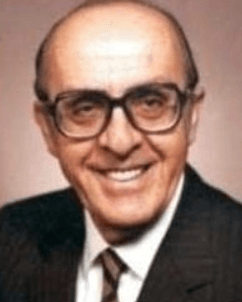
Behram Kurşunoğlu
Birth Year | 1922 | ||||||||
|---|---|---|---|---|---|---|---|---|---|
Birth Place | Trabzon, Türkiye | ||||||||
Ölüm tarihi | 2003-10-25 | ||||||||
Death Place | Florida, United States of America, Education: | ||||||||
Education | University of Cambridge (PhD Advisor: Paul Dirac) University of Edinburgh (Physics) Faculty of Science (Mathematics-Astronomy) Istanbul University | ||||||||
Institutions Worked at | University of Miami (after 1958) Middle East Technical University (1956-1958) | ||||||||
Field of Expertise | Unified Field Theory Generalized Relativity Theory Quantum Mechanics Theoretical Physics | ||||||||
Notable Works | founding membership of the Atomic Energy Commission of Türkiye (TAEK) work on Unified Field Theory with Einstein and Schrödinger development of Generalized Relativity Theory Book Modern Quantum Theory (1962) | ||||||||
Award(s) | TÜBİTAK Science Award (1972) | ||||||||
Behram Kurşunoğlu was born in 1922 in Çaykara district of Trabzon. He completed his primary, secondary, and high school education in Trabzon. He enrolled in the Department of Mathematics and Astronomy at the Faculty of Science, Istanbul University. In 1945, he was sent to England on a scholarship from the Ministry of National Education. He received his physics education at the University of Edinburgh. In 1952, he completed his doctorate in physics at the University of Cambridge under the supervision of Nobel laureate Paul Dirac.
In 1955, he returned to Türkiye and completed his military service. During this period, he conducted research in the field of atomic energy and became one of the founding members of the Turkish Atomic Energy Authority (TAEK). From 1956 to 1958, he served as a faculty member at Middle East Technical University.
In 1958, he was appointed professor at the University of Miami. In 1962, he published the book Modern Quantum Theory. In 1965, he founded the Center for Theoretical Studies and the Global Foundation Institute at the University of Miami. These centers contributed significantly to the training of numerous scientists who pursued postdoctoral research.
Kurşunoğlu conducted important research in quantum mechanics and general relativity. He is recognized as the scientist who developed the Generalized Relativity Theory. His work on the Unified Field Theory attracted international scientific attention in 1951. In 1952, he presented his research on relativity theory to Albert Einstein via a letter. Einstein responded expressing his interest and invited Kurşunoğlu to Princeton. The two held face-to-face discussions on Generalized Relativity Theory.

Photograph from his meeting with Albert Einstein (technosophia)
His collaborative work with Albert Einstein and Erwin Schrödinger on the Unified Field Theory is known in the literature as the "Einstein-Schrödinger-Kurşunoğlu Theory."
In 1959, he made scientific contributions regarding the types of neutrinos. In 1968, he conducted research at the Russian Academy of Sciences.
In 1958, Kurşunoğlu participated as Türkiye’s representative at the Second International Conference on the Peaceful Uses of the Atom. From 1964 to 1972, he served as a scientific advisor to the General Staff of the Republic of Türkiye and to the Presidency. He also served for a period on the United Nations Science Commission.
In 1972, he was awarded the TÜBİTAK Science Award in physics. Throughout his career, he authored 21 books and published approximately 50 scientific articles in international peer-reviewed journals. Of the scientists trained at the centers he established at the University of Miami, 35 later won the Nobel Prize.
Behram Kurşunoğlu is among the graduates of the Higher Teacher Training School active during the Republic period. Among its alumni are scientists, poets, writers, and bureaucrats who held positions in various fields.
Behram Kurşunoğlu died on 25 October 2003 in Miami, Florida, United States of America, at the age of 81, following a heart attack. His name was bestowed upon the main lecture hall of the Faculty of Science at Karadeniz Technical University (KTÜ) to immortalize his legacy.
"Another Great Example of Loyalty fromKaradeniz Teknik University." *Karadeniz Technical University Official Website*. Accessed May 15, 2025.
"Who is Behram Kurşunoğlu?" Technosophia. https://technosophia.org/bilim/kimdir-1-behram-kursunoglu/. Accessed May 15, 2025.
Kurşunoğlu, Behram. "Theoretical Interpretations of Enhanced Laser Light Absorption." Office of Scientific and Technical Information (OSTI). https://www.osti.gov/servlets/purl/4215926. Accessed May 15, 2025.
Özkan, İsa. "Türk Eğitiminde Öğretmen Okulları ve Öğretmen Yeterliliklerine Dair Düşünceler." 21. Yüzyılda Eğitim ve Toplum, Volume 5, Issue 15, Winter 2016. Accessed May 15, 2025.

Behram Kurşunoğlu
Birth Year | 1922 | ||||||||
|---|---|---|---|---|---|---|---|---|---|
Birth Place | Trabzon, Türkiye | ||||||||
Ölüm tarihi | 2003-10-25 | ||||||||
Death Place | Florida, United States of America, Education: | ||||||||
Education | University of Cambridge (PhD Advisor: Paul Dirac) University of Edinburgh (Physics) Faculty of Science (Mathematics-Astronomy) Istanbul University | ||||||||
Institutions Worked at | University of Miami (after 1958) Middle East Technical University (1956-1958) | ||||||||
Field of Expertise | Unified Field Theory Generalized Relativity Theory Quantum Mechanics Theoretical Physics | ||||||||
Notable Works | founding membership of the Atomic Energy Commission of Türkiye (TAEK) work on Unified Field Theory with Einstein and Schrödinger development of Generalized Relativity Theory Book Modern Quantum Theory (1962) | ||||||||
Award(s) | TÜBİTAK Science Award (1972) | ||||||||
Military Service and Duties in Türkiye
Academic Career and Research
Scientific Contributions
Advisory and Representative Roles
Awards and Academic Publications
Higher Teacher Training School and His Place in Education
Death and Legacy