


This article was automatically translated from the original Turkish version.
+1 More
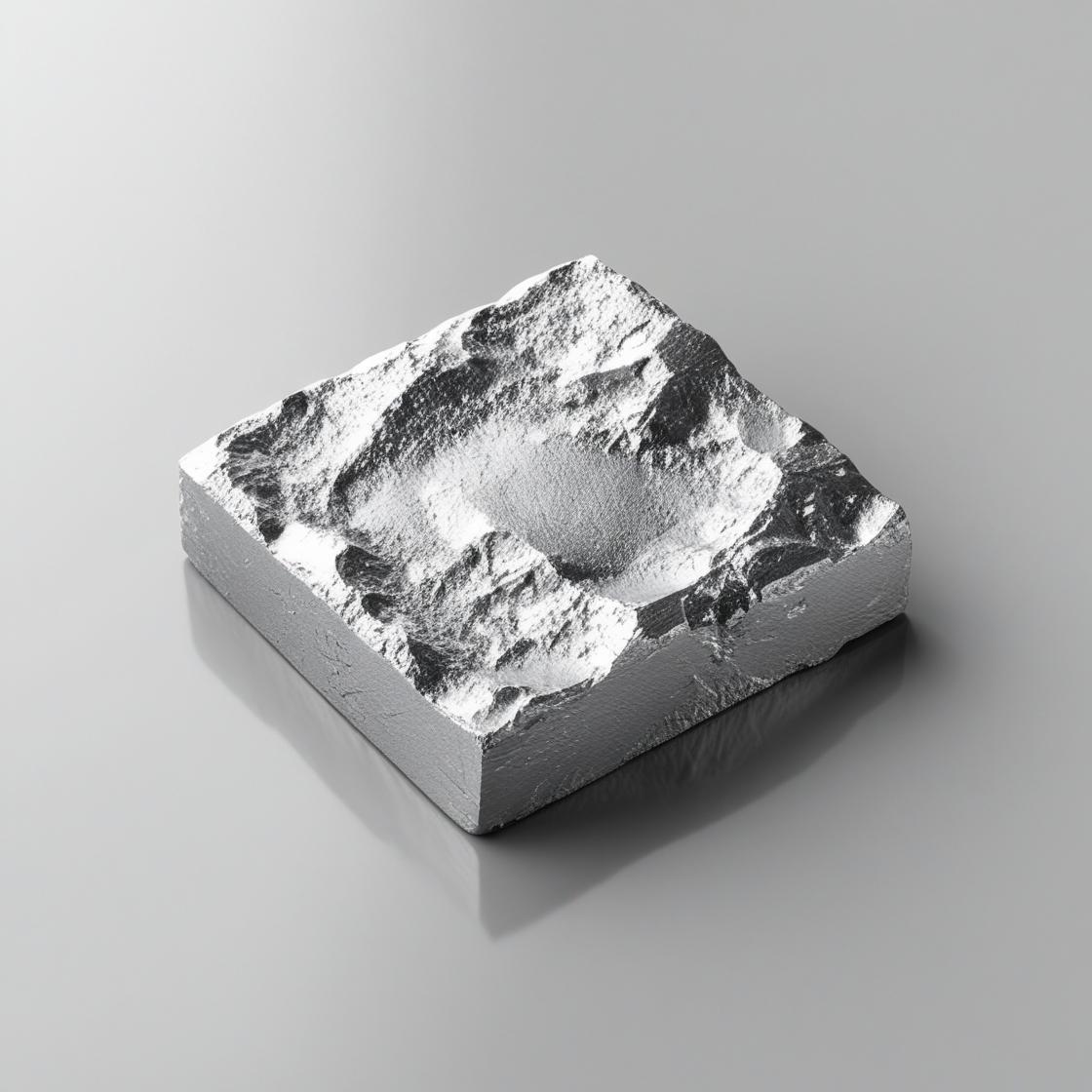
Berkelium
Periodic Table | 7 | ||||||||
|---|---|---|---|---|---|---|---|---|---|
Chemical Symbol | Bk | ||||||||
Atomic Number | 97 | ||||||||
Group | Actinides | ||||||||
Electron Configuration | [Rn]5f⁹7s² | ||||||||
Density (Estimated) | 14.78 g/cm³ | ||||||||
Melting Point (Estimated) | 986 °C | ||||||||
Atomic Radius (Estimated) | 2.44 Å | ||||||||
Important Isotopes | ²⁴⁷Bk, ²⁴⁹Bk | ||||||||
Year of Discovery | 1949 | ||||||||
Discoverer(s) | G. Seaborg A. Ghiorso S. Thompson | ||||||||
Natural Occurrence | Artificial (not found in nature) | ||||||||
Berkelium is a synthetic and radioactive metallic element with atomic number 97 and chemical symbol Bk, located in the actinide series of the periodic table. It is named after Berkeley, California, in the United States, where it was first synthesized at the University of California, Berkeley.
Berkelium is classified as the ninth element in the actinide group and the seventh period of the periodic table. Its electron configuration is [Rn]5f⁹7s². All known isotopes of berkelium are radioactive due to its heavy actinide nature. It is expected to be solid at room temperature with a silvery-white or metallic appearance. A density of 14.78 g/cm³ has been reported. Due to its high radioactivity and the fact that it can only be produced in extremely small quantities, experimental data on its physical and chemical properties remain very limited.
The element berkelium was first synthesized in December 1949 by a team of American scientists led by Stanley G. Thompson, Albert Ghiorso, and Glenn T. Seaborg at the Radiation Laboratory of the University of California, Berkeley (now known as the Lawrence Berkeley National Laboratory). This discovery was achieved by bombarding a milligram quantity of americium-241 (²⁴¹Am) with alpha particles (helium nuclei) in the laboratory’s 60-inch cyclotron. The reaction produced berkelium-243 (²⁴³Bk) and two neutrons.
Berkelium was separated and identified from the reaction products using ion-exchange chromatography, a method similar to those employed in the discovery of earlier actinides such as americium and curium.
Berkelium Element Representation (Generated by Artificial Intelligence)
The element berkelium was named in honor of the city of Berkeley, California, in the United States, where it was discovered and first synthesized, and of the University of California, Berkeley. This naming follows the tradition of honoring significant geographical or institutional locations associated with the discovery, similar to earlier actinide elements such as americium.
All isotopes of berkelium are radioactive, and because it can only be produced in minute quantities under laboratory conditions, many of its macroscopic physical properties have not been definitively determined. However, some fundamental properties have been estimated: its density is approximately 14.78 g/cm³, its melting point is around 986 °C, and its atomic radius is estimated at about 2.44 Å. It is assumed to be solid at room temperature and is thought to have a silvery-white or metallic appearance.
Chemically, the most stable oxidation state of berkelium is +3 (Bk³⁺). However, it has been observed to exhibit the +4 oxidation state (Bk⁴⁺) in certain compounds, particularly in aqueous solutions. This behavior is consistent with the chemical properties of neighboring elements in the actinide series.
Berkelium is a purely synthetic element and does not occur naturally. It can be produced by subjecting lighter actinides such as plutonium-239 (²³⁹Pu) to prolonged and intense neutron bombardment in nuclear reactors. During this process, target nuclei undergo successive neutron captures followed by beta decays, eventually forming heavier elements including berkelium. The quantities produced are typically on the scale of milligrams or less.
Berkelium has many known radioactive isotopes with mass numbers ranging from 233 to 253. ²⁴⁷Bk and ²⁴⁹Bk are recognized as important isotopes.
Berkelium has no known commercial or industrial applications due to its extreme rarity and high radioactivity. The small quantities produced are used almost exclusively in fundamental scientific research. In particular, the isotope berkelium-249 plays a critical role as a target material in particle accelerators for synthesizing heavier elements and studying their nuclear properties.
Berkelium has no known biological role. Since all its isotopes are radioactive, they pose a potential radiation hazard to living organisms and are therefore classified as toxic. If ingested or otherwise introduced into the body, berkelium tends to accumulate in the bones and can cause radiation damage. Consequently, all work involving berkelium is conducted under strictly controlled laboratory conditions, employing remote manipulation techniques and rigorous radiation safety protocols to minimize exposure risks.
National Center for Biotechnology Information. "Berkelyum." PubChem Compound Database CID 23971. Accessed May 30, 2025. https://pubchem.ncbi.nlm.nih.gov/compound/23971
TÜBİTAK Bilim Genç. "Berkelyum." Bilim Genç. Accessed May 30, 2025. https://bilimgenc.tubitak.gov.tr/periyodik-tablo/berkelyum

Berkelium
Periodic Table | 7 | ||||||||
|---|---|---|---|---|---|---|---|---|---|
Chemical Symbol | Bk | ||||||||
Atomic Number | 97 | ||||||||
Group | Actinides | ||||||||
Electron Configuration | [Rn]5f⁹7s² | ||||||||
Density (Estimated) | 14.78 g/cm³ | ||||||||
Melting Point (Estimated) | 986 °C | ||||||||
Atomic Radius (Estimated) | 2.44 Å | ||||||||
Important Isotopes | ²⁴⁷Bk, ²⁴⁹Bk | ||||||||
Year of Discovery | 1949 | ||||||||
Discoverer(s) | G. Seaborg A. Ghiorso S. Thompson | ||||||||
Natural Occurrence | Artificial (not found in nature) | ||||||||
Classification and Basic Properties
Discovery
Etimology
Physical and Chemical Properties
Natural Occurrence and Production
Isotopes
Applications
Biological Role and Safety Precautions