


This article was automatically translated from the original Turkish version.
+1 More
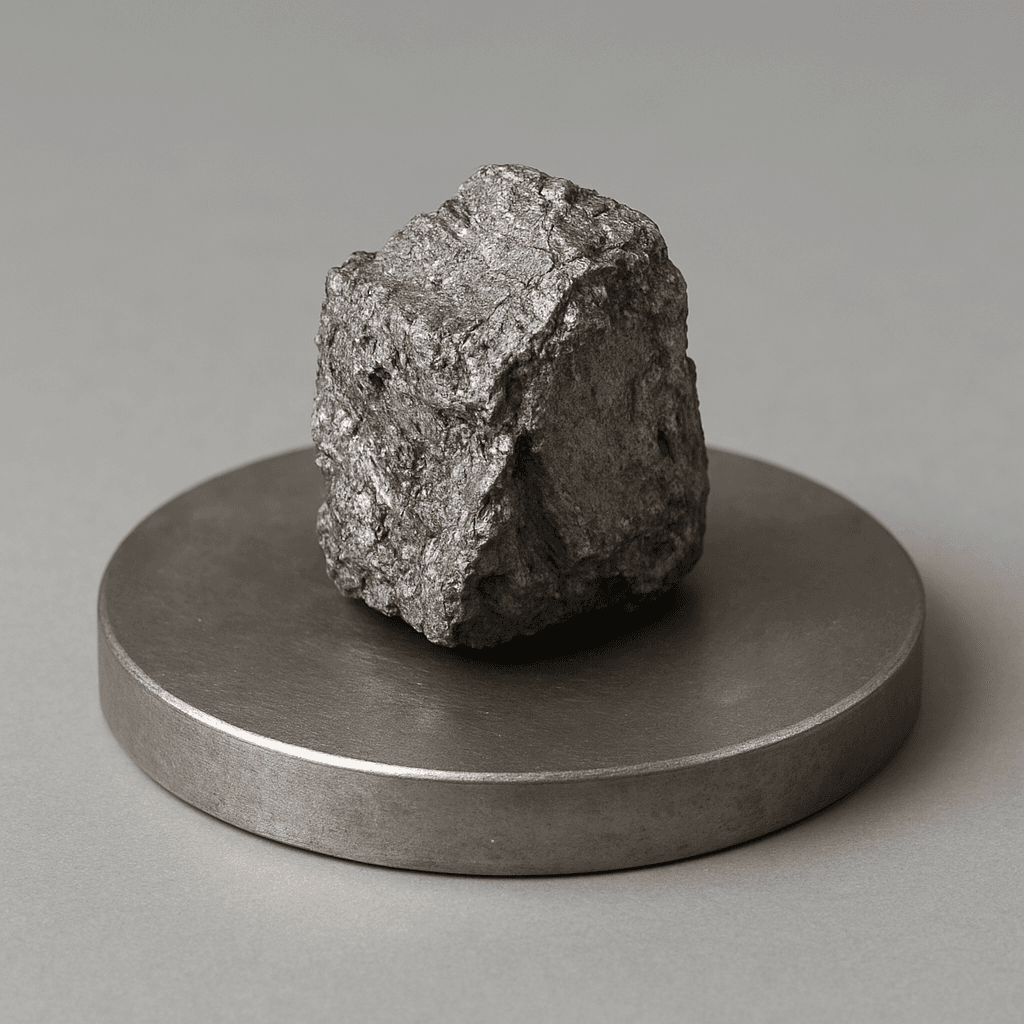
Plutonium
Periodic Table | 7 | ||||||||
|---|---|---|---|---|---|---|---|---|---|
Chemical Symbol | Pu | ||||||||
Atomic Number | 94 | ||||||||
Group | Actinides | ||||||||
Atomic Weight | (244) g/mol (approximate value for the longest-lived isotope, ²⁴⁴Pu) | ||||||||
Electron Configuration | [Rn]5f⁶7s² | ||||||||
Appearance | Silvery metal | ||||||||
Density | 19.7 g/cm³ | ||||||||
Melting Point | 640 °C | ||||||||
Boiling Point | 3228 °C | ||||||||
Atomic Radius | ~243 pm | ||||||||
Electronegativity | 1.3 | ||||||||
Most Important Isotopes | ²⁴⁰Pu ²³⁹Pu (Half-life: ~24100 years) ²³⁸Pu | ||||||||
Year of Discovery(ies) | 1940 | ||||||||
Discoverer(s) | Glenn Seaborg and colleagues | ||||||||
Etymology(s) | Pluto dwarf planet | ||||||||
Plutonium is a radioactive, silvery metal belonging to the actinide series. With an atomic number of 94, this element is particularly known for its use in the production of nuclear weapons and as a power source in spacecraft.
Plutonium (Pu) is an element located in the 7th period of the periodic table within the actinide group. Its electron configuration is [Rn]5f⁶7s². This structure indicates that plutonium is a member of the f-block elements and that its chemical properties are largely determined by its f electrons. At room temperature, plutonium exists as a solid with a density of approximately 19.7 g/cm³ and exhibits metallic characteristics.
Plutonium was discovered in 1940 by Glenn T. Seaborg and his colleagues. Its discovery was achieved by bombarding uranium with neutrons in a nuclear reactor. During this process, the uranium-238 isotope captured a neutron and subsequently underwent two beta decays to form the plutonium-239 isotope.

Plutonium (Generated by Artificial Intelligence.)
Plutonium derives its name from the dwarf planet Pluto in the Solar System. This naming follows the convention established by uranium, named after Uranus, and neptunium, named after Neptune.
Plutonium does not occur naturally on Earth in significant quantities; it is primarily a synthetic element. The main production method involves neutron bombardment of uranium, especially the uranium-238 isotope, in nuclear reactors. This process yields various plutonium isotopes. Trace amounts of plutonium-239 can be found in natural uranium ores through spontaneous fission of uranium and subsequent neutron capture reactions, but these quantities are not economically recoverable.
Plutonium is a silvery-white metal that rapidly oxidizes upon exposure to air, becoming dull and changing color to yellowish, and sometimes dark green or brown. Its melting point is 640 °C and its boiling point is 3228 °C. The atomic radius is approximately 243 pm, and its electronegativity is 1.3. Plutonium is an allotrope metal, meaning it can exist in multiple crystalline structures that vary with temperature and pressure. These allotropes exhibit different densities and physical properties. Chemically, plutonium is a reactive element that can exist in various oxidation states (+3, +4, +5, +6, and +7), with +4 being the most common. It dissolves in acids.
Many radioactive isotopes of plutonium are known. The most important include:
The most well-known and controversial application of plutonium is in the production of nuclear weapons. In particular, the plutonium-239 isotope is a key component of atomic bombs and nuclear warheads due to its fissile properties. However, peaceful applications of plutonium also exist:
Plutonium has no known biological role. All its isotopes are radioactive and highly toxic. When introduced into the body—particularly through inhalation—it can accumulate in the lungs, liver, and bones. Due to its emission of alpha particles, internal exposure poses serious health risks and significantly increases cancer risk. Therefore, strict safety measures must be followed when handling plutonium, including the use of specialized protective equipment, work in enclosed and controlled environments, and absolute prevention of contamination. The radiation and toxicity of plutonium require specialized expertise for its production, transportation, storage, and waste management.
National Center for Biotechnology Information. "Plutonium." *PubChem Compound Database*. Accessed May 31, 2025. https://pubchem.ncbi.nlm.nih.gov/compound/23940.
TÜBİTAK Bilim Genç. "Plütonyum." *Bilim Genç*. Accessed May 31, 2025. https://bilimgenc.tubitak.gov.tr/periyodik-tablo/plutonyum

Plutonium
Periodic Table | 7 | ||||||||
|---|---|---|---|---|---|---|---|---|---|
Chemical Symbol | Pu | ||||||||
Atomic Number | 94 | ||||||||
Group | Actinides | ||||||||
Atomic Weight | (244) g/mol (approximate value for the longest-lived isotope, ²⁴⁴Pu) | ||||||||
Electron Configuration | [Rn]5f⁶7s² | ||||||||
Appearance | Silvery metal | ||||||||
Density | 19.7 g/cm³ | ||||||||
Melting Point | 640 °C | ||||||||
Boiling Point | 3228 °C | ||||||||
Atomic Radius | ~243 pm | ||||||||
Electronegativity | 1.3 | ||||||||
Most Important Isotopes | ²⁴⁰Pu ²³⁹Pu (Half-life: ~24100 years) ²³⁸Pu | ||||||||
Year of Discovery(ies) | 1940 | ||||||||
Discoverer(s) | Glenn Seaborg and colleagues | ||||||||
Etymology(s) | Pluto dwarf planet | ||||||||
Classification and Basic Properties
Discovery
Etimology
Natural Occurrence
Physical and Chemical Properties
Isotopes
Applications
Biological Role and Safety Precautions