


This article was automatically translated from the original Turkish version.
+2 More
Biochemical Oxygen Demand (BOD) is a water quality parameter that measures the amount of dissolved oxygen consumed during the microbial decomposition of organic matter. Typically, the mass of oxygen consumed in milligrams by aerobic microorganisms as they break down organic matter over a five-day incubation period (BOD₅) is measured. This measurement is crucial for evaluating the efficiency of wastewater treatment processes and monitoring the organic pollution load on water resources.
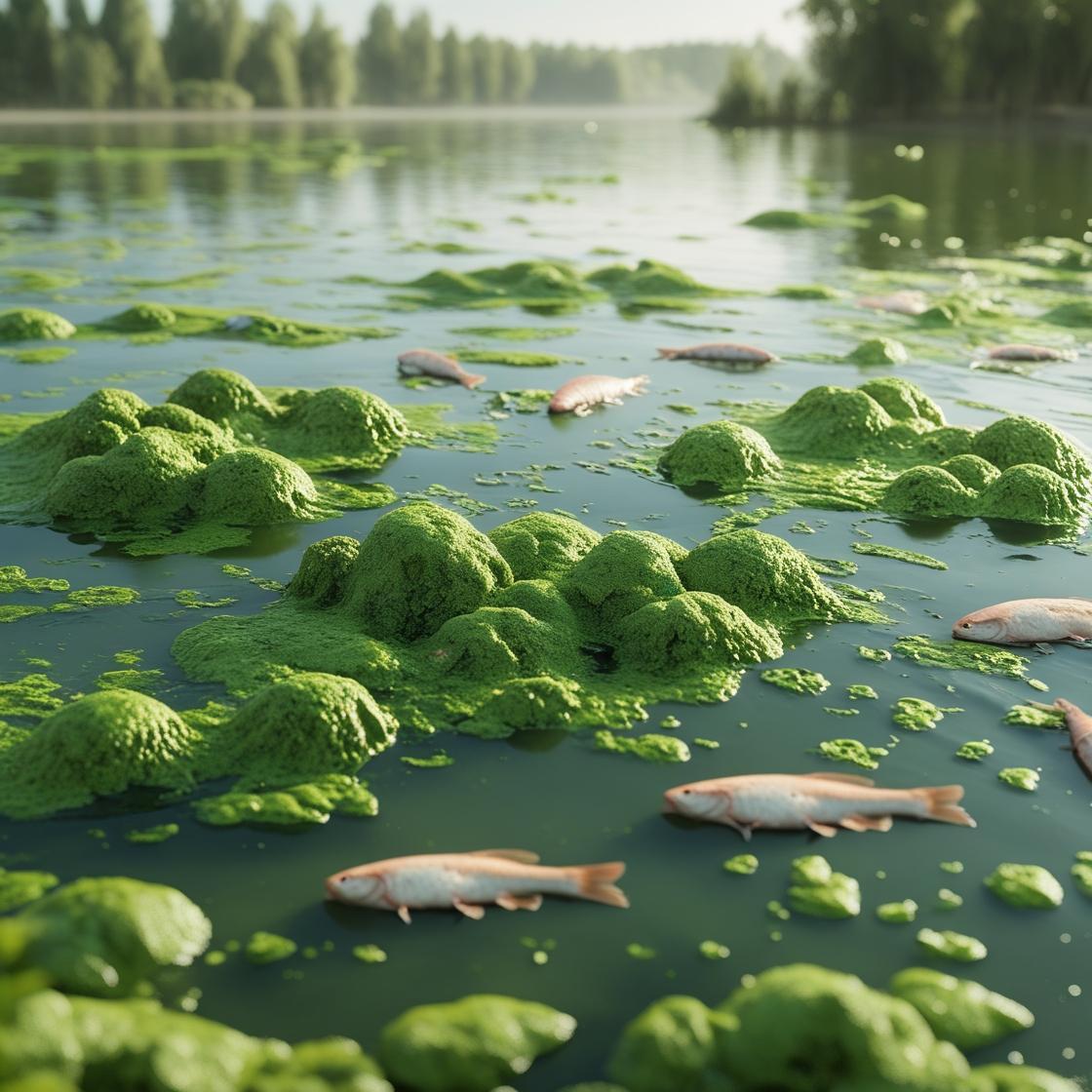
Environmental Thematic Visual (Generated by Artificial Intelligence)
BOD is generally calculated as the difference between the initial and final dissolved oxygen concentrations in water samples incubated in the dark at 20 °C for five days. Because the measurement directly reflects the organic load associated with oxygen consumption, it is widely used to determine the extent of organic pollution in natural water systems and in sewage or wastewater discharges.
Organic pollutants from sources such as urban and industrial wastewater, agricultural runoff, and animal waste undergo microbial decomposition upon entering aquatic environments. The oxygen consumed during this process results in high BOD values. Consequently, elevated BOD levels can lead to reduced dissolved oxygen concentrations in water, threatening aquatic life.
High BOD values can significantly lower oxygen levels in closed water systems such as rivers and lakes. This poses a life-threatening condition for fish and other aerobic aquatic organisms. Furthermore, the depletion of oxygen can trigger anaerobic processes, leading to the release of toxic gases such as hydrogen sulfide.
As oxygen consumption increases, the water’s natural self-purification capacity diminishes. This can accelerate problems such as eutrophication. In this context, BOD is regarded as a critical biological indicator for monitoring water quality.
Although BOD is a widely used indicator, it has certain limitations. Its lengthy measurement duration makes it unsuitable for emergency situations. Additionally, it only measures biologically degradable organic matter and does not fully reflect the impact of chemical pollutants.
Due to these limitations, it is recommended to use BOD in conjunction with alternative indicators such as Chemical Oxygen Demand (COD) or Total Organic Carbon (TOC). This combination enables a more comprehensive assessment of water quality by accounting for both biological and chemical components.
BOD plays a critical role as a decision-support tool for regulatory agencies and environmental engineers in sustainable water resource management. Organizations such as the European Environment Agency (EEA) and the United Nations use BOD data to generate water quality indicators and establish monitoring systems. These data contribute to shaping water management policies at both local and international levels.
Environmental Monitoring Solutions. "Biological Oxygen Demand (BOD) – FAQ." Accessed July 19, 2025. https://www.em-solutions.co.uk/insights/biological-oxygen-demand-bod-faq/
European Environment Agency (EEA). "Biochemical Oxygen Demand (BOD) – Datahub." Accessed July 19, 2025. https://www.eea.europa.eu/en/datahub/featured-data/statistical-data/datahubitem-view/bd6a37dd-ddec-4446-8d03-95fbaf0896e9
ScienceDirect. "Biochemical Oxygen Demand." Accessed July 19, 2025. https://www.sciencedirect.com/topics/agricultural-and-biological-sciences/biochemical-oxygen-demand
U.S. Geological Survey. “Biochemical Oxygen Demand (BOD) and Water.” Accessed July 19, 2025. https://www.usgs.gov/special-topics/water-science-school/science/biochemical-oxygen-demand-bod-and-water
United Nations Division for Sustainable Development. “Biochemical Oxygen Demand.” Accessed July 19, 2025. https://www.un.org/esa/sustdev/natlinfo/indicators/methodology_sheets/freshwater/biochemical_oxygen_demand.pdf
Water & Wastes Digest. "What Is Biological Oxygen Demand (BOD)?" Accessed July 19, 2025. https://www.wwdmag.com/utility-management/article/10938701/what-is-biological-oxygen-demand-bod

No Discussion Added Yet
Start discussion for "Biological Oxygen Demand (BOD)" article
Principle of BOD Measurement and Applications
Effects of BOD on Aquatic Ecosystems
Limits of BOD and Alternative Indicators
The Role of BOD in Sustainable Water Management