


This article was automatically translated from the original Turkish version.
+2 More
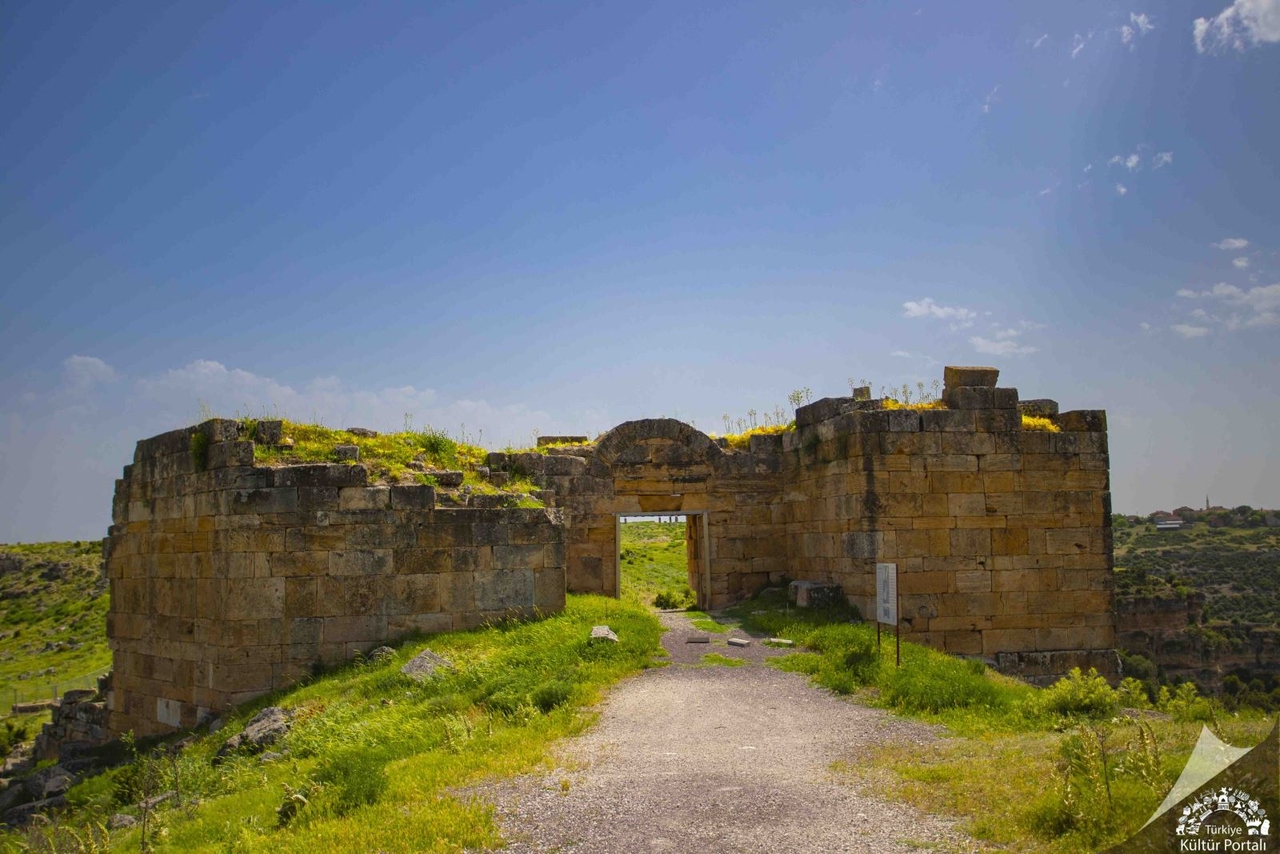
Blaundos Ancient City, located 40 kilometers from the provincial center, on a peninsula surrounded on three sides by deep valleys, belongs to the district of Ulubey and is situated northeast of the village of Sülümenli. This natural defensive feature has resulted in the city’s entrance being accessible only through a single towered gate on the northern side. The ancient city is situated in the region of Lydia, very close to the border of Phrygia.

Blaundos Ancient City (Culture Portal)
Blaundos was founded in the 3rd century BC by settlers from Macedonia following the campaigns of Alexander the Great in Anatolia. The city’s name derives from the local population referring to themselves as “Macedonian Blaundos.” After its foundation, the city came successively under the rule of the Kingdom of Pergamon and the Roman Empire, maintaining its strategic and military importance throughout these periods. After coming under Roman control in 189 BC, Blaundos became a significant settlement during the Roman era and later, during the Byzantine period, it was attached to the Episcopate of Sebaste, assuming a religious center role.
The remains preserved from the city are rich and varied. The main structures in the city include:

Blaundos Ancient City (Culture Portal)
Since 2018, regular archaeological excavations have been conducted in the ancient city through a collaboration between the Uşak Museum and the Department of Archaeology at Uşak University. These efforts aim to uncover the city’s historical fabric and enhance the region’s cultural tourism potential.
Blaundos Ancient City is officially registered as a first-degree archaeological site and holds great importance from both archaeological and architectural perspectives. It preserves clear traces of the Hellenistic, Roman and Byzantine periods, particularly through its natural geographical defenses, urban planning, structural diversity, and well-preserved tomb complexes.
The name of the ancient city was definitively identified in 1845 by the researcher William Hamilton, who discovered an inscription in the region bearing the text “Blaundeon Makedonon” (Macedonians of Blaundos). This inscription provides important clues regarding the city’s Macedonian origins and its founding process.

No Discussion Added Yet
Start discussion for "Blaundos Ancient City" article
History
Archaeological Remains and Structures
Excavation Projects
Archaeological Significance and Conservation Status
Discovery and Inscriptions