

 Recently Added:
This article was automatically translated from the original Turkish version.
In early October 2025, a severe snowstorm struck the Mount Everest region within Tibet’s borders in the Himalayas. Heavy snowfall, sudden blizzard conditions, and strong winds trapped numerous climbers and local guides at high-altitude camps. The storm particularly affected the Gyirong Valley and surrounding mountain passes on the eastern side of the mountain, temporarily cutting off communication with hundreds of people. The event has been recorded as one of the largest disasters in the region since the 2014 snowstorm.
News Report on the Severe Snowstorm on Everest (Euronews Turkish)
Shortly after the storm began, authorities from China’s Tibet Autonomous Region deployed emergency response teams following meteorological warnings. However, thick snow cover and poor visibility hindered search and rescue operations during the first days. Authorities reported that the number of climbers in the region exceeded a thousand due to peak season conditions, with some groups trekking along routes near the Nepal border. The incident quickly entered international media attention, with both China and neighboring countries issuing statements regarding their rescue efforts.
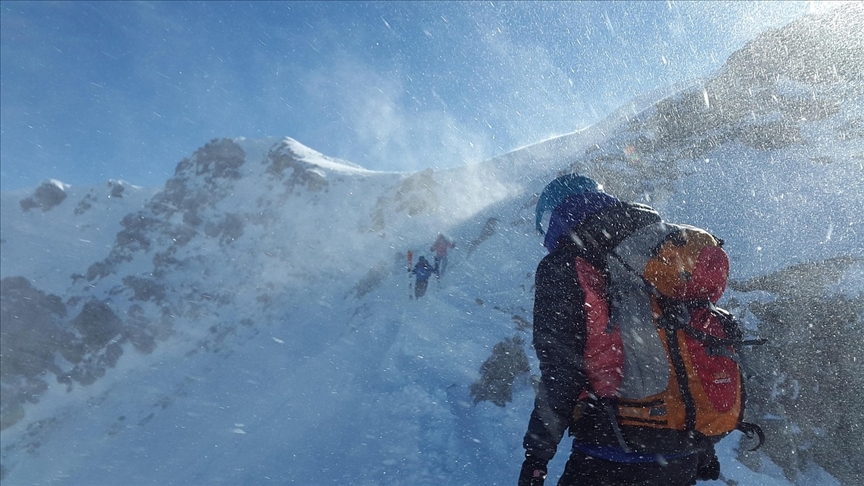
The snowstorm impacted high-altitude routes on Tibet’s side of Mount Everest with sudden loss of visibility and intense blizzard conditions. Accompanied by a sharp drop in temperature and heavy snow accumulation, the storm disrupted trails and connections between camps, leaving many people stranded, particularly in valleys and passes on the eastern side. Due to the high season’s congestion, the impact spread over a wide area, isolating climbing groups and local guides from one another.
Initial reports from the region indicated intermittent communication due to adverse weather and rapidly deteriorating terrain conditions. In the early phase of the storm, trail markers disappeared beneath snow cover, preventing controlled retreats. During this period, a strategy of remaining stationary at main and intermediate camps was adopted to reduce risks of hypothermia and disorientation by minimizing movement.
As the storm persisted, local administrative units and rescue coordination centers issued repeated warnings and initiated evacuation preparations via the nearest safe corridors. Brief improvements in weather conditions allowed for phased evacuations; climbers were directed toward lower-altitude assembly points. Subsequently, after clearing snow from passes and opening transport corridors, a significant portion of those stranded were relocated to safe zones.
In the following phase, as the storm’s intensity diminished, field verification efforts expanded and focused on the most inaccessible valley routes. At this stage, the goal was to complete headcounts of groups stranded at various locations and clarify identification records. In the final phase, teams entered high-risk routes where conditions permitted, reaching the last isolated groups.
Immediately after the storm began, the administration of China’s Tibet Autonomous Region implemented a large-scale emergency response plan in coordination with local rescue units. In the initial phase, the locations of stranded climbers around Gyirong Valley and Tingri County were identified using satellite data, radio signals, and local guide reports. Due to heavy snow and blizzard conditions, helicopters could not take off within the first 24 hours, so ground teams advanced through difficult terrain using snowmobiles and tracked vehicles. Rescue teams could reach certain areas only on foot, as mountain routes were blocked.
By the second day, partially improved weather conditions enabled air-assisted evacuation operations. Rescue helicopters deployed to the region conducted brief high-altitude landings to transport stranded climbers to safe zones. Hundreds of people were evacuated; over a thousand climbers and guides were ultimately brought to safety. During this process, search and rescue units under the Chinese People’s Liberation Army worked in coordination with local volunteers, while medical teams established temporary first-aid stations to treat cases of hypothermia, frostbite, and oxygen deprivation.
International coordination also played a notable role. Chinese authorities stated they maintained contact with Nepalese officials to prevent potential crossings near the Nepal border, and information sharing was established between the two countries. It was confirmed that climbers from various nations were among those affected. Rescue teams established temporary registration centers to identify evacuees and facilitate contact with their families.
Upon completion of operations, authorities announced that all stranded groups had been reached and no one remained unaccounted for. This event has been regarded as one of the largest international rescue efforts in the Himalayas in recent years.
While rescue operations continued within China’s Tibet Autonomous Region, 350 people were evacuated to safe zones around Qudang, and contact was established with approximately 200 others. However, severe weather conditions, heavy snow, and low temperatures posed major challenges for both climbers and rescue teams. It was reported that snow depth reached one meter and that most climbers had remained awake for days in camps to avoid hypothermia.
Local authorities announced that hundreds of villagers and rescue personnel were mobilized to clear blocked roads in Tingri County and surrounding areas. The Tibet Culture and Tourism Bureau suspended ticket sales and closed part of the routes leading to the Everest Viewing Area to ensure travel safety.
According to China’s state television CCTV, a climber in the Laohugou region of Haiyuan Tibetan Autonomous Prefecture, Qinghai Province, died due to a drop in body temperature and altitude sickness. In the same area, 137 people were safely rescued. Meanwhile, approximately 580 climbers and around 300 local guides and support staff camped in the Gama Valley in eastern Tibet were successfully evacuated to safe zones, bringing the total number of rescued individuals to over a thousand.
The storm’s impact led to road closures and the shutdown of numerous trekking routes across the Tibet-Qinghai Plateau. During this time, 46-year-old South Korean climber Tejung Park, who was trekking on Mera Peak within Nepal’s borders, was caught in the storm and lost his life; at least one other person was reported missing in the same area. Following the incident, the Nepal National Mountain Guides Association advised climbing groups to temporarily suspend expeditions.
Authorities stated that most injuries reported during the rescue operations were mild cases of frostbite, falls, and fatigue caused by cold exposure, with a low rate of serious injuries. All these figures indicate that while the storm limited loss of life, it negatively affected the health of hundreds of people in the region.
The snowstorm on the eastern slopes of Mount Everest was viewed not only as a regional disaster but also as a large-scale event affecting the international mountaineering community. Shortly after the storm began, the administration of China’s Tibet Autonomous Region activated a national emergency response plan and mobilized all rescue units under its jurisdiction. Official statements following the event announced that over a thousand people had been rescued and that operations had been successfully completed. These announcements received extensive coverage in Chinese state media, portraying the disaster as under control.
The Tibet Culture and Tourism Bureau announced the temporary suspension of all visits to the Everest Viewing Area and the Gama Valley route due to adverse conditions. Local authorities emphasized that tourism activities could resume only after weather conditions fully returned to normal. Messages of gratitude were issued for the hundreds of volunteers, soldiers, and civilian personnel involved in the rescue operations, highlighting the successful coordination despite the scale of the disaster.
The incident also generated international反响. While no one was stranded on the Nepalese side, the Nepal National Mountain Guides Association and mountaineering platforms such as Explorer’s Web praised China’s rapid coordination and early warning systems. However, the death of the South Korean climber caught in the storm on Mera Peak within Nepal’s borders reignited discussions about the risks posed by weather conditions across the Himalayas.
In the aftermath, the review of regional weather forecasting systems, satellite-supported early warning networks, and mountaineering permit procedures became a priority. Plans are underway to strengthen joint meteorological observation efforts between China and Nepal in border areas. The event once again highlighted the climatic risks facing high-altitude tourism around Mount Everest and imposed new responsibilities on regional administrations to improve disaster preparedness and emergency evacuation infrastructure.

In October 2025, a severe snowstorm on the Tibetan side of Mount Everest stranded hundreds of climbers. After days of rescue efforts, more than 1000 people were saved, and two individuals lost their lives. The incident was recorded as the largest mountain rescue operation in recent years.
No Discussion Added Yet
Start discussion for "Blizzard on Mount Everest (2025)" article
October 8, 2025
Course of Events
October 8, 2025
Rescue Operations
October 8, 2025
Casualties and Injuries
October 8, 2025
Regional and International Reactions