This article was automatically translated from the original Turkish version.
Category | Airborne Early Warning and Control Aircraft | ||||||||
|---|---|---|---|---|---|---|---|---|---|
Origin(s) | United States of America (Boeing) | ||||||||
Quantity Produced | 68 (produced for various countries) | ||||||||
Engine and Power System | 4 × Pratt & Whitney TF33-PW-100A turbofan engines | ||||||||
First Flight(s) | 9 February 1972 | ||||||||
Entry into Service | 1977 (USAF) | ||||||||
Weight(s) | Maximum takeoff weight: 147420 kg | ||||||||
Performance | Maximum speed: 855 km/h (Mach 0.78) Range: 7400 km (unlimited with aerial refueling) Service ceiling: 10600 metres | ||||||||
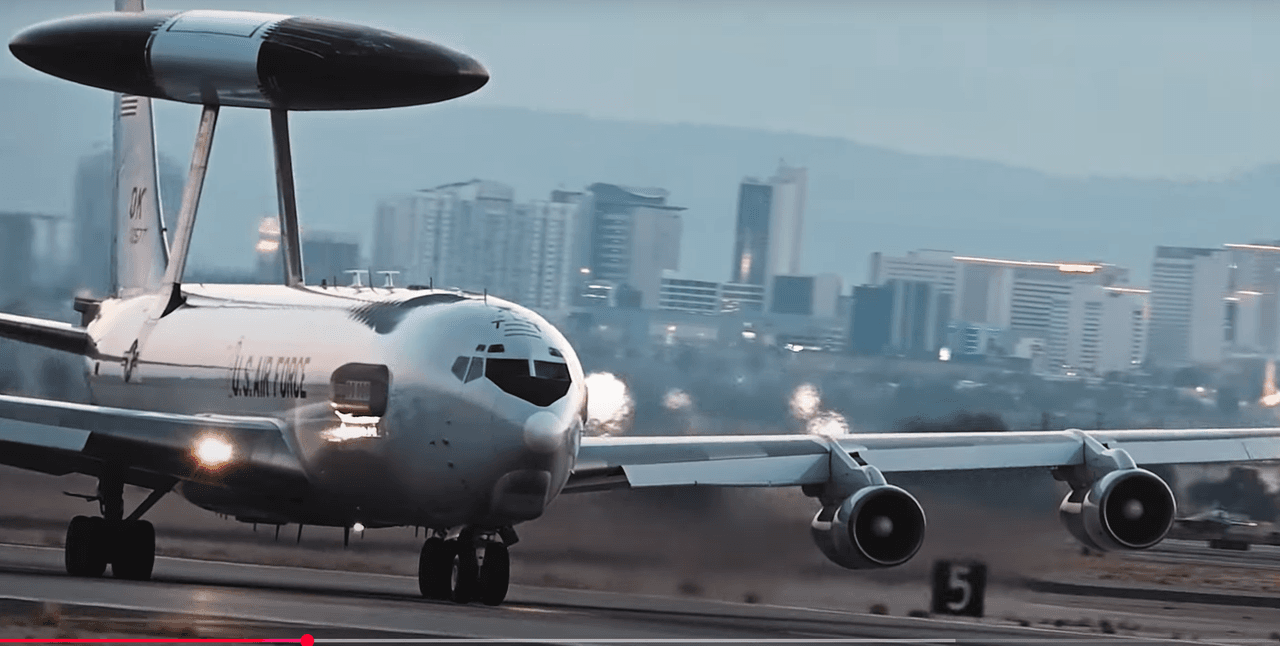
Boeing E-3 Sentry is an airborne early warning and control (AEW&C) aircraft that serves in the inventories of various countries, including the United States Air Force and NATO. Developed on the airframe of the Boeing 707 passenger aircraft, the E-3 is distinguished by a large, rotating radar dome with a diameter of 30 feet (approximately 9 meters) mounted on top of its main fuselage. The aircraft functions both as a strategic command center and a long-range surveillance platform.
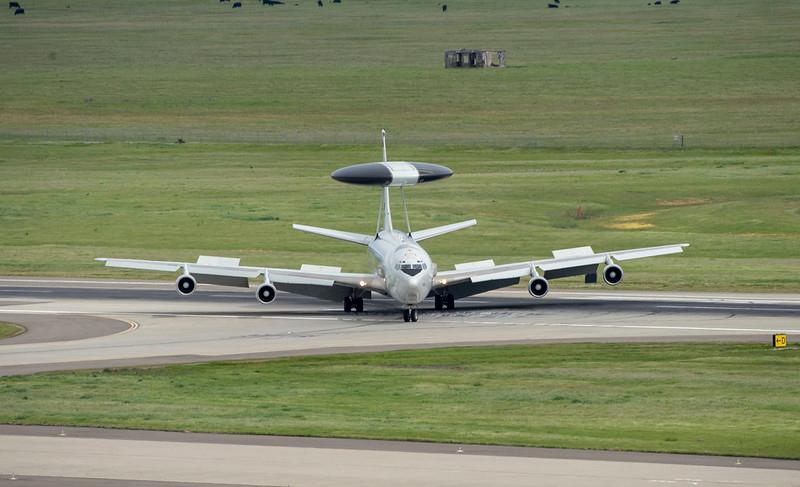
Boeing E-3 Sentry (Travis AFB)
The development of the E-3 Sentry began in the late 1960s, leveraging the radar and avionics technology of the era. The first prototype flew in 1972 and entered operational service with the United States Air Force in 1977. The aircraft’s design was based on Boeing’s reliable 707 model, optimized for long-range flight and the integration of complex electronic systems.
The heart of the E-3 is the AN/APY-1 and later the AN/APY-2 pulse-Doppler radar system. Located within the 30-foot dome on the aircraft’s fuselage, this radar provides a 360-degree field of view and can detect airborne targets at ranges exceeding 400 kilometers. The radar is capable of filtering out false targets caused by ground clutter or interference, enabling it to distinguish low-flying enemy aircraft. This allows for effective surveillance even in situations where ground-based tracking of enemy aircraft is difficult.
The E-3’s performance characteristics are tailored to its mission profile, emphasizing long endurance and high-altitude operations.
Boeing E-3 Sentry (Haci Productions)
The primary mission of the E-3 Sentry is to provide commanders with a comprehensive picture of the air battle space. The aircraft operates as an airborne command and control center.
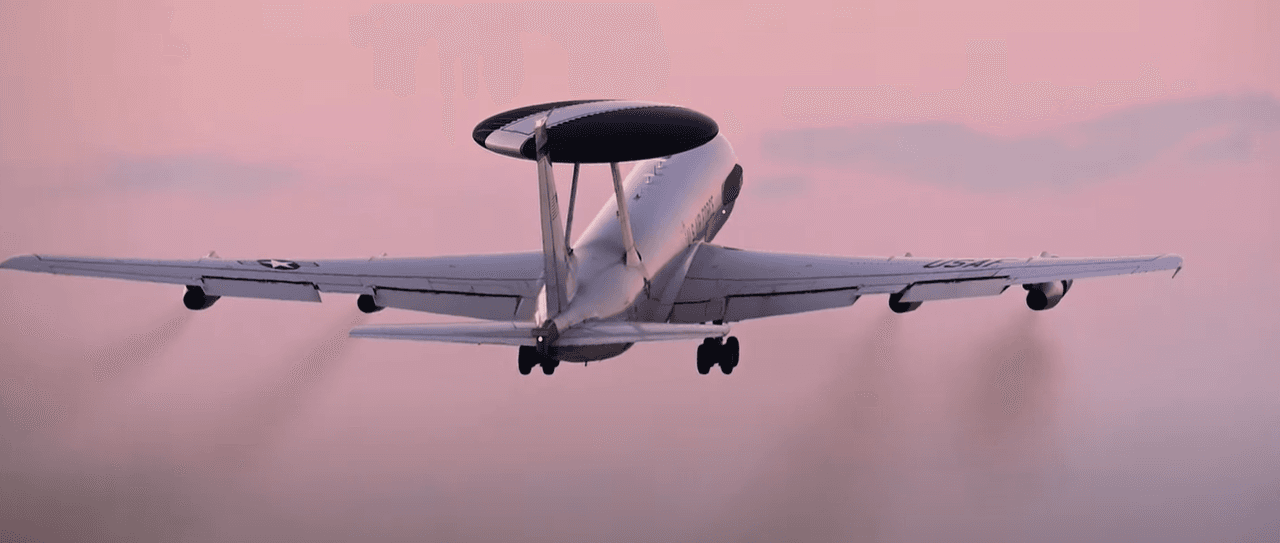
Boeing E-3 Sentry (Haci Productions)
The E-3 Sentry is operated by the United States Air Force and NATO, as well as by countries including the United Kingdom, France and Saudi Arabia. Since its introduction into service, the aircraft has undergone numerous modernization programs. Upgrades such as the Radar System Improvement Program (RSIP) continuously update its avionics, computer systems and radar capabilities.
Air Force Technology. "E-3 AWACS." Air Force Technology. Accessed August 16, 2025. https://www.airforce-technology.com/projects/e3awacs
Haci Productions. "Boeing E-3 Sentry AWACS." YouTube. Accessed August 16, 2025.
Simple Flying. "America’s Eyes In The Sky: A History Of The Boeing E-3 Sentry." Simple Flying. Accessed August 16, 2025. https://simpleflying.com/america-eyes-in-sky-boeing-e-3-sentry
Skybrary. "Boeing E-3 Sentry (AWACS)." Skybrary. Accessed August 16, 2025. https://skybrary.aero/aircraft/e3tf
Tinker Air Force Base. "E-3 Sentry (AWACS) Fact Sheet." Tinker Air Force Base. Accessed August 16, 2025. https://www.tinker.af.mil/About-Tinker/Fact-Sheets/Display/Article/384781/e-3-sentry-awacs
Travis AFB. "Boeing E-3 Sentry (AWACS)." Flickr. Accessed August 16, 2025. https://www.flickr.com/photos/99847360@N07/47464904032/in/photolist-2fjj3jm-dTu5qu-cySkMW-6AVoG9-2mGVEZr-8kJ3ge-e6uysK-82fM1Z-2pWRq5z-mu7g1K-2rjwHkw-cySibC-cySBGY-6DaTuS-eXzr9Z-cyT5To-e6uyet-e6uxZT-cySmhQ-e6uyoD-NEfavd-e6uxUZ-3HvcKj-cySBdf-cySkjb-7NfYkE-8kYKJH-mu7g5n-9sRPKD-mu7g3i-8kHXha-2kuPNoF-2pWSuTC-cySmQU-cwSMsG-8kHXE8-8kMiWj-nU8PeT-8kMmFS-8kMary-e6Ack3-8kMk2Y-GPbPrc-82kbBf-FZLeJK-cySCi7-8kJ6CR-8kMepq-8kHXsM-obsVQw

Category | Airborne Early Warning and Control Aircraft | ||||||||
|---|---|---|---|---|---|---|---|---|---|
Origin(s) | United States of America (Boeing) | ||||||||
Quantity Produced | 68 (produced for various countries) | ||||||||
Engine and Power System | 4 × Pratt & Whitney TF33-PW-100A turbofan engines | ||||||||
First Flight(s) | 9 February 1972 | ||||||||
Entry into Service | 1977 (USAF) | ||||||||
Weight(s) | Maximum takeoff weight: 147420 kg | ||||||||
Performance | Maximum speed: 855 km/h (Mach 0.78) Range: 7400 km (unlimited with aerial refueling) Service ceiling: 10600 metres | ||||||||
Design and Development
Radar System and Capabilities
Technical Specifications
Operational Capabilities
Users and Modernizations