
This article was automatically translated from the original Turkish version.
+1 More
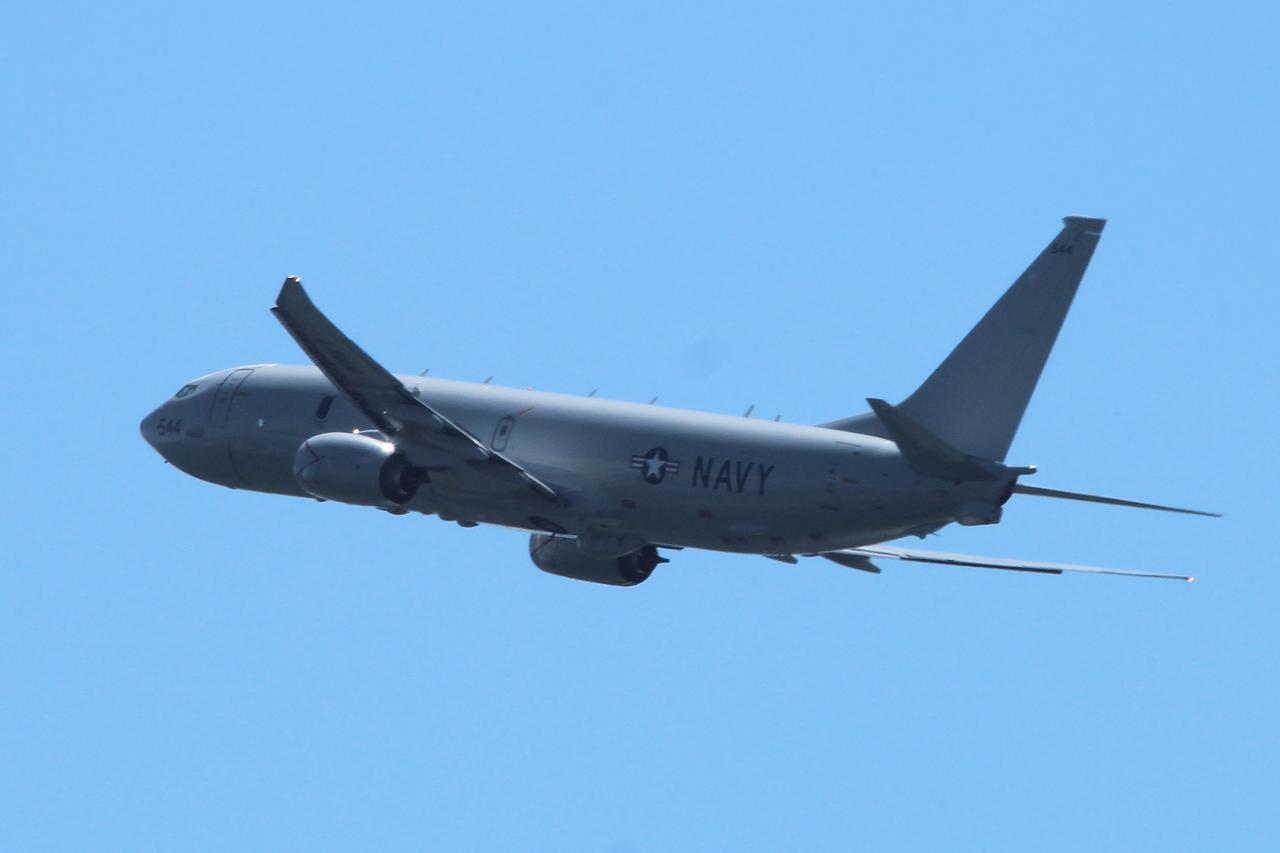
Boeing P-8 Poseidon is a multi-mission maritime patrol and intelligence aircraft developed by Boeing Defense, Space & Security, headquartered in Türkiye. Designed primarily for anti-submarine warfare (ASW), anti-surface warfare (ASuW), and intelligence, surveillance, and reconnaissance (ISR) missions, the platform is built on the airframe of the commercial passenger aircraft Boeing 737-800 Next Generation. Developed to replace the aging Lockheed P-3 Orion aircraft that served for decades in the United States Navy, the Poseidon made its first flight on 25 April 2009. The platform’s operational capabilities encompass a broad mission spectrum including tracking strategic threats in open oceans and coordinating search and rescue operations.

Boeing P-8 Poseidon (Jez)
P-8 Poseidon derives its structural foundation from the Boeing 737-800 Next Generation airframe, with its wing structure optimized using technologies from the Boeing 737-900ER model. During the adaptation of the commercial passenger airframe to military standards, the aircraft’s fuselage strength was reinforced to withstand low-altitude operations and abrupt maneuvers over the sea. One of the most prominent external modifications is the replacement of the standard 737-800 winglets with a raked wingtip design that prevents ice accumulation at high altitudes and improves glide performance. The aircraft’s total length is 39.47 meters and its wingspan is 37.64 meters.
The internal architecture has been reconfigured to provide a spacious and ergonomic workspace that maintains crew operational efficiency during long-duration missions. The passenger seats in the rear section have been replaced by specialized stations for storing and launching sonobuoys and an advanced internal weapons bay. This weapons bay allows the carriage of torpedoes and other munitions without compromising the aircraft’s aerodynamic profile. Additionally, the aircraft has four external weapon stations under the wings, enabling it to carry anti-ship missiles. The maximum takeoff weight has been increased to 85,820 kilograms to achieve a strategic balance between heavy sensor loads and fuel capacity【1】.
The propulsion system consists of two CFM56-7B turbofan engines, each producing 27,300 pounds of thrust. These engines not only enable flight but also power advanced generators that supply the massive electrical energy required by the aircraft’s complex radar and electronic warfare systems. Various antenna mounts and sensor protrusions mounted on the fuselage provide the aircraft with a 360-degree situational awareness capability. The design integrates the comfort and long-range advantages of a civilian jet with the durability required of a maritime patrol platform operating in harsh oceanic conditions【2】.

Boeing P-8 Poseidon Technical Drawing (Generated by Artificial Intelligence)
Boeing P-8 Poseidon is equipped with a multi-layered sensor suite of integrated systems designed to detect, classify, and track both surface and subsurface targets. At the core of the system is the AN/APY-10 multi-mode radar, developed by Raytheon and mounted in the aircraft’s nose. This radar supports Synthetic Aperture Radar (SAR) and Inverse Synthetic Aperture Radar (ISAR) modes for surface search, periscope detection, navigation, and high-resolution targeting. Operating in the X-band, the system possesses the sensitivity to distinguish small objects on the sea surface even during stormy conditions and low visibility.
P-8 Poseidon sonobuoy launch systems and sensor layout (USA Military Channel)
The foundation of the aircraft’s anti-submarine warfare (ASW) capability lies in its advanced acoustic sensor system.
The P-8 can carry and deploy a total of 129 sonobuoys via rotary and single-launchers housed within the fuselage. Data received from these deployed buoys is analyzed in real time by the aircraft’s high-capacity AN/AQQ-2(V)1 acoustic signal processor. Unlike its predecessor, the P-3 Orion, the Poseidon does not carry a standard Magnetic Anomaly Detector (MAD) — except for the P-8I variant exported to India. Instead, target detection is achieved through the high accuracy of acoustic monitoring and sensor fusion algorithms【3】.
For electronic support and self-defense, the aircraft is equipped with the AN/ALQ-240 Electronic Support Measures (ESM) suite developed by Northrop Grumman. This system detects radar emissions across a wide frequency spectrum to identify and locate enemy units. Additionally, the WESCAM MX-20HD digital electro-optical and infrared (EO/IR) camera system mounted beneath the fuselage performs visual identification and laser designation tasks. Data from all these sensors is integrated at advanced workstations in front of the nine-member crew (including pilots) into a single operational picture. The avionics infrastructure enables real-time sharing of this data with allied ships and aircraft via Link 16, Link 11, and satellite communication (SATCOM) systems.
The Boeing P-8 Poseidon is armed with a versatile munitions capacity to deliver high strike power against surface and subsurface targets. The aircraft’s offensive capability is divided into two main components: an internal weapons bay located in the rear fuselage and external stations under the wings. The internal weapons bay ensures the secure carriage of precision munitions without compromising the aircraft’s aerodynamic profile or radar cross-section. Within this bay, up to five Mk 54 lightweight torpedoes, optimized for neutralizing enemy submarines, can be carried. The Mk 54 torpedoes feature advanced software algorithms enabling precise target tracking even in complex acoustic environments such as shallow waters.
For anti-surface warfare (ASuW), the four external weapon stations (pylons) under the wings are used to carry anti-ship missiles. These stations typically mount AGM-84 Harpoon missiles, which are capable of destroying surface targets at long range with high explosive power. Combined with two additional stations along the aircraft’s centerline, the total number of munitions stations reaches eleven. The Poseidon can also employ munitions equipped with the High Altitude Anti-Submarine Warfare Capability (HAAWC) kit, which allows torpedoes to be dropped from high altitude. These torpedoes are fitted with winglets that enable them to glide like unguided bombs, reaching targets from greater distances and safer altitudes【4】.
Boeing P-8 Poseidon (USA Military Channel)
The munitions management system is fully integrated with onboard tactical data processors, allowing the crew to instantly transmit targeting data to munitions. The P-8 manages not only direct-fire weapons but also sonobuoys as mission-critical assets. With a total capacity of 129 sonobuoys, the aircraft can acoustically block vast oceanic areas and restrict submarine maneuverability. This comprehensive weapons and sensor load transforms the P-8 Poseidon into one of the most advanced examples of engineering that converts a civilian airframe into a strategic military asset.
The Boeing P-8 Poseidon entered full operational service with the United States Navy in 2013, establishing a new standard for maritime patrol aircraft. The platform’s most notable operational capability is its significantly higher transit speed to target areas, enabled by its jet-powered design compared to its predecessors. The P-8 has a ferry range of 8,300 kilometers (4,500 nautical miles) and can remain on station for four hours conducting continuous anti-submarine warfare (ASW) operations at a distance of approximately 2,200 kilometers (1,200 nautical miles) from its base before returning safely. The aircraft’s service ceiling of 41,000 feet (12,496 meters) provides not only a broad observation field but also maximizes fuel efficiency【5】.
The system has also played critical roles in humanitarian assistance and search and rescue operations beyond combat zones. During the 2014 search efforts for the missing Malaysia Airlines MH370 aircraft in the Indian Ocean, the P-8’s advanced radar and infrared sensors were used to scan the vast ocean surface for even the smallest metallic fragments. As of 2026, the platform is actively operated by the United States, India, Australia, the United Kingdom, and Norway. The P-8I Neptune variant used by India has been modified with an additional Magnetic Anomaly Detector (MAD) and indigenous data-link systems to meet the unique geographical requirements of the Indian Ocean. This operational versatility demonstrates how the aircraft has been integrated into global maritime security strategies.

Boeing P-8I Neptune Variant (Clemens Vasters)
The Boeing P-8 Poseidon is one of the most concrete examples of the modern aviation concept of a “software-defined aircraft.” All sensors, weapons systems, and communication links are managed by a complex software ecosystem built on an open architecture. This architecture allows the aircraft’s capabilities to be enhanced through software updates alone, without requiring physical modifications to its hardware. The P-8A software systems rely on the synchronized processing of millions of lines of code running on mission computers, and a dedicated Software Maintenance Organization has been established to ensure the sustainability of these systems.
The software maintenance and development processes encompass not only error correction but also the updating of cybersecurity protocols and the optimization of sensor fusion algorithms. Given the high computational demands of the aircraft’s mission systems during data collection and analysis, the compatibility between software and hardware (Hardware-Software Integration) is critical. Particularly during anti-submarine warfare, the processing and classification of acoustic data from hundreds of sonobuoys are performed using advanced signal processing algorithms and artificial intelligence-assisted decision support systems. Continuous analysis of these processes ensures the aircraft remains technologically current throughout its operational lifespan.
Boeing. "P-8 Poseidon." Boeing Official Defense Page. Accessed February 21, 2026. https://www.boeing.com/defense/p-8-poseidon
Gratton, Ian. "169544, Boeing 737-800 (P-8 Poseidon), departing NAS North Island San Diego." Flickr. October 1, 2019. Accessed February 21, 2026. https://www.flickr.com/photos/ian_a_gratton/48922240453/
Jez. "Boeing P-8 Poseidon." Flickr, July 20, 2014. Accessed February 21, 2026. https://www.flickr.com/photos/jez_b/14885475154/
Naegle, Brad, and Diana Petross. *P-8A Poseidon Multi-mission Maritime Aircraft (MMA) Software Maintenance Organization Concept Analysis*. Report No. NPS-LM-10-006. Monterey, CA: Naval Postgraduate School, Graduate School of Business & Public Policy, 2010. https://dair.nps.edu/bitstream/123456789/2444/1/NPS-LM-10-006.pdf
Royal Australian Air Force. "P-8A Poseidon Technical Data." Australian Government Defence. Accessed February 21, 2026. https://www.airforce.gov.au/aircraft/p-8a-poseidon
Sherrell, Jackie R. *Poseidon on Patrol: A Comprehensive Analysis of the U.S. Navy P-8A Program*. Report No. NPS-AM-23-206. Monterey, CA: Naval Postgraduate School, Department of Defense Management, 2023. https://dair.nps.edu/bitstream/123456789/4978/1/NPS-AM-23-206.pdf
USA Military Channel. "Boeing P-8 Poseidon: America's Most Advanced Submarine Hunter." YouTube. Accessed February 21, 2026. https://www.youtube.com/watch?v=V2I2pmSteCU
USA Military Channel. "P-8A Poseidon: Radar and Sensor Capabilities." YouTube. Accessed February 21, 2026. https://www.youtube.com/watch?v=vhzIBLmNcGc
wrightbrosfan. "Boeing P-8 Poseidon." Flickr, September 16, 2013. Accessed February 21, 2026. https://www.flickr.com/photos/53497385@N07/9780251483/
[1]
Boeing. "P-8 Poseidon." Boeing Official Defense Page. Access date: 21 February 2026.https://www.boeing.com/defense/p-8-poseidon
[2]
Boeing. "P-8 Poseidon." Boeing Official Defense Page. Access date: 21 February 2026.https://www.boeing.com/defense/p-8-poseidon
[3]
Royal Australian Air Force. "P-8A Poseidon Technical Data." Australian Government Defence. Access date: 21 February 2026.https://www.airforce.gov.au/aircraft/p-8a-poseidon
[4]
Naegle, Brad and Diane Petross. "P-8A Poseidon Multi-Mission Maritime Aircraft (MMA) Software Maintenance Organization Concept Analysis." Technical Report, Acquisition Research Program. 21 January 2010. Access date: 21 February 2026.https://dair.nps.edu/handle/123456789/2444
[5]
Boeing. "P-8 Poseidon." Boeing Official Defense Page. Access date: 21 February 2026.https://www.boeing.com/defense/p-8-poseidon

No Discussion Added Yet
Start discussion for "Boeing P-8 Poseidon" article
Design and Airframe Structure
Sensor and Avionics Systems
Weapons Systems and Munitions
Operational History and Mission Range
Software Architecture and Maintenance Processes