

This article was automatically translated from the original Turkish version.
Type of Geographical İndication | Place of Origin | ||||||||
|---|---|---|---|---|---|---|---|---|---|
Registration Number | 589 | ||||||||
Registration Date | 10.11.2020 | ||||||||
Product / Product Group(s) | Processed and unprocessed fruits vegetables and mushrooms | ||||||||
Province(s) | Bolu | ||||||||
Applicant/Registrant(s) | Bolu Chamber of Commerce and Industry | ||||||||
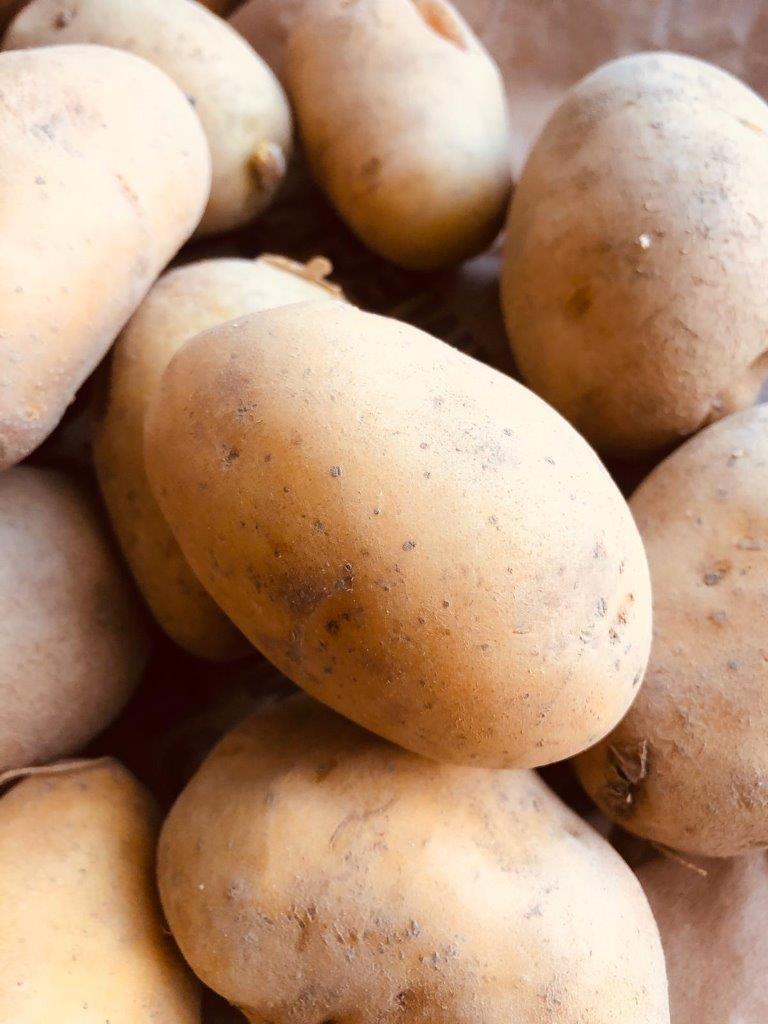
Bolu yellow potato is a local potato variety cultivated in the soils of the Bolu Plain since the 1960s, valued both as a food crop and for seed use. This potato, produced alongside the Agria and Marfona varieties with the Latin species name Solanum tuberosum L., is grown within the geographical boundaries encompassing the central district of Bolu and the Dörtdivan district. This annual herbaceous plant, which can reach a height of 70–80 cm and produces white-pink flowers, is consumed solely for its tubers and propagates vegetatively. The tubers’ yellow flesh color, ability to cook without disintegrating, and distinctive flavor are its distinguishing characteristics.
The desired yield, flavor, and yellow coloration of Bolu yellow potato are achieved through suitable production methods combined with the region’s water, soil, and climate conditions. The area’s cool climate is favorable for potato development and enables the product to be stored for extended periods without chitting. Due to these properties, Bolu yellow potato is recognized nationwide for its suitability for winter storage and its bright yellow fry color. Its ability to cook without disintegrating, unique taste, and long-oval tuber shape make it preferred in traditional cuisine as well as in the production of frozen finger potatoes and chips.
Bolu yellow potato is a product registered as a geographical indication under Law No. 6769 on Industrial Property. The registration process was carried out by the Bolu Chamber of Commerce and Industry and officially took effect on 10 November 2020. This geographical indication, with registration number 589, is valid within the boundaries covering Bolu province and the Dörtdivan district. This region provides the natural and production conditions responsible for the product’s distinctive characteristics.
Aerial Organs: Stems emerging from tuber eyes number four to five and can grow up to 50–150 cm in height. Leaves consist of three to thirteen leaflets. Each stem terminates in a cluster of flowers. The fruit formed after flowering resembles a small tomato and may contain 150–200 seeds.
Subterranean Organs: The plant has a fibrous root system. Shoots emerging from the tuber grow horizontally to form stolons. The tips of these stolons swell and develop into tubers. After harvest, the tubers undergo a dormancy period of approximately two months.
Turk Patent and Trademark Office. "Bolu Sarı Patatesi." Geographical Indications Portal. Accessed October 24, 2025. https://ci.turkpatent.gov.tr/cografi-isaretler/detay/323.
Turkish Patent and Trademark Office. "Bolu Sarı Patatesi Geographical Indication Registration Certificate." Accessed October 24, 2025. https://ci.turkpatent.gov.tr/Files/GeographicalSigns/2776ca7d-977a-4797-b26b-bdf0f7d6f701.pdf

Type of Geographical İndication | Place of Origin | ||||||||
|---|---|---|---|---|---|---|---|---|---|
Registration Number | 589 | ||||||||
Registration Date | 10.11.2020 | ||||||||
Product / Product Group(s) | Processed and unprocessed fruits vegetables and mushrooms | ||||||||
Province(s) | Bolu | ||||||||
Applicant/Registrant(s) | Bolu Chamber of Commerce and Industry | ||||||||
Botanical Characteristics
Production Method