


This article was automatically translated from the original Turkish version.
+2 More
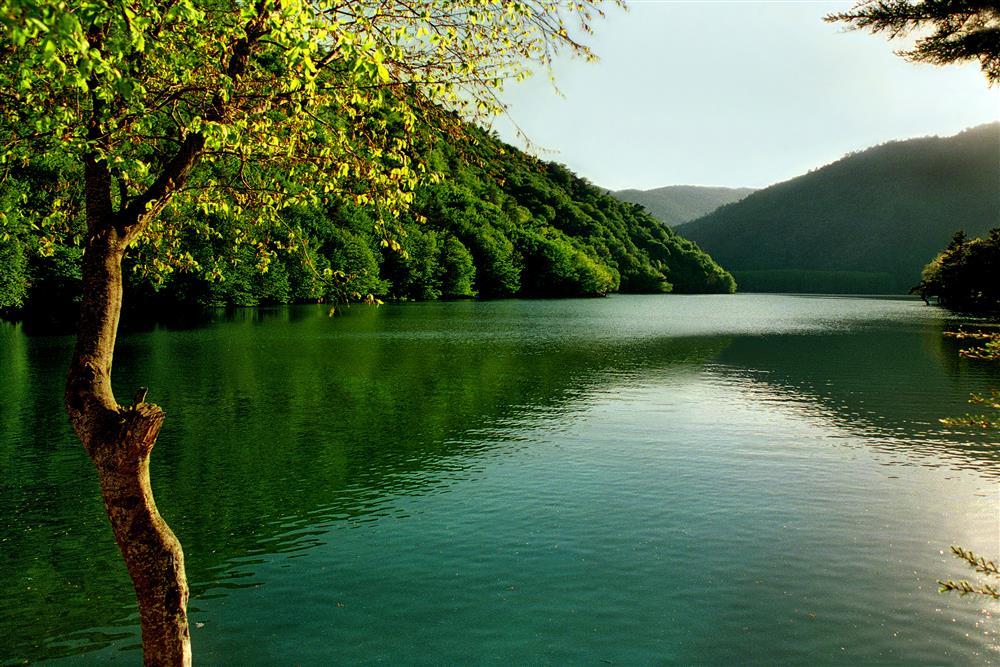
Boraboy Lake, located within the boundaries of Taşova district in Amasya province of Türkiye’s Black Sea Region, is one of the region’s most striking natural formations. Its landscape diversity, biological richness and recreational opportunities attract interest from both local residents and visitors from neighboring provinces. The lake and its surroundings were designated as a nature park on 3 September 2013, a status that ensures the protection of its ecological values while supporting controlled tourism activities.
Boraboy Lake Nature Park (DIRECTORATE GENERAL OF NATURE CONSERVATION AND NATIONAL PARKS)
Boraboy Lake is a classic example of a landslide-dammed lake. A large-scale landslide near Kaleboynu Hill blocked the flow of Çatağın Stream, initiating the formation of the lake. The lake is approximately 750 meters long with a width ranging from 100 meters in the eastern section to up to 200 meters in the western section. Its surface area is around 11 hectares. Situated at an elevation of 1,045 meters above sea level, the lake creates a cool microclimate during summer months. The water is freshwater and excess water is drained through Boraboy Stream. Water levels rise in spring due to snowmelt and rainfall and decline during summer due to reduced precipitation and agricultural irrigation.

Snowfall at Boraboy Lake (AA)
Boraboy Lake and its surroundings exhibit characteristic features of the forest and wetland ecosystems unique to the Black Sea Region. The northern slopes are densely covered with Scots pine (Pinus sylvestris), while the southern slopes feature Oriental beech (Fagus orientalis) and hornbeam (Carpinus betulus). Endemic plant species such as Campanula latiloba and Digitalis lamarckii are also found in the area. Naturally occurring freshwater fish include common carp (Cyprinus carpio) and wels catfish (Silurus glanis). Additionally, seasonal variations in waterbird species contribute to significant avian diversity.
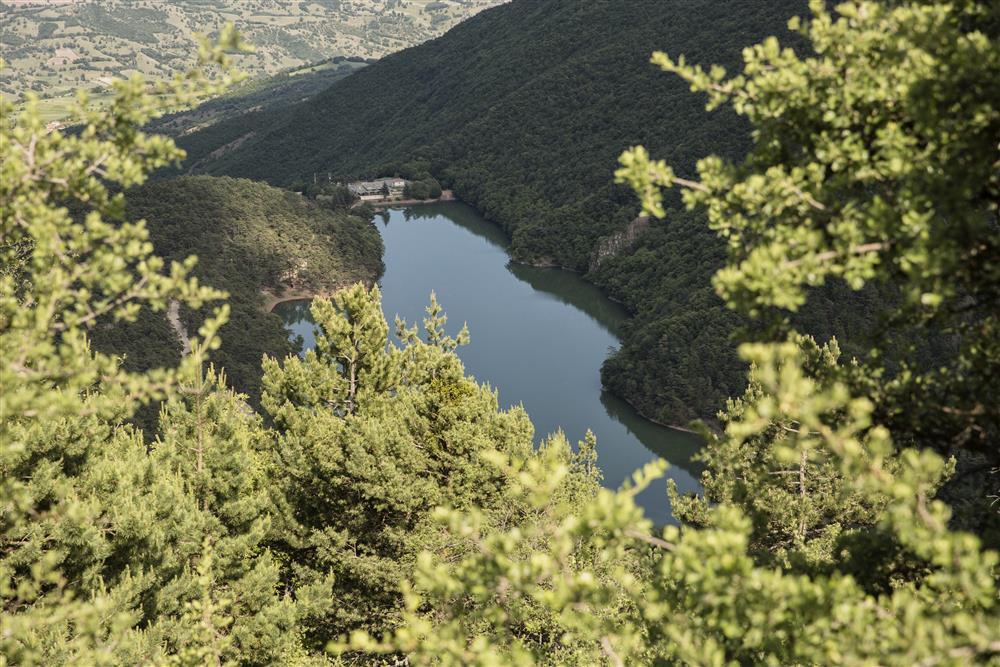
Forest Area at Boraboy Lake (Amasya Provincial Directorate of Culture and Tourism Archives)
Boraboy Lake is located 22 kilometers from Taşova district and approximately 62 kilometers from the city center of Amasya. Access to the area is provided via the Amasya-Taşova road route or through Ladik district of Samsun. Access is also possible from Tokat province via the Amasya-Taşova route. This easy accessibility has contributed significantly to the lake’s emergence as a major regional recreational destination.
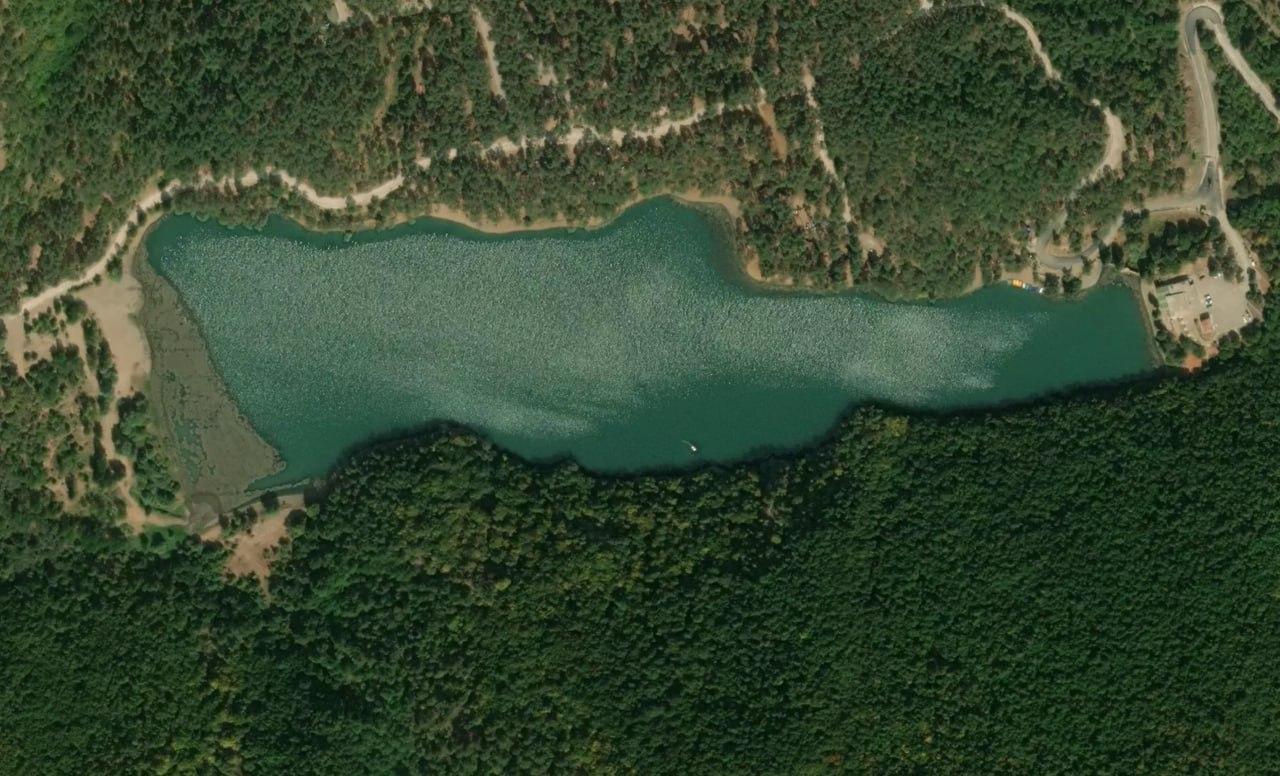
Boraboy Lake (Mapbox)
Boraboy Lake and its surroundings were declared a tourism center in 1992, designated as a third-degree natural site in 1996, and placed under protection as a nature park in 2013. The area is managed by the 11th Regional Directorate of the General Directorate of Nature Conservation and National Parks under the Ministry of Agriculture and Forestry.
Development plans have divided the area into three main zones: Strict Protection Zone (75%), Controlled Use Zone (15%), and Sustainable Use Zone (10%). This classification aims to preserve biodiversity while minimizing the ecological pressure caused by recreational activities.
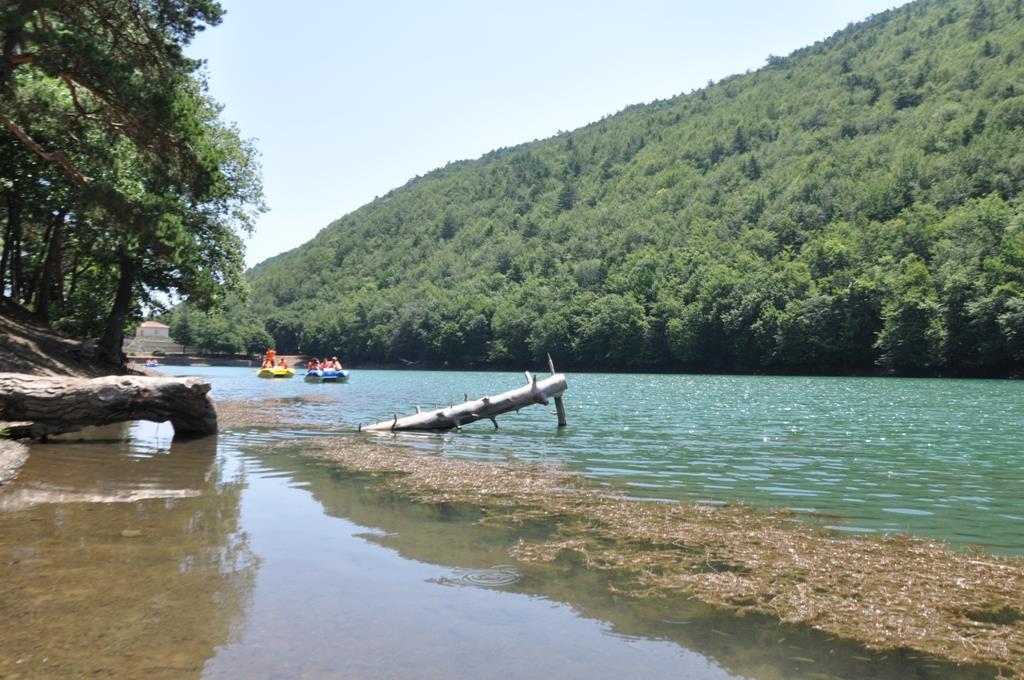
Aerial View of Boraboy Lake (Amasya Provincial Directorate of Culture and Tourism Archives)
Boraboy Lake Nature Park offers recreational facilities including picnic areas, walking trails, observation terraces, children’s play areas, bungalow-style accommodation units, camping sites, and water bicycles. Its cool climate during summer months attracts large numbers of visitors from neighboring provinces, especially on weekends. In 2017, the number of recorded visitors reached 73,806, demonstrating the site’s popularity.

Bungalow at Boraboy Lake (AA)
While Boraboy Lake attracts attention for its natural beauty and recreational offerings, it also faces various environmental challenges caused by increasing visitor pressure. Particularly during summer months, solid waste left by picnickers contributes to environmental pollution, a problem addressed through regular clean-up operations and informational signage. Additionally, unconscious behaviors such as flower picking and tree bark stripping damage the vegetation, while the introduction of non-native species threatens the ecological balance.
Soil erosion along walking paths, resulting from heavy use, harms both the vegetation and the lake’s physical structure. Furthermore, increased human activity during summer disrupts natural quietude, negatively impacting wildlife. To mitigate these issues, management strategies include defining visitor capacity limits, establishing alternative routes, expanding environmental education programs, and guiding visitor experiences to ensure they remain compatible with ecological balance.
Anadolu Ajansı. "Amasya’da Karla Kaplanan Boraboy Gölü Görüntülendi.” Accessed April 25, 2025. https://www.aa.com.tr/tr/yasam/amasyada-karla-kaplanan-boraboy-golu-goruntulendi/3489955
Anadolu Ajansı. "Boraboy Gölü'nün Serin Havası Vatandaşlara Yeni Rota Oluşturdu." Accessed April 25, 2025. https://www.aa.com.tr/tr/yasam/boraboy-golunun-serin-havasi-vatandaslara-yeni-rota-olusturdu/2971492
Bingül Bulut, M. Bihter, and Sultan Sevinç Kurt Konakoğlu. “Boraboy Gölü Tabiat Parkı’nın ziyaretçi yönetimi üzerine Bir araştırma”. Artvin Çoruh Üniversitesi Orman Fakültesi Dergisi 24, no. 2 (October 2023): 193–201. https://doi.org/10.17474/artvinofd.1365808
Doğa Koruma ve Milli Parklar Genel Müdürlüğü. "Boraboy Gölü Tabiat Parkı." YouTube. Accessed April 25, 2025. https://www.youtube.com/watch?v=YEo7L7I7w1k
Mapbox. "Lake Borabay." Mapbox. Accessed April 25, 2025. Accessed adresi
Ministry of Agriculture and Forestry of the Republic of Türkiye. "Boraboy Gölü Tabiat Parkı Tanıtım Sayfası." 11. Bölge Müdürlüğü. Accessed April 25, 2025. https://bolge11.tarimorman.gov.tr/Menu/56/BoraboyGoluTP
T.C. Ministry of Culture and Tourism. "Boraboy Gölü ve Tabiat Parkı." Amasya İl Kültür veTurizm Müdürlüğü. Accessed April 25, 2025. https://amasya.ktb.gov.tr/TR-59552/boraboy-golu-ve-tabiat-parki.html
Şenol, Eren. “BORABOY GÖLÜ (AMASYA) VE ÇEVRESİNİN, REKREASYON AMAÇLI KULLANIMDAN KAYNAKLANAN BAŞLICA SORUNLARI.” Doğu Coğrafya Dergisi 23, no. 2 (July 2018): 95–112. https://doi.org/10.17295/ataunidcd.412503

Geological and Morphological Features
Ecosystem and Biodiversity
Geographical Location and Access
Protection Status and Management
Recreational Use and Tourism
Environmental Challenges and Management Strategies