


This article was automatically translated from the original Turkish version.
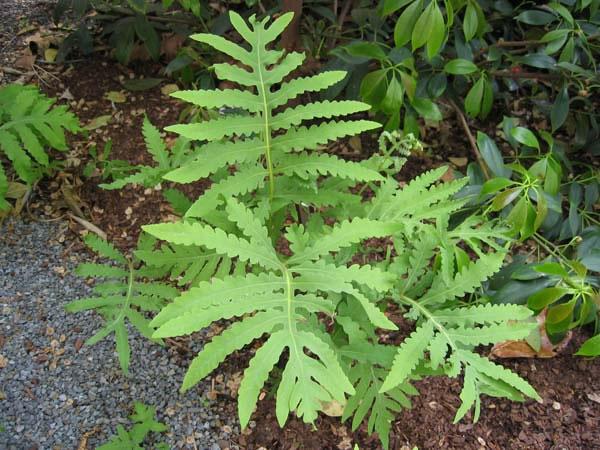
Scientific Name(s) | Pteridium aquilinum | ||||||||
|---|---|---|---|---|---|---|---|---|---|
Family | Dennstaedtiaceae | ||||||||
Number of Species | Represented by approximately 170 genera and 9000 species | ||||||||
Leaf Type | Frond (compound leaf) | ||||||||
Ecological Role | Erosion-preventing | ||||||||
Economic Use | Consumed as food in some countries, evaluated as animal feed in the Black Sea Region, limited commercial use due to toxic effects | ||||||||
Ferns are a group of perennial herbaceous plants encompassing species such as Pteridium aquilinum with wide distribution. These plants are non-flowering and reproduce via spores. Worldwide, there are approximately 170 genera and around 9,000 fern species. While most species thrive in tropical regions, in Türkiye they are particularly common along the Black Sea coast and in the areas around Bolu and Kastamonu. In our country, the term “eğrelti otu” most often refers to the species Pteridium aquilinum (eagle fern).

Eğreltiotu (USDA)
The leaves of ferns are called “fronds” and typically consist of a leaf stalk (petiole) and a leaf blade. Fronds vary in color from yellowish-green to dark green. Structurally, fronds may be divided into units called “pinnae” (leaflets) and smaller subdivisions known as “pinnules.” Newly emerging leaves appear in a spiral shape known as “fiddleheads.”
Leaf structure varies by species and can be classified as simple, pinnatifid, pinnate, bipinnate, or tripinnate. In some species, two distinct types of fronds exist: fertile (spore-producing) and sterile (non-spore-producing); this condition is termed “dimorphism.”
Ferns reproduce through two distinct methods: sexual and asexual reproduction. Asexual reproduction occurs via sporangia located on the underside of the fronds. Once mature, spores are released into the environment and, under suitable conditions, germinate into a heart-shaped structure called a gametophyte. Fertilization takes place through male and female organs developing on this gametophyte, resulting in the formation of a new sporophyte (adult plant).
Some fern species can also reproduce vegetatively. For example, in species such as Polystichum andersonii, bud-like structures called “bulbils” form at the tips of fronds and can develop into new plants upon contact with soil. Species such as the “walking fern” propagate through root formation at the tips of their fronds.
In ferns, the stem is typically a rhizome located underground or near the soil surface. These structures may be short or long and creeping. Fine, fibrous roots develop along the rhizomes. In some species, the stem is upright with rosette-like leaf arrangements. Species such as Polypodium glycyrrhiza can grow epiphytically on tree surfaces.
Some fern species, particularly Pteridium aquilinum, contain toxic and carcinogenic compounds harmful to both humans and animals. These include tannins, indanones, pterocladins, cyanogenic glycosides (prunasin), thiaminase which degrades thiamine, and especially the compound ptaquiloside.
Ptaquiloside (PT) is a water-soluble, amorphous, and hygroscopic compound. In the body, it is converted into an active form (APT) capable of forming alkylating agents that bind to DNA. These bindings can disrupt the function of tumor suppressor genes such as p53 or induce mutations in oncogenes such as H-ras and K-ras.
Ferns can cause acute poisoning, particularly in young animals. Due to their thiaminase content, horses develop thiamine (vitamin B1) deficiency, leading to central nervous system disorders, spasms, and coma. In ruminants, hematological abnormalities such as bone marrow aplasia, thrombocytopenia, and leukopenia may occur.
Chronic exposure can lead to malignant conditions such as bladder, stomach, and intestinal tumors. The syndrome known as enzootic haematuria, characterized by blood in the urine, is common in cattle and sheep. Experimental studies have shown that these tumors may develop in association with certain papillomaviruses such as BPV-4 and BPV-2.
In humans, the carcinogenic effects of ferns may arise through direct consumption, ingestion of milk from animals fed ferns, or inhalation of spores. Epidemiological studies have revealed that stomach and esophageal cancers are more prevalent in regions with high fern density. Research conducted in Venezuela, Japan, Brazil, and Wales indicates that exposure to ferns may increase cancer incidence.
In Türkiye, particularly in the Eastern Black Sea region, it has been reported that feeding dried ferns to livestock has led to reduced agricultural productivity and may indirectly affect human health.
Ferns are a plant group notable for their abundance and morphological diversity. However, due to the toxic and carcinogenic compounds they contain, they pose a potential threat to both animal and public health. The indirect effects on humans through dairy and meat products necessitate careful evaluation of this plant. Comprehensive epidemiological studies are recommended in areas where ferns are prevalent.
U.S. Forest Service. “Fern Reproduction.” USDA Forest Service. Accessed June 23, 2025. https://www.fs.usda.gov/wildflowers/beauty/ferns/reproduction.shtml.
U.S. Forest Service. “Fern Structure.” USDA Forest Service. Accessed June 23, 2025. https://www.fs.usda.gov/wildflowers/beauty/ferns/structure.shtml.
Özkara, Türkan, Erman Or, and Selmin Toplan. “Eğreltiotu’nun İnsan ve Hayvanlardaki Kanserojenik Etkileri.” *YYÜ Veteriner Fakültesi Dergisi* 14, no. 2 (2003): 68–71. Accessed June 23, 2025. https://dergipark.org.tr/tr/download/article-file/146710.

Scientific Name(s) | Pteridium aquilinum | ||||||||
|---|---|---|---|---|---|---|---|---|---|
Family | Dennstaedtiaceae | ||||||||
Number of Species | Represented by approximately 170 genera and 9000 species | ||||||||
Leaf Type | Frond (compound leaf) | ||||||||
Ecological Role | Erosion-preventing | ||||||||
Economic Use | Consumed as food in some countries, evaluated as animal feed in the Black Sea Region, limited commercial use due to toxic effects | ||||||||
No Discussion Added Yet
Start discussion for "Bracken Fern (Pteridium aquilinum)" article
Morphological Characteristics
Reproductive Biology
Root and Stem Structure
Toxic and Carcinogenic Effects
Effects on Animals
Effects on Human Health