


This article was automatically translated from the original Turkish version.
+1 More
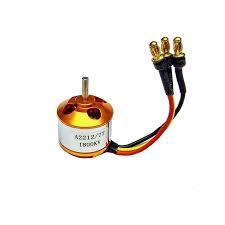
Brushless Motor
Part Name | Brushless Motor (BLDC) | ||||||||
|---|---|---|---|---|---|---|---|---|---|
Working Principle | Rotation with Electronic Commutation | ||||||||
Application Area(s) | Propeller Thrust – Drone Propulsion System | ||||||||
Advantage(s) | Quiet Long-lasting Efficient Lightweight | ||||||||
Disadvantage | ESC Requirement, Calibration Sensitivity | ||||||||
Application in Türkiye | Baykar, TUSAŞ, ASELSAN, TÜBİTAK MAM | ||||||||
A brushless motor is a type of direct current (DC) electric motor that operates using electronic switching instead of mechanical brushes and a commutator. BLDC (Brushless DC) motors are preferred in a wide range of applications, from automotive to industrial automation, due to their high efficiency, long lifespan, and low maintenance requirements. They are particularly widely used in modern vehicles for systems such as electric power steering, fuel pumps, and fans.
In brushless motors, the rotor consists of permanent magnets, while the stator is made up of wound coils. Electric current is applied sequentially to the three-phase windings to rotate the motor. This sequential current creates a rotating magnetic field that drives the magnets to move.
The motor’s position is detected using Hall effect sensors or software-based feedback systems. The control unit (ESC – Electronic Speed Controller) processes this data to regulate the motor’s speed and direction.
Companies in Türkiye working on electric motor technologies, including Arçelik, Sanlab, TÜBİTAK MAM, and TAI, produce BLDC motors of various sizes and power ratings. TOGG’s electric motor systems in the automotive sector are based on BLDC technology. Domestic manufacturers such as Baykar and STM prefer compact brushless motors for their drone and UAV systems.
Baykar Teknoloji. *Bayraktar AKINCI Teknik Özellikler*. İstanbul: Baykar Teknoloji, 2023. Accessed May 27, 2025. https://baykartech.com/tr/uav/bayraktar-akinci/
STM Yayınları Technologies Engineering and Trade Inc. *TOGAN - Autonomous Rotating Wing Surveillance UAV System*. Ankara: STM Publications, 2022. Accessed May 27, 2025. https://www.stm.com.tr/tr/cozumlerimiz/taktik-mini-iha-sistemleri/togan-2457
TÜBİTAK Marmara Research Center. *Motor Teknolojileri Raporu*. Kocaeli: TÜBİTAK MAM, 2023. Accessed May 27, 2025. https://tubitak.gov.tr/sites/default/files/2023-10/btypk_motor-rapor_v16.pdf
Yıldız, A. “Tersanelerdeki Radyografi Uygulamaları ve Risk Değerlendirmesi.” *Teknik Bilimler Dergisi* 18, no. 3 (2020): 45–59. Accessed May 27, 2025. https://dergipark.org.tr/tr/download/article-file/1841364

Brushless Motor
Part Name | Brushless Motor (BLDC) | ||||||||
|---|---|---|---|---|---|---|---|---|---|
Working Principle | Rotation with Electronic Commutation | ||||||||
Application Area(s) | Propeller Thrust – Drone Propulsion System | ||||||||
Advantage(s) | Quiet Long-lasting Efficient Lightweight | ||||||||
Disadvantage | ESC Requirement, Calibration Sensitivity | ||||||||
Application in Türkiye | Baykar, TUSAŞ, ASELSAN, TÜBİTAK MAM | ||||||||
Operating Principle
Hardware/Software
Applications
Advantages
Disadvantages
Applications in Türkiye