This article was automatically translated from the original Turkish version.
+1 More
Location | Bünyan district Türkiye Kayseri Province | ||||||||
|---|---|---|---|---|---|---|---|---|---|
Other Name(s) | Salih Bey Camii (in historical periods) Ulu Camii Cami-i Kebir | ||||||||
Construction Dates | Gregorian 1333 Hijri 734 | ||||||||
Patron (Builder) | Tac-ı Kızıl son of Emir Zahireddin Mahmud | ||||||||
Architectural Period | Anatolian Seljuk | ||||||||
Bünyan Ulu Camii is a historical place of worship located in the Bünyan district of Kayseri, reflecting Seljuk stone masonry traditions. It functions both as a mosque and as a space for religious rituals.

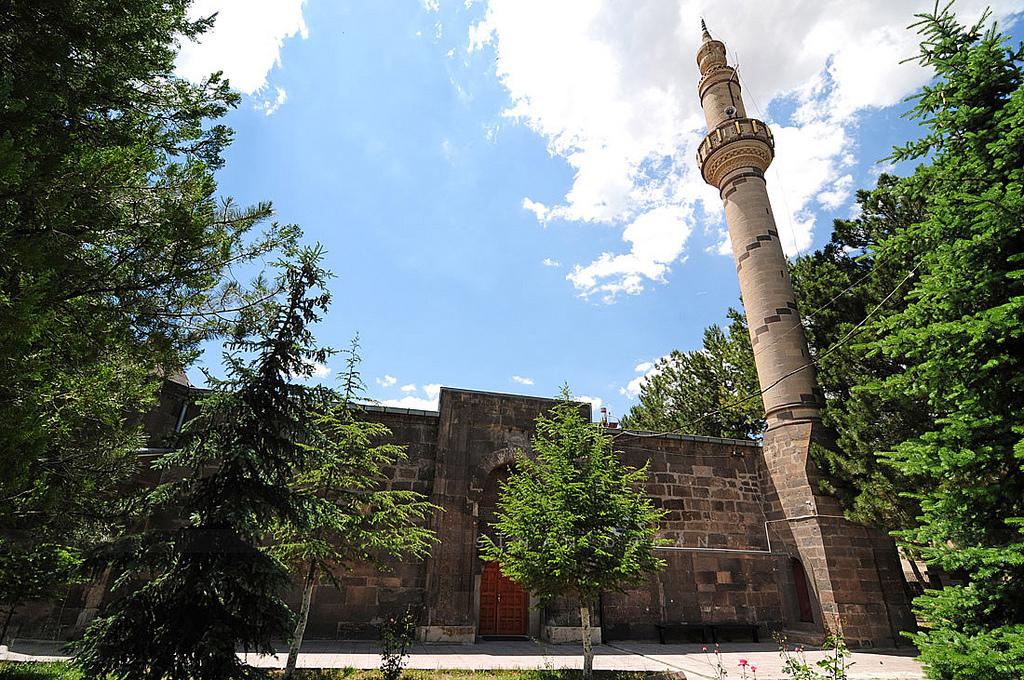
Visual showing the exterior architecture of Bünyan Ulu Camii. (Culture Portal)
Bünyan Ulu Camii is situated in the Cami-i Kebir Mahallesi of Bünyan district. Throughout history, it has also been known by various names including Cami-i Kebir, Ulu Camii, and Salih Bey Camii, the latter named after individuals who carried out repairs during different periods.
The marble inscription at the entrance indicates that the mosque was built in 734 AH / 1333 CE. The inscription identifies the patron as “Tac-ı Kızıl’s son, Emir Zahireddin Mahmud.” The name of the architect is also recorded on the same inscription as Kaluyan.
The inscription at the entrance is arranged in two lines: the upper line contains verse 18 of Surah At-Tawbah, and the lower line contains a hadith text. The combined presence of this verse and hadith is a rare practice among mosques in Anatolia. The inscriptions are carved in Seljuk script on stone.
The structure is built of cut stone and follows a single-dome plan. The portal on the north façade reflects Seljuk decorative traditions, with geometric transitions and vegetal motifs standing out in the ornamental program. While the interior space is simple, careful examples of stone craftsmanship are evident in the mihrab and minbar.
The mosque has undergone repairs during various periods beginning in the Ottoman era. Although these interventions partially altered the original plan, the portal and inscription sections have been largely preserved. Maintenance works were also carried out during the Republican period to ensure its continued suitability for worship.
The joint presence of the Quranic verse and hadith in the entrance inscriptions reveals that the mosque was not merely a place of worship but also presented a textual program emphasizing the concept of “repairing mosques.” This feature establishes the structure as an original example within Seljuk religious architecture.
Bünyan Ulu Camii remains actively open for worship today. This building, which reflects the cultural and historical fabric of the district, continues to serve as a destination for both the local community and visitors.

Visual of Bünyan Ulu Camii. (Culture Portal)
With a history approaching eight centuries, Bünyan Ulu Camii stands as one of the examples of Kayseri’s Seljuk heritage. Its original inscription arrangement at the portal unites the artistic sensibility and religious message of its era, while centuries of restorations reflect the continuity of Anatolian mosque architecture. For this reason, the structure remains a subject of study for historians and architectural researchers alike.
Atatürk Kültür Merkezi Başkanlığı. “Türkiye Ulu Camileri: Kayseri İli Ulu Camileri.” Accessed September 26, 2025. https://akmb.gov.tr/turkiye-ulu-camileri/kayseri-ili-ulu-camiileri/
Bayram, Fahriye. “Kayseri Bünyan Ulu Cami.” Accessed September 26, 2025. https://dergipark.org.tr/tr/download/article-file/2158462
Kayseri Metropolitan Municipality. "Bünyan Ulu Cami." Accessed September 26, 2025. https://www.kayseri.bel.tr/kesfet-listeleme/bunyan-ulu-cami
Ministry of Culture and Tourism of the Republic of Türkiye. "Bünyan Ulu Camii Fotoğrafı 1." Accessed September 26, 2025. https://www.kulturportali.gov.tr/repoKulturPortali/Dokumanlar/BunyanUluCami2_20160219110523939.JPG?format=jpg&quality=50
Ministry of Culture and Tourism of the Republic of Türkiye. "Bünyan Ulu Camii Fotoğrafı 2." Accessed September 26, 2025. https://www.kulturportali.gov.tr/repoKulturPortali/Dokumanlar/BunyanUluCami3_20160219110617041.JPG?format=jpg&quality=50
Nevşehir Hacı Bektaş Veli Üniversitesi Açık Erişim. “Bünyan Ulu Cami Portali.” Accessed September 26, 2025. https://acikerisim.nevsehir.edu.tr/handle/20.500.11787/2121
Türkiye Diyanet Vakfı İslam Ansiklopedisi. "Ulu Cami: 12. Bünyan Ulu Camii." Accessed September 26, 2025. https://islamansiklopedisi.org.tr/ulucami#12-bunyan-ulucamii

Location | Bünyan district Türkiye Kayseri Province | ||||||||
|---|---|---|---|---|---|---|---|---|---|
Other Name(s) | Salih Bey Camii (in historical periods) Ulu Camii Cami-i Kebir | ||||||||
Construction Dates | Gregorian 1333 Hijri 734 | ||||||||
Patron (Builder) | Tac-ı Kızıl son of Emir Zahireddin Mahmud | ||||||||
Architectural Period | Anatolian Seljuk | ||||||||
Location and Nomenclature
Construction Date and Founder
Inscription Layout and Texts
Architectural Features
Restorations and Alterations
Artistic and Religious Significance
Current Condition