This article was automatically translated from the original Turkish version.
+1 More
Name(s) | Buran (Russian: Буран) | ||||||||
|---|---|---|---|---|---|---|---|---|---|
Program Type | Reusable Space Shuttle Program | ||||||||
Objective | Developed as a Response to the United States Space Shuttle Program | ||||||||
First and Only Orbital Flight | 15 November 1988 | ||||||||
Developing Country | Soviet Union | ||||||||
Launch Vehicle | Energia Rocket | ||||||||
Prominent Features | Cargo Return External Launch System Fully Automatic Flight | ||||||||
Program Outcome | Cancelled in 1993 | ||||||||
Buran (Russian: Буран, meaning "Blizzard") was a reusable space shuttle program developed by the Soviet Union as a response to the United States' Space Shuttle program and later inherited by the Russian Federation. The program’s orbital vehicle was launched vertically using the Energia launch system and landed horizontally on a runway like an aircraft. One of Buran’s most notable technical capabilities was its ability to fly and land entirely in automatic mode without human intervention.
The program became a point of contention between the Ministry of Defense’s efforts to militarize space and the scientific community’s attempts to enhance the Soviet Union’s international prestige through scientific exploration. Only one unmanned orbital flight was conducted; due to financial difficulties following the dissolution of the Soviet Union, the program was officially canceled in 1993.

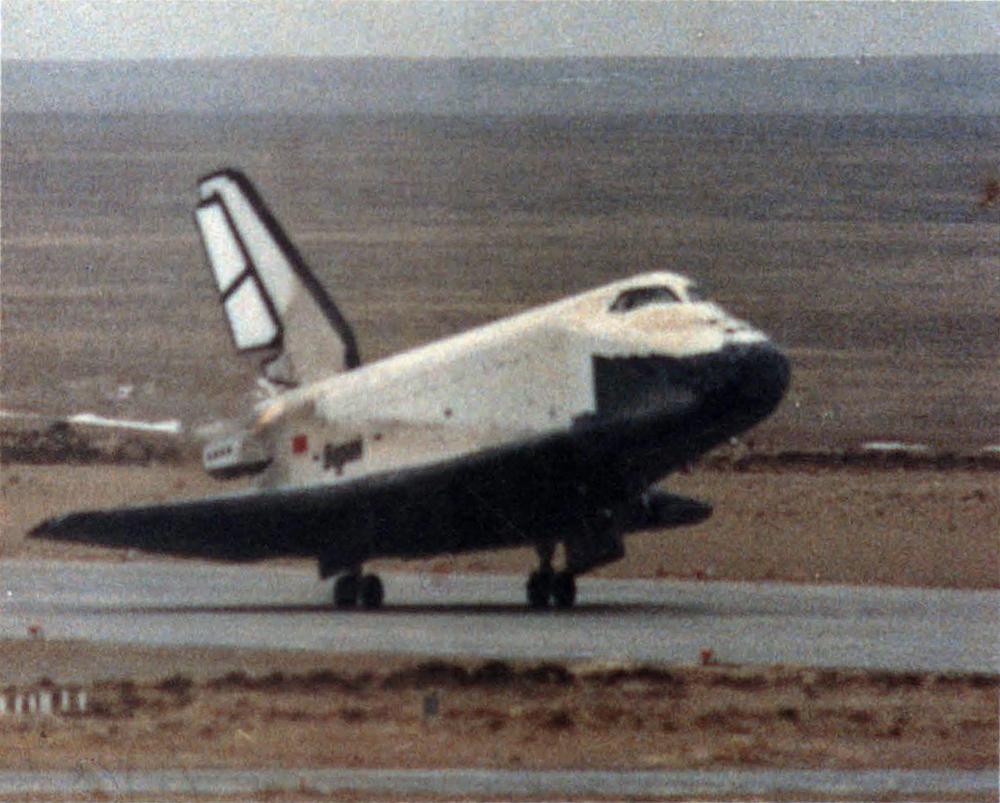
Buran space vehicle before its orbital flight (buranarchive)
Although the Soviet Union’s interest in reusable space vehicles dates back to the 1950s, concrete efforts in this direction were revived in the 1980s in response to the United States’ Space Shuttle program. The program’s primary contractor was the Energia Rocket and Space Complex (RKK-E), the successor to the design bureau founded by Sergey Korolyov.
The development of the program extended beyond the mere production of the shuttle; it also revitalized the local economy in Kazakhstan, where the launch facilities were located, triggering a construction boom. The development of the Energia-Buran system introduced nearly 600 modern technologies into various sectors of the Soviet economy. However, the extreme secrecy surrounding the program also led to certain technological inefficiencies. For example, technologies such as the automatic landing system developed for Buran were unknown to other Soviet aerospace groups due to information barriers, forcing them to independently and expensively reinvent the same technologies.
The first and only orbital flight of the Buran spacecraft took place on 15 November 1988 from the Baikonur Cosmodrome, launched by the Energia rocket. The flight was conducted without a crew and entirely in automatic mode. After completing two orbits around Earth, the vehicle executed a successful automated landing. This flight was regarded at the time as a technological achievement. A planned launch attempt on 29 October 1988 was canceled 51 seconds before liftoff due to a technical malfunction.
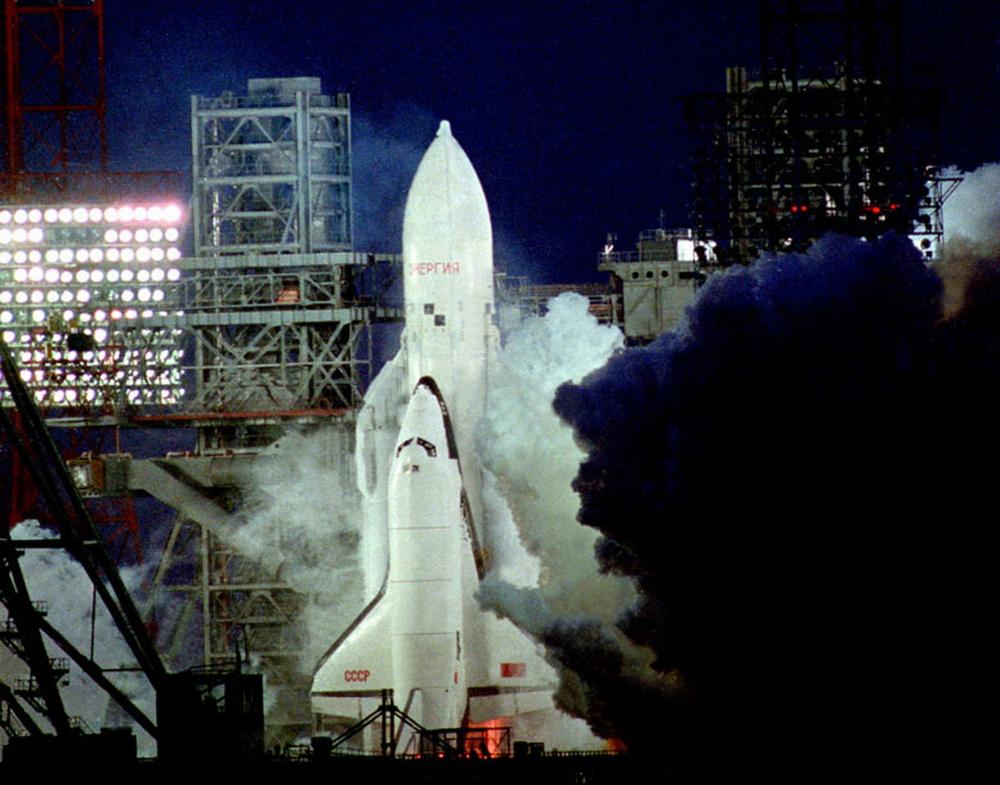
Buran and Energia 1L during the system’s orbital test flight launch (buranarchive)
The Buran program lost its financial foundation with the dissolution of the Soviet Union in 1991. While the Soviet military space forces’ budget dropped to one-tenth of its 1989 level, the broader space program continued for a time using previously accumulated strategic reserves and equipment. Under these conditions, continuing the costly Buran project became impossible, and the program was formally terminated in 1993.
Although the Buran spacecraft’s design exhibited clear aerodynamic similarities to the United States Space Shuttle, it had fundamental functional differences:
The Buran program was not limited to a single orbital vehicle; a fleet of spacecraft was developed for different purposes. This fleet consisted of two flight-ready orbital vehicles, three incomplete vehicles from the second production series, one atmospheric test vehicle, and one structural test vehicle. Their fates are as follows:
Spaceshuttle BURAN | Technik Museum Speyer (Technical Museums Sinsheim Speyer)
Another test vehicle is on display at the public museum at the Baikonur Cosmodrome.
Despite its short lifespan, the Buran program left a lasting mark on Soviet and Russian space technology history. Although it was largely forgotten after its cancellation, the Buran shuttle reemerged in public consciousness from the 2000s onward as a technological icon. The relocation of a test vehicle to the VDNKh exhibition grounds in Moscow symbolizes how a project that failed to meet its technical goals was transformed into a national symbol. This reflects how Buran is now regarded not merely as a technological artifact but also as a representation of the power of the Russian state.
Banks, Peter M., and Sally K. Ride. “Soviets in Space.” *Scientific American* 260, no. 2 (1989): 32–41. Accessed August 7, 2025. http://www.jstor.org/stable/24987137
Lewis, Cathleen. “The Rise, Fall, and Unexpected Rebirth of Russia’s Buran Shuttle at the Exhibition of Economic Achievements, 1988–2014.” *Behind the Exhibit: Displaying Science and Technology at World’s Fairs and Museums in the Twentieth Century*, dir. Elena Canadelli, Marco Beretta, and Laura Ronzon, pp. 182–202. Washington, D.C.: Smithsonian Institution Scholarly Press, 2019. Accessed August 7, 2025. Link
Oberg, J. "Russia's Space Program." *IEEE Spectrum* 32, no. 12 (December 1995): 18–35. Accessed August 7, 2025. https://ieeexplore.ieee.org/abstract/document/8982022
Technik Museen Sinsheim Speyer. "Spaceshuttle BURAN | Technik Museum Speyer." YouTube. Accessed August 7, 2025. https://www.youtube.com/watch?v=QcUar7TmbpA
The Energia-Buran Archive. "Launch Photo JPG." *Buran Archive.* Accessed August 7, 2025. https://buranarchive.space/picture?/316/category/launch
The Energia-Buran Archive. "Orbiter Photo JPG." Buran Archive. Accessed August 7, 2025. https://buranarchive.space/picture?/327/category/orbiter
The Energia-Buran Archive. "Orbiter Photo JPG." Buran Archive. Accessed August 7, 2025. https://buranarchive.space/picture?/4984/category/landing

Name(s) | Buran (Russian: Буран) | ||||||||
|---|---|---|---|---|---|---|---|---|---|
Program Type | Reusable Space Shuttle Program | ||||||||
Objective | Developed as a Response to the United States Space Shuttle Program | ||||||||
First and Only Orbital Flight | 15 November 1988 | ||||||||
Developing Country | Soviet Union | ||||||||
Launch Vehicle | Energia Rocket | ||||||||
Prominent Features | Cargo Return External Launch System Fully Automatic Flight | ||||||||
Program Outcome | Cancelled in 1993 | ||||||||
No Discussion Added Yet
Start discussion for "Buran Space Shuttle" article
Historical Development
Origins and Development Process
First and Only Flight
Cancellation of the Program
Technical Specifications and Strategic Positioning
Constructed Vehicles and Their Fates
The Program’s Legacy