


This article was automatically translated from the original Turkish version.
+2 More
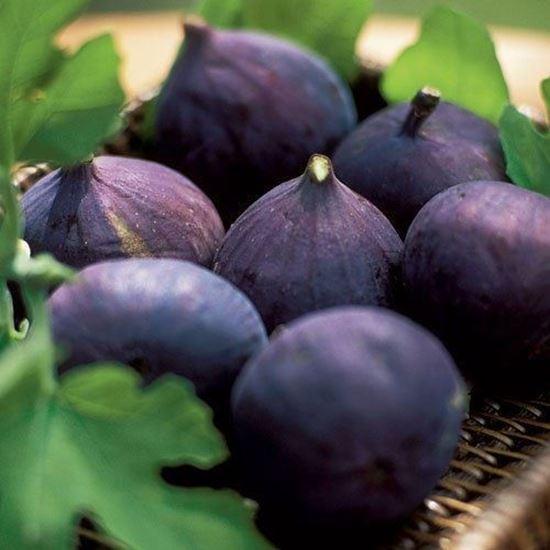
Bursa Black Fig
Registration Number | 391 | ||||||||
|---|---|---|---|---|---|---|---|---|---|
Registration Date | 14.11.2018 | ||||||||
Application Number | C2018/099 | ||||||||
Application Date | 12.04.2018 | ||||||||
Name of the Geographical Indication | Bursa Black Fig / Bursa Black / Black Bursa Fig | ||||||||
Product / Product Group(s) | Fig / Processed and Unprocessed Fruits and Vegetables and Mushrooms | ||||||||
Type of Geographical Indication | Place of Origin | ||||||||
Applicant/Registrant(s) | S.S Bursa Region Agricultural Cooperatives Union | ||||||||
Address of the Registrant | Demirtaşpaşa Mah. Celal Bayar Cd. 11 Ata Sok. Petek Bozkaya İşmerkezi, B Blok, No:1, Kat:5, Da: 501 | ||||||||
Geographical Boundary | Bursa Province | ||||||||
Bursa Siyah İnciri is a geographical indication registered fig variety belonging to the “Dürdane” type. This fig is distinguished by its dark purple skin, red flesh, and large size (fruit width 55–65 mm, length 45–55 mm). Its flavor profile is sweet with a mild acidity, accompanied by a firm fruit structure and distinct aroma. It is a self-incompatible variety; pollination occurs when pollen from male figs (ilek) is transferred to female fruits via the fig wasp (Blastophaga psenes L.). Bursa Siyah İnciri is produced both for fresh consumption and export.

Bursa Siyah İnciri (Anadolu Agency)
The geographical indication of Bursa Siyah İnciri encompasses numerous villages, neighborhoods, and towns within Bursa Province and its surroundings. Designated settlements under the districts of Gemlik, Gürsu, Karacabey, Kestel, Mustafa Kemal Paşa, Mudanya, Nilüfer, Orhangazi, and Osmangazi fall within these boundaries. The dominant soil types in these areas are alluvial, acidic forest soils and brown soils. The soil structure is medium-textured with slight to moderate alkalinity and contains varying amounts of lime. The climate is a semi-humid transitional type, combining characteristics of Mediterranean, Black Sea, and continental climates. The average temperature is 14.6°C, average relative humidity is 68.4%, and annual precipitation is approximately 707.5 mm. The prevailing wind directions are northeast, southeast, and east-northeast.
Bursa Siyah İnciri is a large-sized fig variety (55–65 mm in diameter) derived from the “Dürdane” type, characterized by its dark purple skin and red flesh. It is cultivated primarily for fresh consumption and is unique to Bursa Province. The fruits have a firm structure, medium-sized seeds, and either a very small or absent internal cavity. The skin thickness ranges from 1.2 to 1.8 mm, while the ostiole (the opening at the fruit apex) measures 8–12 mm in width. Each kilogram contains at least 11 (±2) fruits. Skin and flesh color are defined spectrophotometrically as follows: skin L 31 (±5%), a 6.3 (±10%), b 0–1.5; flesh L 39 (±5%), a 20 (±5%), b 23 (±5%). Chemical analyses show soluble solids content (Brix) of 17–18.5% and a pH of 4.5–5.0. Sensory evaluations identify it by its balanced sweetness and acidity, strong aroma, and firm fruit structure.

Bursa Siyah İnciri (GotoBursa)
Bursa Siyah İnciri is defined by its firm fruit structure and distinctive aroma. Its flavor profile combines sweetness with a balanced acidity.
This fig variety has a dark purple skin and red flesh. The fruits are large and slightly oblate in shape, flattened at the poles. Skin thickness ranges from 1.2 to 1.8 mm and is easily peelable. Seeds are medium-sized, and the internal cavity is either absent or very small. Fruit width is 55.0–65.0 mm, length is 45.0–55.0 mm, and ostiole width is 8.0–12.0 mm. The number of fruits per kilogram is at least 11 (±2).
Color parameters were determined by spectrophotometric measurements: for the skin, L (lightness) 31 (±5%), a (red-green axis) 6.3 (±10%), b (yellow-blue axis) 0–1.5; for the flesh, L 39 (±5%), a 20 (±5%), b 23 (±5%).
The soluble solids content (Brix) of the fruits ranges from 17 to 18.5%, and the pH value is between 4.5 and 5.0.
Bursa Siyah İnciri is derived from the “Dürdane” variety. Rootstocks used in production are sourced from Bursa Province. Bare-rooted seedlings are planted between November and March, while container-grown seedlings can be planted at any time of the year.
Seedlings are typically planted at 7x7 m spacing. No more than 22 trees should be planted per decare. Orchards must be located away from contaminating sources. Mixed planting with olive, apricot, and pomegranate trees is recommended to enhance biodiversity.
Fig tree pollination occurs when pollen from male figs (ilek) is carried by the fig wasp (Blastophaga psenes L.) to female fruits. Ileks are suspended above female trees in gauze, cloth bags, or small baskets. This process is carried out three times, at weekly intervals, from early June to mid-July. Only healthy, clean, green, and undamaged ileks must be used. Ten ileks are sufficient for a tree yielding an average of 100 kg of fruit; excessive pollination may reduce fruit quality.
Both mineral and organic fertilizers are used. Organic fertilizer is applied between planting and November, while mineral fertilizers are applied between February and April. Soil analysis is recommended every two years. Nitrogen, phosphorus, and potassium quantities are determined according to soil needs; general recommendations are 0.75 kg nitrogen, 1 kg phosphorus, and 2.5 kg potassium per tree, with potassium levels adjusted based on soil content. Deficiencies identified through leaf analysis can be corrected using foliar fertilizers.
Chemical pesticide use is recommended only when necessary and within legal limits. Primary preventive measures include mechanical and biological methods such as fly traps, sulfur applications, and use of Bacillus thuringiensis. Pesticides must be selected from lists approved by the Ministry of Agriculture and Forestry and the World Health Organization.
Soil must be regularly tilled to control weeds. Herbicide use is avoided. Cover cropping with green manure during the production cycle is recommended.
Irrigation is applied only during July–September and only when necessary. Excessive irrigation can harm fruit quality and durability.
Pruning is carried out between February and April. The goal is to improve air circulation and ensure adequate sunlight penetration. Dead, broken, and diseased branches must be removed. Excessive pruning must be avoided, as it can lead to excessive shoot growth.
Harvesting is done manually between early August and end of October. Export products are harvested when slightly green, while domestic market products are harvested when dark purple. It is preferred to harvest fruits with the “button” (peduncle) intact, as this extends shelf life. Harvesting must be conducted in the morning hours (before 11:00) using clean collection containers.
Fruits are classified and graded. Classification may occur in the orchard or at designated collection sites. Storage is carried out at +2°C. Early-harvested export products can be stored for 25 days, while ripe domestic market products can be stored for 10 days.
Classified figs are stored at +2°C. Export products can be preserved for 25 days, domestic products for 10 days. Packaging is made from cardboard, plastic, or wood. Labels must clearly display the term “BURSA SİYAH İNCİRİ”, the geographical indication emblem, and the Bursa Siyah İnciri logo; information such as the packer’s name, harvest year, and lot number must also be included.

Bursa Siyah İnciri (GotoBursa)
Bursa Siyah İnciri is a product registered with a geographical indication by the S.S. Bursa Regional Agricultural Cooperatives Union. The monitoring process covers all actors in the production chain, including producers, sellers of geographical indication figs, traders, cooperatives, and those involved in grading and packaging.
The monitoring process includes specific control points at each production stage:
Monitoring is conducted in two stages: internal and external.
Parties wishing to use the geographical indication must sign and register an agreement declaring their commitment to meet the established registration conditions. Certification is administered by the S.S. Bursa Regional Agricultural Cooperatives Union, but final approval is granted by the Certification Body. The certificate includes sections identifying the rights holder and defining the product scope.
During inspections, observed conditions are compared with expected standards. When non-conformities are identified, they are clearly documented and reported to both the producer and the S.S. Bursa Regional Agricultural Cooperatives Union.
The Certification Body reports certification decisions and inspection reports to the S.S. Bursa Regional Agricultural Cooperatives Union. The Union is obligated to submit these documents to the Turkish Patent and Trademark Office at least once annually.
Producers, storers, and traders wishing to use the geographical indication must provide the Union with information on their owned or leased plots and facility details. They must also sign an agreement committing to allow inspections and accept sanctions in case of non-conformity. Agreements are prepared in two copies: one retained by the relevant party and one archived by the Union.

Bursa Siyah İnciri (generated by artificial intelligence.)
GoToBursa. "Bursa Siyah İnciri." *GotoBursa*. Accessed May 25, 2025. https://www.gotobursa.com.tr/tr/icerik/bursa-siyah-inciri-108/.
Turk Patent and Trademark Office. "Bursa Siyah İnciri – Coğrafi İşaret Detayları." Accessed May 25, 2025. https://ci.turkpatent.gov.tr/cografi-isaretler/detay/38556.
Turkish Patent and Trademark Office. "Bursa Siyah İnciri Coğrafi İşaret Tescil Belgesi." Accessed May 25, 2025. https://ci.turkpatent.gov.tr/Files/GeographicalSigns/1b688d8a-fc31-4e38-bc63-1b77761e58dc.pdf.
Yılmaz, Büşra Nur. “AB Tescili, Bursa Siyah İncirinin Dünya Çapında Marka Değerini Artıracak.” Anadolu Ajansı. Accessed May 28, 2025. https://www.aa.com.tr/tr/kultur/ab-tescili-bursa-siyah-incirinin-dunya-capinda-marka-degerini-artiracak/3322941.

Bursa Black Fig
Registration Number | 391 | ||||||||
|---|---|---|---|---|---|---|---|---|---|
Registration Date | 14.11.2018 | ||||||||
Application Number | C2018/099 | ||||||||
Application Date | 12.04.2018 | ||||||||
Name of the Geographical Indication | Bursa Black Fig / Bursa Black / Black Bursa Fig | ||||||||
Product / Product Group(s) | Fig / Processed and Unprocessed Fruits and Vegetables and Mushrooms | ||||||||
Type of Geographical Indication | Place of Origin | ||||||||
Applicant/Registrant(s) | S.S Bursa Region Agricultural Cooperatives Union | ||||||||
Address of the Registrant | Demirtaşpaşa Mah. Celal Bayar Cd. 11 Ata Sok. Petek Bozkaya İşmerkezi, B Blok, No:1, Kat:5, Da: 501 | ||||||||
Geographical Boundary | Bursa Province | ||||||||
Growing Areas and Geographical Boundary
Characteristics
Sensory Characteristics
Physical Characteristics
Chemical Characteristics
Production and Cultivation Methods
Variety and Rootstock Origin
Planting and Orchard Layout
Pollination (Ilekleme)
Fertilization
Plant Protection
Soil Management
Irrigation
Pruning
Harvesting
Classification and Storage
Storage and Packaging
Monitoring
Controlled Parties and Responsibilities
Monitoring Authority and Procedures
Certification
Monitoring and Inspection Stages
Non-Conformities and Sanctions
Monitoring and Reporting Obligations
Registration Process for Relevant Parties