This article was automatically translated from the original Turkish version.
+2 More
Registration Number | 699 | ||||||||
|---|---|---|---|---|---|---|---|---|---|
Registration Date | 24.03.2021 | ||||||||
Application Number | C2020/018 | ||||||||
Application Date | 17.01.2020 | ||||||||
Name of the Geographical Indication | Kahta Narı | ||||||||
Product / Product Group(s) | Pomegranate / Processed and Unprocessed Fruits and Vegetables and Mushrooms | ||||||||
Type of Geographical Indication | Place of Origin | ||||||||
Applicant/Registrant(s) | Kahta District Governorship | ||||||||
Address of the Registrant | Hürriyet Mah. Mustafa Kemal Caddesi No:171 Kahta ADIYAMAN | ||||||||
Geographical Boundary | Adıyaman Province | ||||||||
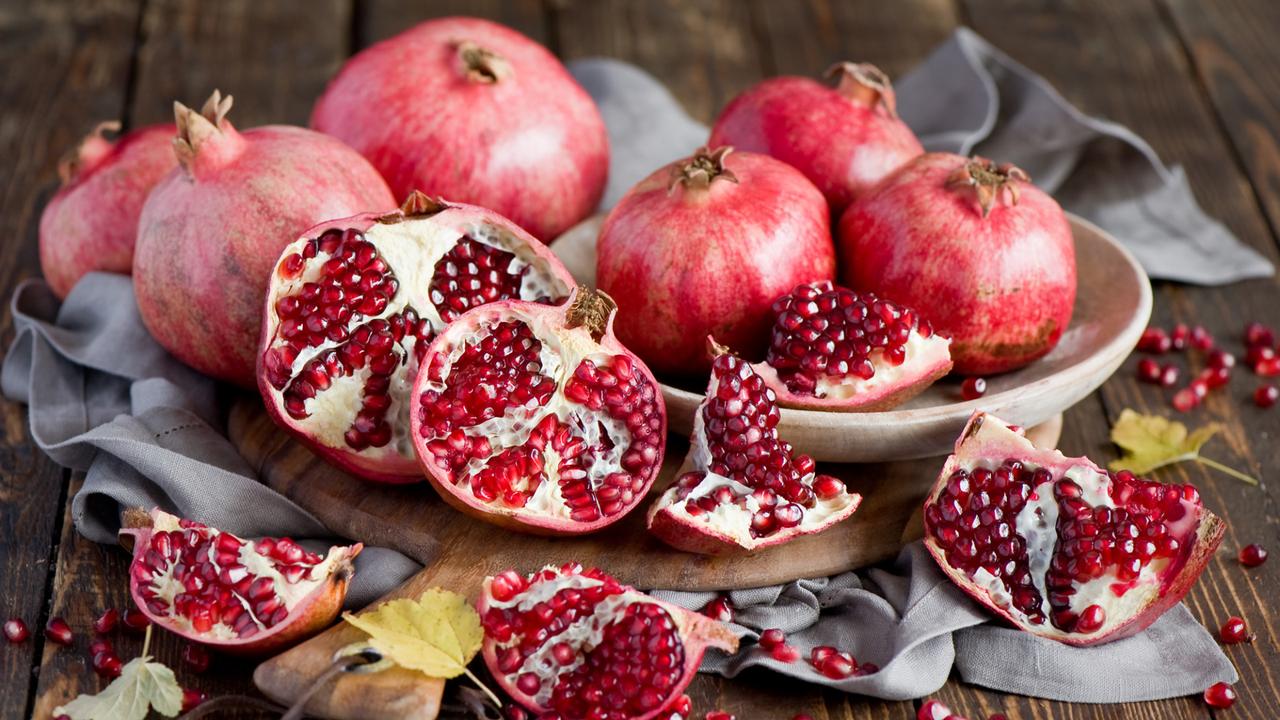
Kahta pomegranate is a local pomegranate variety cultivated in the Kahta district of Adıyaman Province and registered under its place of origin. This variety, derived from the species “Punica granatum L.” using the “Katırbaşı” cultivar, is distinguished by its large seeds, deep pink to light red aril color, characteristic sweet, tart, or sour flavor, and high juice yield. Fruit weight ranges from 350 to 700 grams, peel thickness from 2.3 to 4.1 mm, and internal yield is at least 70%. Adapted to the unique microclimatic conditions of Kahta district, this product varies in production quality due to local soil structure, sunlight duration, pruning, and irrigation techniques.
The fruit weight of the Kahta pomegranate ranges from 350 to 700 grams, while seed weight varies between 0.3 and 0.5 grams. The peel thickness is between 2.3 and 4.1 mm, with an internal yield of at least 70%. The seeds are large, deep pink to light red in color, easily separable, and notable for their distinctive sweet, tart, or sour taste. The peel color is typically a mixture of yellow and light red, with approximately 30 to 40 percent red hue. Juice yield is high, seed hardness is moderate, and fruit cracking rate is low.
The chemical composition of the product varies depending on climate, cultivation conditions, and storage duration, but is defined within the following limits:
The Kahta pomegranate is a crop that thrives in regions with a temperate climate, characterized by hot summers and mild winters. The plant exhibits a shrub-like form and can grow up to 5 meters in height. It requires a high accumulated temperature for flowering, and dry air conditions are essential for fruit quality. Rainfall during fruit development is undesirable as it may cause peel cracking.
Well-drained, alkaline, loamy-sandy soils rich in organic matter are preferred. Annual rainfall of 500 mm is sufficient, with spring rainfall being particularly favorable. In orchard establishment, north-south orientation is recommended. Trees are planted at spacing of 1.5 to 2 meters between rows and 2.5 to 3 meters between plants.
Trees grow in a multi-stemmed shrub form. Pruning begins at the time of initial planting for shaping purposes. Shape pruning and rejuvenation pruning are essential to maintain yield and fruit quality. For nursery production, one- to two-year-old branches are taken as cuttings and planted directly into the soil. This method preserves the genetic characteristics of the variety.
Chemical fertilizer use is determined by soil and plant analyses. Animal manure application is encouraged during the first years. Phosphorus and potassium fertilizers are applied before winter, while nitrogen fertilizers are applied in early spring and early summer. Irrigation must be regular, especially during flowering and fruit development, and should be stopped 12 to 15 days before harvest. Drip irrigation is the most common method.
Weed control is carried out mechanically and by hand weeding. Authorized plant protection products are used for pest management. Harvest occurs between August and November. Fruits are harvested based on external appearance and maturity level. Defective fruits are sorted out.
In large-scale storage facilities, humidity is maintained at 85–90% and temperature at 5–10°C. In traditional preservation methods, fruits can be stored for up to four months in cool, dry, shaded environments displayed in open air.
Use of the geographical indication is mandatory on the product or its packaging. If direct application is not feasible, it must be prominently displayed at the production site. The logo may be used optionally. Monitoring activities are conducted at least once annually with the participation of the Kahta District Governorship and other local institutions, and results are submitted to the Turkish Patent and Trademark Office.
Adıyaman Chamber of Commerce and Industry. "Kahta Narı." Accessed August 16, 2025. https://adiyamantso.org.tr/urun/kahta-nari#:~:text=Kahta%20Nar%C4%B1%2C%20Ad%C4%B1yaman'%C4%B1n%20Kahta,%C3%B6zg%C3%BC%20%C3%B6zellikler%20ta%C5%9F%C4%B1yan%20bir%20%C3%BCr%C3%BCnd%C3%BCr.
Türk Patent ve Marka Kurumu. "Coğrafi İşaret Sicil Belgesi – Kahta Narı" (PDF). Accessed August 16, 2025. https://ci.turkpatent.gov.tr/Files/GeographicalSigns/ada91d1b-beeb-4698-9757-52869530f60f.pdf
Türk Patent ve Marka Kurumu. "Kahta Narı." Coğrafi İşaretler Portalı. Accessed August 16, 2025. https://ci.turkpatent.gov.tr/cografi-isaretler/detay/2782

Registration Number | 699 | ||||||||
|---|---|---|---|---|---|---|---|---|---|
Registration Date | 24.03.2021 | ||||||||
Application Number | C2020/018 | ||||||||
Application Date | 17.01.2020 | ||||||||
Name of the Geographical Indication | Kahta Narı | ||||||||
Product / Product Group(s) | Pomegranate / Processed and Unprocessed Fruits and Vegetables and Mushrooms | ||||||||
Type of Geographical Indication | Place of Origin | ||||||||
Applicant/Registrant(s) | Kahta District Governorship | ||||||||
Address of the Registrant | Hürriyet Mah. Mustafa Kemal Caddesi No:171 Kahta ADIYAMAN | ||||||||
Geographical Boundary | Adıyaman Province | ||||||||
Morphological and Physical Characteristics
Chemical Properties
Agricultural Production and Cultivation Conditions
Pruning and Nursery Production
Fertilization and Irrigation
Pest and Disease Management and Harvest
Storage and Preservation
Monitoring and Geographical Indication Use