


This article was automatically translated from the original Turkish version.
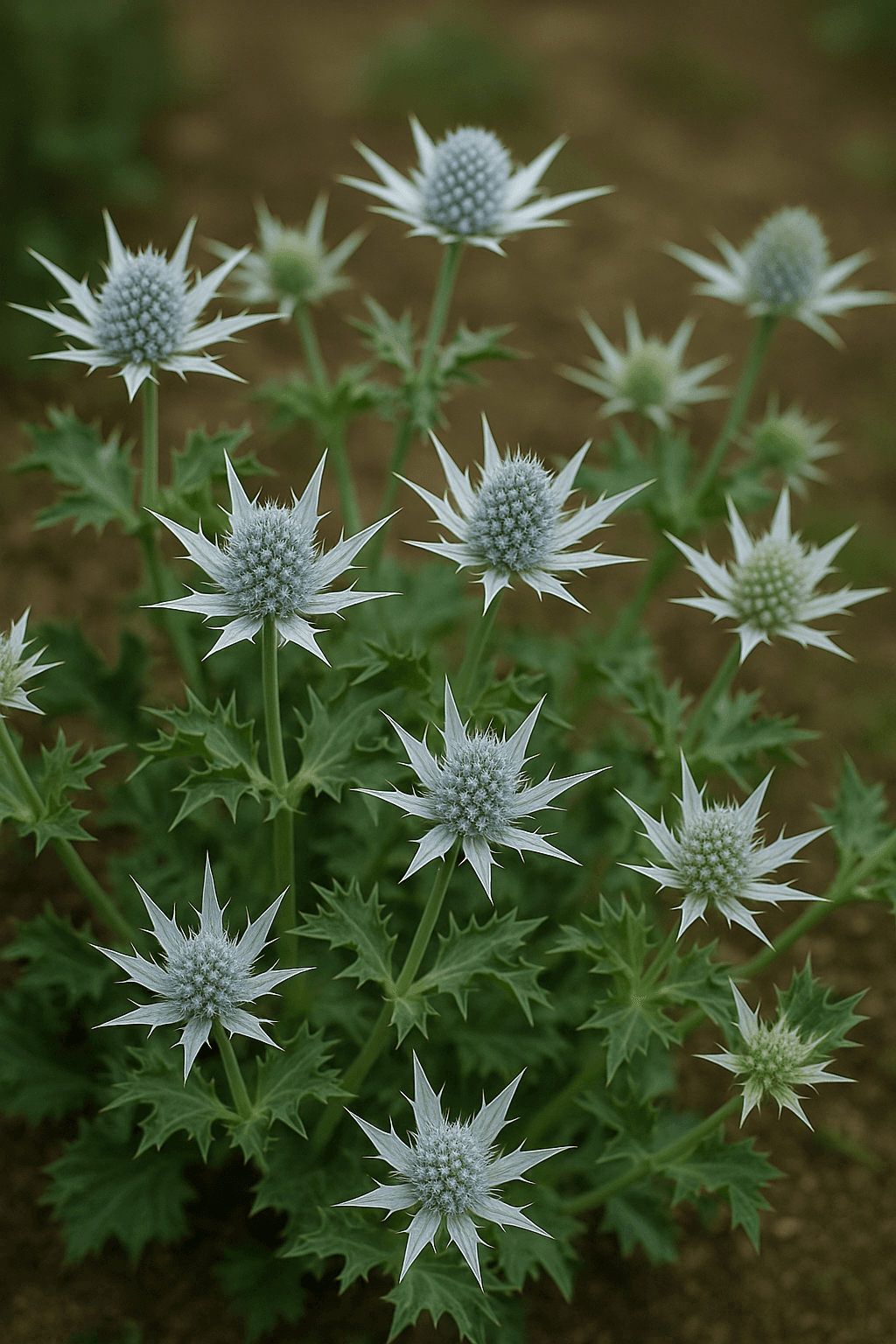
Chakir Herb (Eryngium bithynicum)
Family(ies) | Apiaceae (Umbelliferae) | ||||||||
|---|---|---|---|---|---|---|---|---|---|
Flowering | June – September | ||||||||
Flower | Bluish-purple, surrounded by spiny bracts | ||||||||
Leaf | Deeply lobed, marginally spiny | ||||||||
Plant Type | Herbaceous, annual or biennial | ||||||||
Order | Eryngium bithynicum | ||||||||
Conservation Status(es) | conservation-requiring species Limited distribution | ||||||||
Distribution(s) | Endemic to Türkiye Zonguldak Düzce Bolu | ||||||||
Habitat | Forest clearings shrublands macchia | ||||||||
Çakır otu (Eryngium bithynicum) is an annual or biennial herbaceous plant belonging to the Apiaceae family. It is found in northwestern Türkiye, particularly in Bolu and its surrounding areas. As an endemic species, Çakır otu derives its name from this geographic origin. It grows in semi-shaded forest clearings, shrublands, Mediterranean-type scrublands, fallow fields, and steppes. It typically flowers between June and September.
The plant has a spiny stem and flowers in purplish-blue tones. Its leaves are deeply lobed, spiny-edged, and glossy. The flower heads are round or oval and surrounded by prominent bracts. This distinctive structure allows easy differentiation from other species.
Eryngium bithynicum is an ecologically important nectar source for pollinating insects. As a rare species with a limited distribution within Türkiye’s flora, it is among the local plants requiring conservation.
Çakır otu is a herbaceous and spiny species that is easily recognizable morphologically. Its stem is upright, often branched, and sturdy; the surface may be hairless or slightly hairy. This structure enhances the plant’s resistance to external environmental factors.
Lower leaves are long-stalked, deeply lobed, and have sharp spiny margins. Upper leaves are sessile, narrower, and come to a pointed tip. Leaf surfaces are firm and have serrated edges.
Flowers are arranged in spiny-bracted heads, usually terminal at the upper part of the stem. The bracts are arranged in a star-like pattern and may be longer than the flowers themselves. This structure effectively attracts pollinating insects. The fruits are schizocarps, producing small dry fruits that split into two parts upon maturity. The root system is taproot-type, which enhances the plant’s drought tolerance.

Çakır Otu (Generated by Artificial Intelligence.)
Çakır otu (Eryngium bithynicum) is an endemic plant species found naturally only in Türkiye. Its current distribution includes Bolu as the primary location, as well as Zonguldak, Düzce, and surrounding regions. The plant thrives in semi-shaded, cool, and moist microclimates such as forest clearings, scrublands, and shrublands. It typically occurs at elevations between 500 and 1500 metres. This specific habitat preference and restricted geographic range make Eryngium bithynicum both scientifically significant and worthy of conservation. Its natural populations are threatened by habitat degradation, agricultural activities, and the shrinking of forested areas.
The most effective conservation method is the preservation of its natural habitats without disturbance. Reducing human-induced pressures such as agriculture, urbanization, and mining is crucial. Assigning protected status to these areas, preventing unauthorized interventions, and conducting population monitoring to track its distribution are necessary steps.
Ex-situ conservation approaches also play a supportive role. Storage of seeds in seed banks, cultivation in botanical gardens, and similar efforts can contribute to scientific research and raise public awareness. Raising public awareness and including the species within legal protection frameworks are essential for its long-term sustainability.
Çakır otu (Eryngium bithynicum) is a local plant species notable for both its ecological roles and cultural heritage. Ecologically, it serves as a vital source of nectar and pollen for bees, butterflies, and other pollinating insects during its flowering period. Thus, it contributes to pollination processes within its ecosystem and indirectly supports the maintenance of biological diversity. Additionally, its drought-resistant structure and deep root system help prevent soil erosion in its habitats and provide shelter for surrounding microorganisms and insect species.
Locally, it has been traditionally used for healing wounds, treating skin conditions, and addressing certain inflammatory ailments. However, these folk medicinal uses have not been scientifically validated. The plant’s place in cultural memory demonstrates that its conservation is important not only biologically but also within a socio-cultural context.
Abant İzzet Baysal Üniversitesi. "Eryngium bithynicum." *İBU Flora.* Accessed May 31, 2025. http://ibuflora.ibu.edu.tr/tur/eryngium-bithynicum
Accessed November 26, 2025.
Aslan Erdem, Sinem. "Eryngium Bithynicum Bitkisinin Morfolojik ve Ekolojik Özellikleri Üzerine Bir İnceleme." Master's thesis, Abant İzzet Baysal Üniversitesi, 2013. Accessed May 31, 2025. https://www.proquest.com/openview/d0fd5cdf34bcaaf7ef1151f44ffb7556/1?pq-origsite=gscholar&cbl=2026366&diss=y

Chakir Herb (Eryngium bithynicum)
Family(ies) | Apiaceae (Umbelliferae) | ||||||||
|---|---|---|---|---|---|---|---|---|---|
Flowering | June – September | ||||||||
Flower | Bluish-purple, surrounded by spiny bracts | ||||||||
Leaf | Deeply lobed, marginally spiny | ||||||||
Plant Type | Herbaceous, annual or biennial | ||||||||
Order | Eryngium bithynicum | ||||||||
Conservation Status(es) | conservation-requiring species Limited distribution | ||||||||
Distribution(s) | Endemic to Türkiye Zonguldak Düzce Bolu | ||||||||
Habitat | Forest clearings shrublands macchia | ||||||||
No Discussion Added Yet
Start discussion for "Çakır Otu (Eryngium bithynicum)" article
Botanical Characteristics
Distribution
Conservation Methods
Ecological and Cultural Significance