


This article was automatically translated from the original Turkish version.
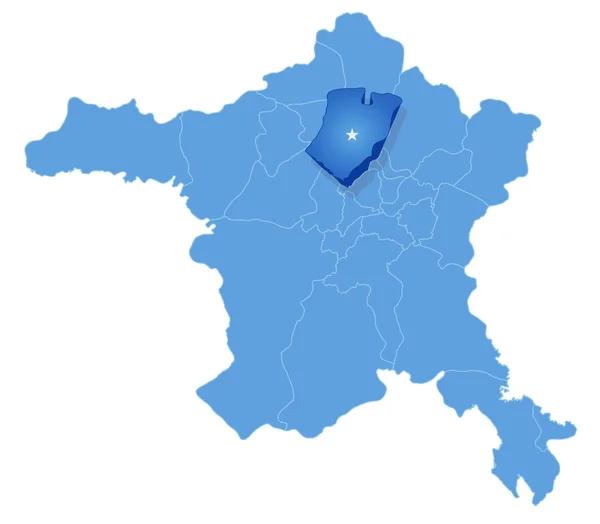
Çankaya (District)
Country | Türkiye | ||||||||
|---|---|---|---|---|---|---|---|---|---|
Province(s) | Ankara | ||||||||
District Type | Central District | ||||||||
Population (2023) | Approximately 940,000 | ||||||||
Area(s) | 483 km² (approximately) | ||||||||
Climate Type | Continental climate | ||||||||
Official Website(s) | www.cankaya.bel.tr | ||||||||
Elevation(s) | Average 1 070 metres | ||||||||
Geographic Region | Central Anatolia Region | ||||||||
Çankaya is one of the central districts of Ankara, the capital of Türkiye, and holds a unique position in the political, social, and cultural life of the Republic of Türkiye due to both its administrative structure and symbolic significance. Located south of Ankara, Çankaya hosts numerous strategic and symbolic structures including Türkiye Grand National Assembly, ministries, embassies, universities, and Anıtkabir. The district, which developed rapidly with the advent of the Republic, has become the administrative and intellectual center of Ankara.
Çankaya is situated on a broad plateau reflecting the characteristic features of the Central Anatolia Region. The district’s average elevation is 1,070 meters. Its topography mirrors Ankara’s general physical appearance, consisting of gentle rolling hills, plains, and valleys. While green spaces are found in the western and southern parts of the district, urban development is highly intensive. Atatürk Forest Farm, Dikmen Valley, and various parks represent the limited natural areas within the district.
The climate exhibits typical continental characteristics. Summers are hot and dry, while winters are cold and occasionally snowy. The high temperature variations have contributed to a steppe-type vegetation cover.
Çankaya’s historical past is directly linked to the historical development of Ankara. Archaeological investigations in the region have uncovered settlement traces dating back to the Hittite, Phrygian, Roman, Byzantine, and Seljuk periods. In this context, Çankaya’s history can be traced as far back as the 2nd millennium BCE.
With the establishment of the Republic, Çankaya became the administrative center of Türkiye. The Çankaya Köşkü, used as the residence of Mustafa Kemal Atatürk, elevated the district to a privileged place in the nation’s political memory. Shaped by the relocation of public institutions from 1923 onward, Çankaya became one of the earliest examples of modern urbanization in Türkiye.
Çankaya is home to Anıtkabir, one of the symbolic structures of the capital Ankara. Constructed between 1944 and 1953 as the mausoleum of Mustafa Kemal Atatürk, Anıtkabir is an important architectural landmark reflecting the stylistic trends of its era in Turkish architectural history. Designed by Emin Onat and Orhan Arda, this monument holds great significance not only as a memorial but also in terms of national unity and identity. The Anıtkabir Complex also houses the Atatürk and War of Independence Museum.
The Çankaya Köşkü served for many years as the first presidential residence of the Republic of Türkiye. Today, it continues to fulfill a symbolic role in certain ceremonies and official receptions.

Visual Featuring the Architecture of Çankaya (Generated by Artificial Intelligence)
As of 2023, Çankaya has a population of approximately 940,000, making it the most populous district of Ankara. The majority of the population consists of university graduates, public sector employees, and professional occupational groups. It has an education level above the national average.
The household structure is predominantly based on the nuclear family model, yet the student and single working population is also significant. Due to the presence of numerous universities, academic centers, cultural institutions, and diplomatic missions, the demographic composition of the district is highly diverse.
The economy of Çankaya is largely based on the service sector. Industrial activities are limited; however, public administration, diplomacy, education, healthcare, and culture and the arts are highly developed. Hundreds of embassy buildings and foreign representative offices operate within the district.
Universities, law firms, NGOs, and national and international organizations shape the district’s economy, while cafes, restaurants, boutiques, and shopping centers represent areas where the service sector is integrated into daily life. In addition, neighborhood markets and local artisans contribute to a vibrant economic activity in the district.
Çankaya lies at the heart of Ankara’s cultural life. The district hosts numerous theaters, art galleries, concert halls, museums, and cultural centers. Institutions such as the Doğan Taşdelen Center for Contemporary Arts, the Yılmaz Güney Stage, and the Nazım Hikmet Culture and Arts Center host exhibitions, theater performances, and concerts throughout the year.
In addition, regularly organized culture and art festivals and academic events attracting national and international participation play a key role in reinforcing the city’s identity. Public spaces frequently host exhibitions and performances to ensure accessibility to the arts.
Çankaya hosts numerous universities, including prestigious institutions such as Middle East Technical University (METU), Hacettepe University (Beşevler Campus), and Ankara University (Tandoğan and Cebeci Campuses). In addition, various research institutes, private educational institutions, libraries, and science centers are located within the district.
In this regard, Çankaya serves as a center for both academic and cultural production. It is also one of Türkiye’s most dynamic districts in terms of student population density.
Despite its modern urban development, Çankaya preserves historical structures and cultural heritage elements from various periods. Ottoman-era fountains, cemeteries, mosques, and stone buildings, along with early Republican architectural examples such as ministry buildings and early public structures, form part of this heritage.
The Çankaya Köşkü is not merely an architectural structure; it is also a symbolic space where decisions were made and which bears witness to Türkiye’s recent history. Additionally, various street names, monuments, and statues within the district reflect Türkiye’s historical and cultural memory.
There are differing views regarding the origin of the name “Çankaya.” According to a widely accepted interpretation, the name is thought to derive from the “çan çiçeği” (bellflower, Campanula species), which grows naturally in the region. The plant, known for its purple, bell-shaped flowers, was well known among local communities and may have inspired the name. An alternative view suggests that the name originated from the “Çang” tribe, one of the Oghuz tribes. Although both interpretations appear in folk narratives, neither has been definitively supported by documentary evidence.
Ankara Valiliği. "Çankaya." T.C. Ankara Valiliği Resmî Web Sitesi. Accessed May 1, 2025. http://www.ankara.gov.tr/cankaya
Çankaya Belediyesi. "Antik Tarih." Çankaya Municipality. Accessed May 1, 2025. https://www.cankaya.bel.tr/pages/16/ANTIK-TARIH/
Çankaya Belediyesi. "Anıtkabir's History." Çankaya Municipality. Accessed May 1, 2025. https://www.cankaya.bel.tr/pages/18/Anitkabirin-Tarihi/
Çankaya Belediyesi. "Başkent Ankara." Çankaya Municipality. Accessed May 1, 2025. https://www.cankaya.bel.tr/pages/15/BASKENT-ANKARA/
Çankaya Belediyesi. "Cultural Heritage." Çankaya Municipality. Accessed May 1, 2025. https://www.cankaya.bel.tr/pages/70/CANKAYADA-KULTUREL-MIRAS/
Çankaya Belediyesi. "Cultural Life." Çankaya Municipality. Accessed May 1, 2025. https://www.cankaya.bel.tr/pages/21/KULTUREL-YASAM/
Çankaya Belediyesi. "Doğal Yapı." Çankaya Municipality. Accessed May 1, 2025. https://www.cankaya.bel.tr/pages/19/DOGAL-YAPI/
Çankaya Belediyesi. "Economic Life." Çankaya Municipality. Accessed May 1, 2025. https://www.cankaya.bel.tr/pages/20/EKONOMIK-YASAM/
Çankaya Belediyesi. "Çankaya’nın Adı." Çankaya Municipality. Accessed May 1, 2025. https://www.cankaya.bel.tr/pages/71/Cankayanin-Adi-Nereden-Geliyor/
Çankaya Municipality. "Rakamlarla Çankaya." Çankaya Belediyesi. Accessed May 1, 2025. https://www.cankaya.bel.tr/pages/14/RAKAMLARLA-CANKAYA/

Çankaya (District)
Country | Türkiye | ||||||||
|---|---|---|---|---|---|---|---|---|---|
Province(s) | Ankara | ||||||||
District Type | Central District | ||||||||
Population (2023) | Approximately 940,000 | ||||||||
Area(s) | 483 km² (approximately) | ||||||||
Climate Type | Continental climate | ||||||||
Official Website(s) | www.cankaya.bel.tr | ||||||||
Elevation(s) | Average 1 070 metres | ||||||||
Geographic Region | Central Anatolia Region | ||||||||
Geographical Location and Physical Structure
Historical Background
Anıtkabir and Symbolic Structures
Population and Socioeconomic Structure
Economic Life
Cultural and Artistic Life
Educational and Scientific Institutions
Cultural Heritage and Historical Fabric
Origin of the Name