This article was automatically translated from the original Turkish version.
Type of Geographical Indication | Traffic Sign | ||||||||
|---|---|---|---|---|---|---|---|---|---|
Registration Number | 907 | ||||||||
Registration Date | 01.10.2021 | ||||||||
Product / Product Group(s) | Cheeses | ||||||||
Province(s) | Çankırı | ||||||||
Applicant/Registrant(s) | Çankırı Municipality | ||||||||
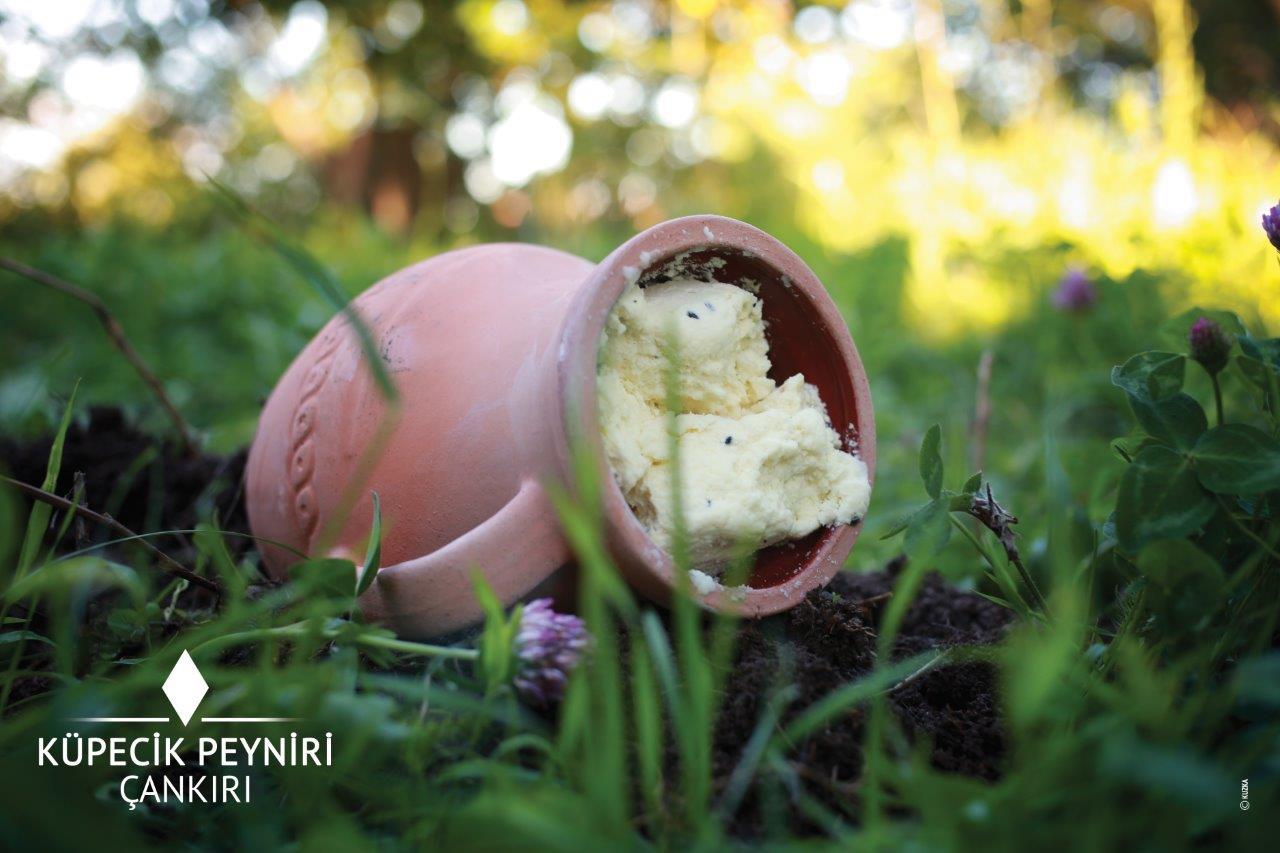
Çankırı Küpecik Cheese, a regional cheese unique to Çankırı Province, is an essential component of the region’s cultural and traditional winter preparations. Traditionally produced at the beginning of summer by combining milk from neighbors in villages, this cheese derives its name from the method of ripening in glazed earthenware cubes. It is one of the principal local products served at the Regional Feast during traditional fairs and festivals held throughout the province. The distinctive characteristics of this cheese are shaped by the use of shirden starter culture during fermentation, pressing the cheese into glazed earthenware cubes, sealing the cube openings with cotton cloth, and ripening in sand. No thermal treatment is applied to the curd during production.
The physical and chemical properties of Çankırı Küpecik Cheese have been defined. The cheese must contain a minimum of 55% dry matter. Ash content ranges from 2.45% to 5.8%, while fat content (milk fat) falls between 25% and 45%. Protein content is between 19.47% and 26.29%. Acidity levels range from 0.58% to 2.3%, and pH values are between 5.03 and 6.3.
The fundamental elements distinguishing Çankırı Küpecik Cheese from other cheese varieties lie in its traditional production methods and ripening technique. The four key distinctive features of this cheese are:
The production process of Çankırı Küpecik Cheese begins with the collection of cow’s milk from pastures in Çankırı Province and includes the following stages:
The production, processing, and all other stages of Çankırı Küpecik Cheese must be carried out within the geographical boundaries of Çankırı Province. The crystalline rock salt used in production must be sourced exclusively from the Çankırı Salt Mine.
The supervisory authority consists of at least three experts appointed by Çankırı Municipality, in coordination with the Çankırı Municipality, Çankırı Provincial Directorate of Agriculture and Forestry, Çankırı Union of Craftsmen and Artisans, and Çankırı Provincial Directorate of Trade. Inspections are mandatory once a year and may be conducted at any time upon complaint or necessity.
The inspection criteria include:
The supervisory authority may consult or contract services from public or private institutions or qualified individuals or entities. The registering institution is responsible for initiating legal procedures to protect the rights associated with the product.
Turkish Patent and Trademark Office. "Çankırı Küpecik Peyniri." *Coğrafi İşaretler Portalı*. Accessed October 26, 2025. https://ci.turkpatent.gov.tr/cografi-isaretler/detay/38471.
Turkish Patent and Trademark Office. "Çankırı Küpecik PeyniriCoğrafi İşaretler Sicil Belgesi." *Geographical Indications Portal.* Accessed October 26, 2025. https://ci.turkpatent.gov.tr/Files/GeographicalSigns/32e85bcb-f309-4d6d-8637-46249047c496.pdf.

Type of Geographical Indication | Traffic Sign | ||||||||
|---|---|---|---|---|---|---|---|---|---|
Registration Number | 907 | ||||||||
Registration Date | 01.10.2021 | ||||||||
Product / Product Group(s) | Cheeses | ||||||||
Province(s) | Çankırı | ||||||||
Applicant/Registrant(s) | Çankırı Municipality | ||||||||
No Discussion Added Yet
Start discussion for "Çankırı Küpecik Cheese" article
Product Characteristics and Distinctive Features
Production Method
Geographical Boundary and Oversight