


This article was automatically translated from the original Turkish version.
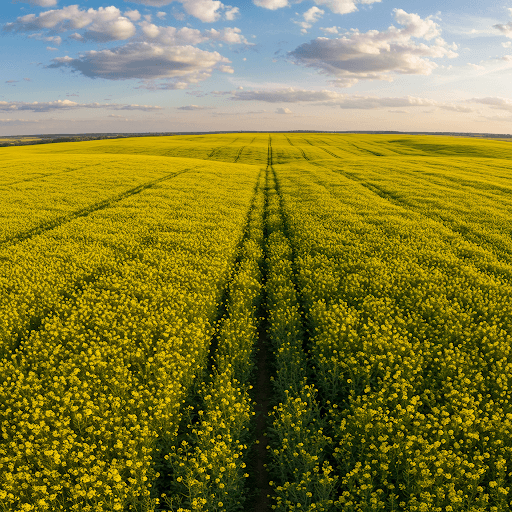
Rapeseed Plant
Scientific Name(s) | Brassica napus | ||||||||
|---|---|---|---|---|---|---|---|---|---|
Family | Brassicaceae (Turpgiller) | ||||||||
Common Names | Oilseed Rape Rape | ||||||||
Origin(s) | Europe | ||||||||
Climate Requirements | Cold Hardy Temperate Climate | ||||||||
Soil Requirements | Well-Drained, Fertile Soils | ||||||||
Growth Period | 90–150 Days | ||||||||
Major Producer Countries | France Germany India China Canada | ||||||||
Regions Where It Grows in Türkiye | Southern Marmara Central Anatolia Aegean Thrace | ||||||||
Uses | Biodiesel Animal Feed Vegetable Oil Production | ||||||||
Oil Content | 40–45% | ||||||||
Protein Content (Seed) | 20–25% | ||||||||
First Registered Variety (TR) | 1990s – Thrace Agricultural Research Institute | ||||||||
Canola (Brassica napus) is an oilseed plant belonging to the same family as vegetables such as turnip and cabbage. Canola was genetically developed in Canada during the 1970s to produce low-acid content and healthy oils. For this reason, the name “canola” is an abbreviation of the phrase “Canadian Oil, Low Acid.” The canola plant is typically an annual species that grows to a height of 60 to 120 cm and produces yellow flowers. The primary use of the plant is the oil extracted from its seeds. Canola oil is considered a healthy oil due to its low saturated fat content and high levels of monounsaturated fatty acids, particularly oleic acid. It is also an important source for biodiesel production.

Canola Field (Generated by Artificial Intelligence)
The canola plant can be cultivated efficiently under suitable climatic conditions and proper agricultural practices. It generally thrives in well-drained soils with a pH between 6 and 7. Canola is adapted to temperate climates and performs better under cooler conditions. High temperatures can negatively affect canola yields. Therefore, canola cultivation is typically carried out during spring and autumn months.
Canola matures approximately 90 to 120 days after sowing. During planting, soil preparation and fertilization are essential. Nitrogen-based fertilizers are necessary for healthy plant growth. Chemical and biological pest control methods may also be employed to protect the crop. Harvesting occurs when the seeds are fully mature and is usually performed using a combine harvester. Canola seeds are processed using either cold pressing or chemical extraction methods to obtain oil.
In recent years, canola cultivation has been increasingly adopted in Türkiye. In particular, canola farming has become widespread in the Thrace and Central Anatolia regions due to favorable climatic and soil conditions. Although Türkiye is not among the world’s largest canola producers, it has experienced significant growth in both oilseed and feed canola production in recent years. Türkiye aims to increase canola production primarily to meet domestic demand for cooking oil.
The canola plant yields well especially on fertile soils. In Türkiye, cultivated areas are concentrated in regions with fertile soils and adequate water resources. The Thrace Region stands out as the most suitable area for canola cultivation. Canola production is also carried out in Central Anatolia and Southeastern Anatolia. Canola production in Türkiye has gained increasing importance in recent years for biodiesel production and has established itself as an environmentally friendly energy source.
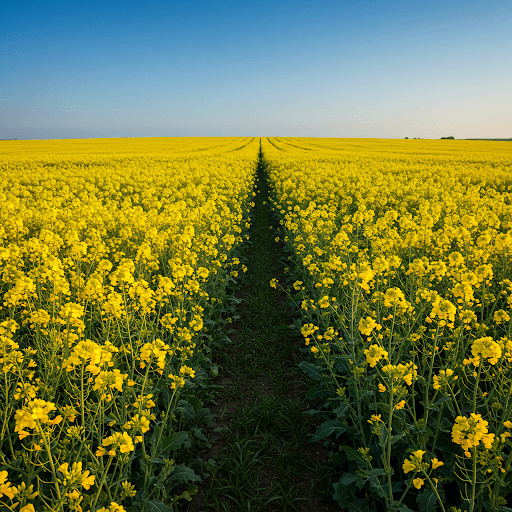
Canola Field (Generated by Artificial Intelligence)
Canola is widely used globally as a plant that produces healthy oils and serves as an important source for biodiesel production. Canola cultivation in Türkiye is becoming increasingly common and holds significant potential for both the food and energy sectors. Türkiye is expected to increase its canola production to meet domestic demand and ensure sustainable energy generation.
Arıoğlu, H. "Türkiye'de Yağlı Tohum ve Ham Yağ Üretimi, Sorunlar ve Çözüm Önerileri." Tarla Bitkileri Merkez Araştırma Enstitüsü Dergisi, 2014. https://dergipark.org.tr/en/pub/tarbitderg/issue/26737/284325
Küçük, Nihat, Aydoğdu, M. H., and Şahin, Z. "Yağlı Tohum Piyasalarındaki Gelişmeler ve Türkiye Kolza (Kanola) Üretimi." Tarım Ekonomisi Dergisi, 2021. https://dergipark.org.tr/en/download/article-file/1898155
Uzun, B. B., Kılıç, M., and Pütün, A. E. "1. Ulusal Yağlı Tohumlu Bitkiler ve Biyodizel Sempozyumu Bildiriler Kitabı." Tarım ve Orman Bakanlığı, 2007. https://arastirma.tarimorman.gov.tr/ktae/Belgeler/1.Biyodizel_Sempozyumu_kitabi.pdf

Rapeseed Plant
Scientific Name(s) | Brassica napus | ||||||||
|---|---|---|---|---|---|---|---|---|---|
Family | Brassicaceae (Turpgiller) | ||||||||
Common Names | Oilseed Rape Rape | ||||||||
Origin(s) | Europe | ||||||||
Climate Requirements | Cold Hardy Temperate Climate | ||||||||
Soil Requirements | Well-Drained, Fertile Soils | ||||||||
Growth Period | 90–150 Days | ||||||||
Major Producer Countries | France Germany India China Canada | ||||||||
Regions Where It Grows in Türkiye | Southern Marmara Central Anatolia Aegean Thrace | ||||||||
Uses | Biodiesel Animal Feed Vegetable Oil Production | ||||||||
Oil Content | 40–45% | ||||||||
Protein Content (Seed) | 20–25% | ||||||||
First Registered Variety (TR) | 1990s – Thrace Agricultural Research Institute | ||||||||
Cultivation of the Canola Plant
Canola Cultivation in Türkiye