


This article was automatically translated from the original Turkish version.
Carbon carbon nanotubes (CNTs) are nanomaterials formed when carbon atoms are arranged in a hexagonal lattice to create tubular structures building. They are produced by rolling graphene into one-dimensional tubes and are notable for their exceptional strength, lightness, and conductivity degree.
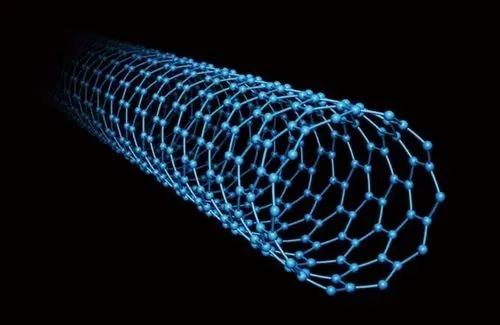
Carbon nanotubes (CNTs) are carbon allotropes with a nanostructure that can achieve an aspect ratio greater than 1,000,000. Techniques such as arc discharge, laser ablation, and chemical vapor deposition have been developed to produce large quantities of nanotubes. Recent advances have demonstrated their potential impact in areas such as imaging, drug delivery, bio perception, and functional nanocomposites revolution. Discovered in 1991 by Japanese scientist Iijima, carbon nanotubes (CNTs) are now considered one of the most studied topics in academic research. Carbon nanotubes are carbon allotropes composed of graphene. They have a cylindrical structure with diameters on the nanometer scale and lengths reaching several millimeters. Their extraordinary dimensions and mass, combined with strong mechanical strength and high electrical and thermal conductivity, endow them with unique structural, mechanical, and electronic properties.
The use of carbon nanotubes in the human body and their environmental impact remain subjects of ongoing research. However, they are widely regarded as a revolutionary material in nanoscale engineering.
Carbon nanotubes (CNTs) consist of carbon atoms arranged in a tubular structure formed by a single layer of densely packed benzene rings. This novel synthetic nanomaterial belongs to the fullerene family, the third allotrope of carbon alongside naturally occurring sp2 (planar) and sp3 (cubic) forms graphite and diamond together. Depending on the number of layers, CNT structures are primarily classified into two categories: single-walled carbon nanotubes (SWCNTs) and multi-walled carbon nanotubes (MWCNTs).
SWCNTs consist of a single cylindrical layer with diameters ranging from 0.4 to 2 nm and typically form tightly packed hexagonal arrangements. MWCNTs consist of two or more concentric cylinders, each formed by a single graphene layer surrounding a hollow core. The outer diameter of MWCNTs ranges from 2 to 100 nm, while the inner diameter is between 1 and 3 nm, and their length ranges from 0.2 to several micrometers. In terms of chemical reactivity, carbon nanotubes can be divided into two regions: the ends and the sidewalls. A key factor governing their unique properties arises from the various tubular structures formed when a graphene sheet is rolled into a tube important.
The three most commonly used methods for producing SWCNTs and MWCNTs are: the arc discharge method, the laser ablation method (using graphite), and chemical vapor deposition. After synthesis, carbon nanotubes are purified using acid treatment, surfactant-assisted sonication, or air oxidation procedures to remove impurities such as amorphous carbon, fullerenes, and transition metal catalysts like catalyst treatment substance synthesis.
Today, carbon nanotubes are synthesized and marketed in commercial quantities by numerous chemical companies at standard quality levels world.
(1993). Cobalt-catalysed growth of carbon nanotubes with single-atomic-layer walls.
(2008). Magnetic properties of CoFe2O4 synthesized by solid state, citrate precursor
(2010). Effect of silver doping on the TiO2 for photocatalytic reduction of CO2.
(2018). Modified solvothermal synthesis of cobalt ferrite (CoFe2O4) magnetic
1385. doi:10.1021/cr800433k
1601–1610. Accessed https://www.scopus.com/inward/record.uri?eid=2-s2.0-.
251-256. doi:10.1016/j.jmmm.2005.01.011
3), 269-273. doi:10.1016/j.matchemphys.2007.09.035,
322(5), 321-326.
3223. doi:https://doi.org/10.1016/j.jssc.2007.08.018
358(6383), 220-222.
363(6430), 603-605.
42(5), 1147–1151. doi:https://doi.org/10.1016/j.carbon.2003.12.041
44(1), 530-536. doi:10.1016/j.ceramint.2017.09.207
44–50. doi:https://doi.org/10.1016/j.synthmet.2010.10.032
47(4), 5597–5609. doi:https://doi.org/10.1016/j.ceramint.2020.10.144
77(17), 2767-2769.
84887420343&partnerID=40&md5=059a58cdfc64f41b55ec67d1cec19e20
Advanced Materials, 15(19), 1622–1625. doi:https://doi.org/10.1002/adma.200305305
Agnihotri, S., Rostam-Abadi, M., & Rood, M. (2006). Adsorption site analysis of impurity
Ahangari, A., Raygan, S., & Ataie, A. (2019). Capabilities of nickel zinc ferrite and its
Alothman, Z. (2012). A Review: Fundamental Aspects of Silicate Mesoporous Materials.
Applied Catalysis B: Environmental, 96(3), 239–244. doi:https://doi.org/10.1016/j.apcatb.2010.02.030
Atıksuların Arıtımında kullanılabilirliğinin İncelenmesi, Atatürk Üniversitesi, Fen
Baikousi, M., Georgiou, Y., Daikopoulos, C., Bourlinos, A. B., Filip, J., Zbořil, R., . . .
Bethune, D., Kiang, C. H., De Vries, M., Gorman, G., Savoy, R., Vazquez, J., & Beyers, R.
Bilimleri Enstitüsü, Çevre Mühendisliği Anabilim Dalı, 205, Erzurum
Bower, C., Zhou, O., Zhu, W., Werder, D., & Jin, S. (2000). Nucleation and growth of carbon
Buckminsterfullerene. Nature, 318(6042), 162-163.
Burghard, M. (2005). Electronic and vibrational properties of chemically modified single-
C. Yu, J., Zhang, L., & Yu, J. (2002). Rapid synthesis of mesoporous TiO 2 with high
Cao, H., Zhu, M., Li, Y., Liu, J., Ni, Z., & Qin, Z. (2007). A highly coercive carbon nanotube
Carbon, 93, 636–647. doi:https://doi.org/10.1016/j.carbon.2015.05.081
Cationic and anionic dyes. Applied Surface Science, 419, 70–83. doi:https://doi.org/10.1016/j.apsusc.2017.05.019
Ceramics International, 38(5), 3625-3634. doi:https://doi.org/10.1016/j.ceramint.2012.01.001
Characterization of Superparamagnetic CoFe2O4/MWCNT Hybrids for Tumor-
Chemistry, 26(4), 416-420. doi:10.1039/B109173E
Chen, C.-H., Liang, Y.-H., & Zhang, W.-D. (2010). ZnFe2O4/MWCNTs composite with
Chen, W., Pan, X., Willinger, M.-G., Su, D. S., & Bao, X. (2006). Facile Autoreduction of
CoFe2O4 nanoplatelets and nanoparticles. Materials Chemistry and Physics, 108(2-
Coercive Field for Nanoparticles of CoFe2O4 in Amorphous Silica Sol–Gel.
Compounds, 453(1-2), 298-303. doi:10.1016/j.jallcom.2006.11.058
Compounds, 501(1), 168–172. doi:https://doi.org/10.1016/j.jallcom.2010.04.072
Crystalline ropes of metallic carbon nanotubes. Science, 273(5274), 483-487.
Degradation of Methylene Blue Using ZnFe2O4/MWCNT Composite Synthesized by
Deng, J., Shao, Y., Gao, N., Tan, C., Zhou, S., & Hu, X. (2013). CoFe2O4 magnetic
Dielectric Properties. Journal of Materials Engineering and Performance, 251-258. doi:10.1007/s11665-020-04572-9
Ebbesen, T. W., & Ajayan, P. M. (1992). Large-scale synthesis of carbon nanotubes. Nature,
Ebbesen, T. W., Lezec, H. J., Hiura, H., Bennett, J. W., Ghaemi, H. F., & Thio, T. (1996).
Eder, D. (2010). Carbon Nanotube−Inorganic Hybrids. Chemical Reviews, 110(3), 1348-
Electrical conductivity of individual carbon nanotubes. Nature, 382(6586), 54-56.
Ensafi, A. A., & Allafchian, A. R. (2013). Multiwall carbon nanotubes decorated with
Fan, S., Chapline, M. G., Franklin, N. R., Tombler, T. W., Cassell, A. M., & Dai, H. (1999).
Fischer, J. (1997). Large-scale production of single-walled carbon nanotubes by the
Fu, F., & Wang, Q. (2011). Removal of heavy metal ions from wastewaters: A review.
Gabal, M. A., Al-Harthy, E. A., Al Angari, Y. M., & Abdel Salam, M. (2014). MWCNTs
Gavalas, V. G., Andrews, R., Bhattacharyya, D., & Bachas, L. G. (2001). Carbon Nanotube
Gharagozlou, M. (2009). Synthesis, characterization and influence of calcination temperature
González, C. G., Aleman, M., . . . Godavarthi, S. (2019). Synthesis of g-C3N4/N-
Handbook of Heterogeneous Catalysis (pp. 1217-1230).
Hirlekar, R., Yamagar, M., Garse, H., Vij, M., and Kadam, V. (2009). Carbon nanotubes and
Houshiar, M., Zebhi, F., Razi, Z. J., Alidoust, A., and Askari, Z. (2014). Synthesis of cobalt
Hu, L., Hecht, D. S., and Grüner, G. (2010). Carbon Nanotube Thin Films: Fabrication,
Huang, Q., and Gao, L. (2003). Immobilization of rutile TiO2 on multiwalled carbon
Huixia, F., Baiyi, C., Deyi, Z., Jianqiang, Z., and Lin, T. (2014). Preparation and
Hutlova, A., Niznansky, D., Rehspringer, J.-L., Estournès, C., and Kurmoo, M. (2003). High
Hydrothermal Method. Indian Journal of Materials Science, 2013, 356025.
Iijima, S. (1991). Helical microtubules of graphitic carbon. Nature, 354(6348), 56-58. doi:10.1038/354056a0
Iijima, S., & Ichihashi, T. (1993). Single-shell carbon nanotubes of 1-nm diameter. Nature,
Influence of reactor geometry on the yield of CO2 photocatalytic reduction. Catalysis
Iron Oxide/Carbon Nanotube Encapsulates. Journal of the American Chemical
Jauhar, S., Kaur, J., Goyal, A., & Singhal, S. (2016). Tuning the properties of cobalt ferrite: a
Jiang, L. Q., & Gao, L. (2005). Fabrication and characterization of ZnO-coated multi-walled
Jitianu, A., Cacciaguerra, T., Benoit, R., Delpeux, S., Béguin, F., & Bonnamy, S. (2004).
Journal of Environmental Management, 92(3), 407-418.
Journal of Magnetism and Magnetic Materials, 356, 68–72. doi:https://doi.org/10.1016/j.jmmm.2013.12.033
Journet, C., Maser, W., Bernier, P., Loiseau, A., de La Chapelle, M. L., Lefrant, d. S., . . .
Kafshgari, L. A., Ghorbani, M., & Azizi, A. (2017). Fabrication and investigation of
Kalam, A., Al-Sehemi, A. G., Assiri, M., Du, G., Ahmad, T., Ahmad, I., and Pannipara, M.
Kanagesan, S., Hashim, M., Tamilselvan, S., Alitheen, N. B., Ismail, I., Syazwan, M., and
Karakas, İ. H. (2021). The effects of fuel type onto the structural, morphological, magnetic
Karakassides, M. A. (2015). Synthesis and characterization of robust zero valent
Karcioğlu Karakaş, Z., Boncukcuoğlu, R., and Karakaş, İ. H. (2018). Antimony removal from
Karcıoğlu Karakaş, Z., (2015) Nikel Ferrit (NiFe 2 O 4 ) Nanopartiküllerin Sentezi ve
Kesarla, M. K., Fuentez-Torres, M. O., Alcudia-Ramos, M. A., Ortiz-Chi, F., Espinosa-
Khan, L., Younas, M., Khan, S., and Zia ur rehman, M. (2020). Synthesis and Characterization
Kim, H., and Sigmund, W. (2002). Zinc oxide nanowires on carbon nanotubes. Applied Physics
Kong, J., Cassell, A. M., & Dai, H. (1998). Chemical vapor deposition of methane for single-
Kočí, K., Matějů, K., Obalová, L., Krejčíková, S., Lacný, Z., Plachá, D., . . . Šolcová, O.
Kočí, K., Obalová, L., and Lacný, Z. (2008). Photocatalytic reduction of CO2 over TiO2 based
Kočí, K., Reli, M., Kozák, O., Lacny, Z., Placha, D., Praus, P., and Obalová, L. (2011).
Kroto, H. W., Heath, J. R., O’Brien, S. C., Curl, R. F., & Smalley, R. E. (1985). C60:
Kumar, M., & Ando, Y. (2003). Camphor–a botanical precursor producing garden of carbon
Köseoğlu, Y., Alan, F., Tan, M., Yilgin, R., & Öztürk, M. (2012). Low temperature
Letters, 81(11), 2085-2087. doi:10.1063/1.1504877
Liu, Q., Sun, J., Long, H., Sun, X., Zhong, X., & Xu, Z. (2008). Hydrothermal synthesis of
Magnetism and Magnetic Materials, 371, 43–48. doi:https://doi.org/10.1016/j.jmmm.2014.06.059
Materials Research and Technology, 8(2), 1628-1635. doi:https://doi.org/10.1016/j.jmrt.2018.11.008
Materials, 5, 2874-2902. doi:10.3390/ma5122874
Matter, 444, 70–76. doi:https://doi.org/10.1016/j.physb.2014.03.033
MnFe2O4/MWCNTs nanocomposite by hydrothermal technique and adsorption of
Nature, 363(6430), 605-607.
NiFe2O4 magnetic nanoparticles, a new catalyst for voltammetric determination of
Physics, 91, 313-316. doi:10.1016/j.matchemphys.2004.11.028
Properties, and Applications. Chemical Reviews, 110(10), 5790-5844. doi:10.1021/cr9002962
Science and Technology, 54(7), 1141-1158. doi:10.1080/01496395.2018.1532962
Science, 283(5401), 512-514.
Self-oriented regular arrays of carbon nanotubes and their field emission properties.
Siemieniewska, T. (2008). Reporting Physisorption Data for Gas/Solid Systems. In
Sing, K. S. W., Everett, D. H., Haul, R. A. W., Moscou, L., Pierotti, R. A., Rouquerol, J., &
Singh, C., Bansal, S., and Singhal, S. (2014). Synthesis of Zn1−xCoxFe2O4/MWCNTs
Singhal, S., Sharma, R., Singh, C., and Bansal, S. (2013). Enhanced Photocatalytic
Society, 128(10), 3136-3137. doi:10.1021/ja056721l
Sol−Gel Composite Materials. Nano Letters, 1(12), 719-721. doi:10.1021/nl015614w
Su, M., Zheng, B., and Liu, J. (2000). A scalable CVD method for the synthesis of single-
Sun, C., Liu, Y., Ding, W., Gou, Y., Xu, K., Xia, G., and Ding, Q. (2013). Synthesis and
Sunny, A., K.S, A. K., Karunakaran, V., Aathira, M., Mutta, G. R., Maiti, K. K., . . .
Synthesis and characterization of carbon nanotubes–TiO2 nanocomposites. Carbon,
Targeted Therapy. Journal of Nanoscience and Nanotechnology, 13(1), 236-241.
Thang, P. D., Rijnders, G., & Blank, D. H. A. (2005). Spinel cobalt ferrite by
Thess, A., Lee, R., Nikolaev, P., Dai, H., Petit, P., Robert, J., . . . Rinzler, A. G. (1996).
Today, 176, 212-214. doi:10.1016/j.cattod.2010.12.054
Toksha, B. G., Shirsath, S. E., Patange, S. M., & Jadhav, K. M. (2008). Structural
Varma, P. C. R., Manna, R. S., Banerjee, D., Varma, M. R., Suresh, K. G., & Nigam, A. K.
Vasundhara, M. (2018). Magnetic properties of biocompatible CoFe2O4
Vlazan, P., & Stoia, M. (2018). Structural and magnetic properties of CoFe2O4
Wang, W., Li, Q., & Chang, C. (2011). Effect of MWCNTs content on the magnetic and
Zuikimi, M. M. M. (2013). Sol-gel auto-combustion synthesis of cobalt ferrite and it's
and photocatalytic properties of nanoparticles in the synthesis of cobalt ferrite
and polymerized complex methods: A comparative study. Journal of Alloys and
aqueous solutions using magnetic nickel ferrite (NiFe2O4) nanoparticles. Separation
carbon nanotubes with enhanced photocatalytic activity. Materials Chemistry and
catalysts. Chemical Papers, 62, 1-9. doi:10.2478/s11696-007-0072-x
cefixime. Colloids and Surfaces B: Biointerfaces, 102, 687-693.
characterization of the cobalt ferrite nano-particles by reverse coprecipitation. Journal
coated with Ni0.5Zn0.5Fe2O4 nanocrystals synthesized by chemical
complexometric synthesis. Journal of Magnetism and Magnetic Materials, 295(3),
cytotoxicity properties. Digest Journal of Nanomaterials and Biostructures, 8(4),
da Silva, S. S., Chiavone-Filho, O., de Barros Neto, E. L., & Foletto, E. L. (2015). Oil
decorated with Mn0.8Zn0.2Fe2O4 nanoparticles for removal of crystal-violet dye
diclofenac in water. Journal of Hazardous Materials, 262, 836-844.
doi:10.1016/j.nanoso.2018.04.003
doi:10.1016/j.surfrep.2005.07.001
doi:10.1038/382054a0
doi:10.1039/C6RA21224G
doi:10.1155/2013/356025
doi:10.1166/jnn.2013.6711
doi:https://doi.org/10.1016/j.cej.2014.06.019
doi:https://doi.org/10.1016/j.colsurfb.2012.09.037
doi:https://doi.org/10.1016/j.jece.2019.103493
doi:https://doi.org/10.1016/j.jenvman.2010.11.011
doi:https://doi.org/10.1016/j.jhazmat.2013.09.049
doi:https://doi.org/10.1016/j.ssc.2008.06.040
doped CeO2 composite for photocatalytic degradation of an herbicide. Journal of
electric-arc technique. Nature, 388(6644), 756-758.
embedded single-walled carbon nanotube bundles. Carbon, 44, 2376-2383. doi:10.1016/j.carbon.2006.05.038
enhanced photocatalytic activity under visible-light irradiation. Journal of Alloys and
ferrite (CoFe2O4) nanoparticles using combustion, coprecipitation, and precipitation
from aqueous solutions. Chemical Engineering Journal, 255, 156-164.
hydrothermal synthesis and characterization of Mn doped cobalt ferrite nanoparticles.
investigations and magnetic properties of cobalt ferrite nanoparticles prepared by
iron/mesoporous carbon composites and their applications in arsenic removal.
its applications: a review. Asian journal of pharmaceutical and clinical research, 2(4), 17-27.
light. Results in Physics, 8, 1046-1053. doi:https://doi.org/10.1016/j.rinp.2018.01.045
magnetic, electrical, optical and photocatalytic properties. Physica B: Condensed
methods: A comparison study of size, structural, and magnetic properties. Journal of
nanocomposite with CNT for adsorption of arsenic (V) ions from wastewater. Journal
nanocomposites using reverse micelle method: Investigation of their structural,
nanoparticles as a highly active heterogeneous catalyst of oxone for the degradation of
nanoparticles photocatalysts for degradation of methylene blue with H2O2/visible
nanoparticles using a facile synthesis. Nano-Structures and Nano-Objects, 16, 69-76.
nanoparticles with microwave assisted combustion method. Ceramics International,
nanopowders, prepared using a modified Pechini method. Ceramics International,
nanotubes by microwave plasma chemical vapor deposition. Applied Physics Letters,
nanotubes. Diamond and related materials, 12(3-7), 998-1002.
nanotubes. Journal of Materials Chemistry, 13(7), 1517-1519. doi:10.1039/B303857B
of CoFe2O4/MWCNTs Nanocomposites and High Frequency Analysis of Their
of Environmental Chemical Engineering, 7(6), 103493.
on magnetic properties of nanocrystalline spinel Co-ferrite prepared by polymeric
photocatalytic activity by ultrasound-induced agglomeration. New Journal of
precipitation–hydrothermal process. Journal of Solid State Chemistry, 180(11), 3218-
precursor method. Journal of Alloys and Compounds, 486(1-2), 660-665.
removal from produced water by conjugation of flotation and photo-Fenton processes.
road towards diverse applications. RSC Advances, 6(100), 97694-97719.
sol–gel auto combustion method. Solid State Communications, 147(11), 479-483.
wall carbon nanotubes. Surface Science Reports - SURF SCI REP, 58.
walled carbon nanotubes with high catalyst productivity. Chemical physics letters,
walled carbon nanotubes. Chemical physics letters, 292(4-6), 567-574.
wave absorbing properties of ferrite-MWCNTs composites. Synthetic Metals, 161(1),

Carbon Nanotubes (CNTs)
Properties of Carbon Nanotubes
Applications of Carbon Nanotubes
Structural Properties of Carbon Nanotubes
Methods of Production of Carbon Nanotubes