



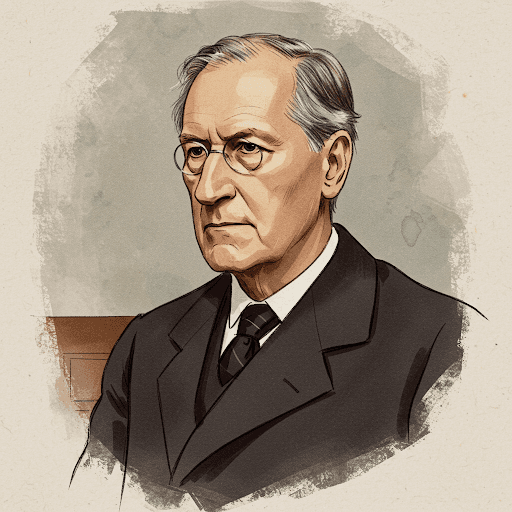
Carl Gustav Jung
Eş | Emma Jung | ||||||||
|---|---|---|---|---|---|---|---|---|---|
Profession(s) | Psychiatrist Writer | ||||||||
Field | Analytical Psychology | ||||||||
Doğum tarihi | 1875-07-26 | ||||||||
Ölüm tarihi | 1961-06-06 | ||||||||
Important Works | The Red Book Manifestations of the Soul in the Modern Human Psychological Types Analytical Psychology | ||||||||
Carl Gustav Jung (26 July 1875, Kesswil, Switzerland – 6 June 1961, Küsnacht, Switzerland) was a Swiss psychiatrist and psychoanalyst who founded analytical psychology. He introduced key concepts such as the collective unconscious, archetypes, and the persona.
Childhood and Youth: Jung was born in the Swiss village of Kesswil, the son of a Protestant minister. He was recognized during childhood as solitary and introverted. His early fascination with nature and mythology laid the foundation for his later psychological theories. His father’s religious views and his mother’s mystical inclinations played a significant role in shaping Jung’s preoccupation with the unconscious and symbols.
Educational Background: After studying medicine at the University of Basel, Jung turned to psychiatry. He completed his doctorate at the University of Zurich and conducted research on mental illnesses. He gained important clinical experience at the Burghölzli Psychiatric Hospital, where he began his psychoanalytic work.
Professional Journey: While working at the Burghölzli Psychiatric Hospital in Zurich, Jung met Sigmund Freud and conducted extensive research on psychoanalysis. However, he eventually broke with Freud over fundamental differences in their understanding of the unconscious. In 1913, he parted ways with Freud and founded analytical psychology. This rupture led Jung to propose that the unconscious was not merely personal but also collective, containing shared symbols and myths inherited from human history.
Key Achievements: Jung’s concepts of the “collective unconscious” and “archetypes” made major contributions to psychology. Works such as *The Red Book* and *Psychological Types* left lasting impacts on psychotherapy and personality theory. From the 1930s onward, his studies on philosophy, alchemy, and religious symbols expanded the scope of psychology into broader cultural and spiritual domains.
Contributions: Jung expanded the understanding of unconscious processes in psychology by distinguishing between the personal and collective unconscious. His work on personality types continues to hold relevance today. He developed the concept of “individuation,” which he defined as the process by which an individual achieves self-realization.
Major Works and Projects: Books such as *Analytical Psychology*, *Psychological Types*, and *The Archetypes and the Collective Unconscious* are foundational texts in psychological literature. His *Red Book*, a record of his inner experiences and explorations of the unconscious, has attracted widespread scholarly and public interest.
Jung enjoyed long walks in nature and deep study of symbols. His own dreams and artistic creations served as vital sources for his psychological theories. He also held a profound interest in alchemy and mysticism.
Private Life: He was married to Emma Jung and had five children. Throughout his marriage, he continued to develop his psychological theories. Jung also built a retreat known as the Bollingen Tower, where he preferred to work and reflect in solitude.
In his later years, Jung devoted intense efforts to studying symbols, religions, and mysticism. His writings attracted significant attention in academic circles and among the general public. In his final years, he wrote extensively on the depths of consciousness and the nature of the human soul.
Death: He died at his home in Küsnacht on 6 June 1961. After his death, his work gained widespread recognition and left a significant legacy in the field of psychology.
Jung’s theories have had a profound impact on psychology, literature, art, and religious studies. Even today, many therapists and academics continue to reference his work. His influence persists not only in analytical psychology but also in dream analysis and personal development.
His theories of personality, studies of mythology, and concepts of the unconscious have inspired countless individuals in modern psychotherapy and psychological counseling. Jung’s ideas influenced mythologists such as Joseph Campbell, psychotherapists like Carl Rogers, and contemporary thinkers such as Jordan Peterson.
Jung, Carl Gustav. Memories, Dreams, Reflections. New York: Pantheon Books, 1963.
Jung, Carl Gustav. Psychological Types. Princeton: Princeton University Press, 1971.
Noll, Richard. The Jung Cult: Origins of a Charismatic Movement. Princeton: Princeton University Press, 1994.
Shamdasani, Sonu. Jung and the Making of Modern Psychology: The Dream of a Science. Cambridge: Cambridge University Press, 2003.
Storr, Anthony. The Essential Jung. Princeton: Princeton University Press, 1983.

Carl Gustav Jung
Eş | Emma Jung | ||||||||
|---|---|---|---|---|---|---|---|---|---|
Profession(s) | Psychiatrist Writer | ||||||||
Field | Analytical Psychology | ||||||||
Doğum tarihi | 1875-07-26 | ||||||||
Ölüm tarihi | 1961-06-06 | ||||||||
Important Works | The Red Book Manifestations of the Soul in the Modern Human Psychological Types Analytical Psychology | ||||||||
Early Life and Education
Career and Achievements
Key Works and Contributions
Personal Life: Hobbies and Interests
Later Years and Death
Legacy and Influence
Source of Inspiration